

When you crave an honest, warming, and unforgettable lunch that smells just like the best old-Czech pub, forget about lengthy experiments with Western cuisine. Say goodbye to boring quick-fry dishes—these traditional Czech pork slices from neck, shoulder, or loin, coated in flour, brushed with full-fat mustard, seared on a dark onion base, and slowly braised in a rich sauce are the absolute top, and they’ll disappear from your table in no time. The secret to success lies in scoring the edges to prevent curling, perfectly caramelizing the onions to a deep brown, and adding extra mustard just before pouring in the broth.
What you’ll need for a proper lunch:
For the meat base and marinating:
- Pork slices: 4 to 5 pieces (ideally juicy pork neck or shoulder, but leaner loin or leg can also be used)
- Full-fat mustard: for brushing the meat (plus 2 tablespoons for the sauce itself)
- Plain flour: for lightly coating the meat before the mustard layer
- Vegetable oil or lard: for frying and sautéing
- Spices: salt and freshly ground black pepper to taste
For the onion base and sauce:
- Onions: an amount roughly equal in weight to the meat (the more onions, the better and thicker the sauce)
- Pork broth: or hot water if you don’t have broth on hand
- For thickening: a bit of homemade roux or plain flour mixed with a little cold water
Step-by-step preparation:
1. Preparing the slices and the mustard trick: Cut the pork into even slices. Lightly score the outer tendons and edges of each slice in several places with a knife—this is an old butcher’s trick that keeps the meat from curling up during quick frying and ensures even cooking. Season the slices on both sides with salt and pepper, then lightly coat them in flour. Only after flouring, generously brush both sides with a layer of full-fat mustard.
2. The crucial onion base: In a deep pan or pot, heat a generous amount of oil or good-quality lard. Add finely chopped onions. Now comes the key phase: sauté the onions over medium heat, stirring constantly, until they turn a beautiful, deep brown (but don’t let them burn black, or the sauce will become bitter). Properly browned onions are the foundation for the perfect flavor and color of the final sauce.
3. Searing the meat and releasing the aroma: Carefully place the prepared pork slices onto the finished dark onions in the pan. Sear them quickly on both sides so the meat seals in all its juices. Once the slices turn white and the mustard is slightly roasted, cover the pan with a lid and let the meat braise in its own juices for about 5 minutes.
4. Mustard finale and slow braising: After five minutes, remove the lid, add another two tablespoons of full-fat mustard to the meat, and sauté everything together for about a minute so the mustard blends with the pan drippings. Then pour in hot pork broth or water until the meat is just covered. Reduce the heat to low, cover, and let it slowly braise until the pork is perfectly tender and soft (depending on the cut, this takes 40 to 60 minutes).
5. Thickening the sauce and serving: Once the meat is tender, carefully remove it with tongs onto a plate and set aside in a warm place. Thicken the remaining sauce with the cooked onions using a bit of roux or flour mixed with cold water. Let the sauce simmer for at least another 10 to 15 minutes on low heat. If you prefer a completely smooth sauce, you can strain it through a sieve or blend it with an immersion blender at this stage. Finally, return the meat to the sauce to heat through.
Proven tips for the best result:
- Scoring the meat edges: Scoring the tendons before frying ensures the slices won’t curl and will stay perfectly flat in the pan.
- The power of the onion base: Patience when browning the onions to a deep brown pays off—it gives the sauce depth and a beautiful color without the need for artificial coloring.
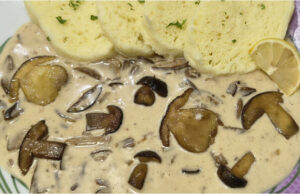
- The ideal side dish: This mustard classic is unbeatable with steamed rice, bread or potato dumplings, or with boiled pasta, which soaks up the sauce beautifully.