
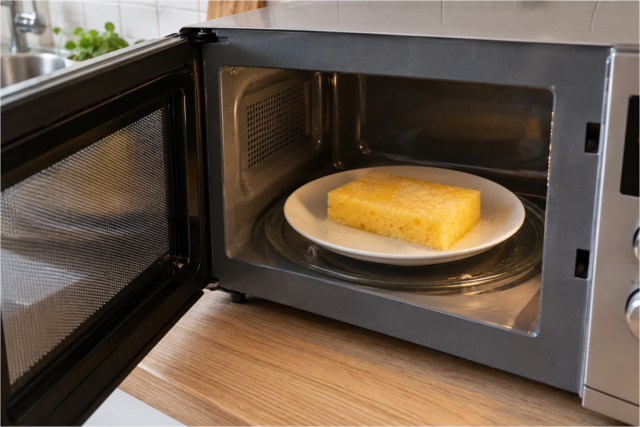
A dish sponge may look intact, yet still give off an unpleasant odor. A popular trick suggests heating it for a minute in the microwave. While heat can reduce the number of microorganisms, it won’t turn an old sponge into a new one. We’ll advise you on what really works for sponge maintenance and when it’s better to reach for a fresh one.
You wash the plates, rinse the cutlery, and suddenly notice a musty smell. The source may not be the drain or the trash can. The problem could be the sponge you’re holding. Its pores trap water and tiny food particles, creating an environment where microorganisms thrive.
Will a Minute in the Microwave Help? Only With an Important Warning
The microwave trick is based on real science. In a 2007 laboratory test by the American USDA research center, heating sponges for one minute led to a significant reduction in bacteria. However, this doesn’t guarantee the same results for every sponge at home.
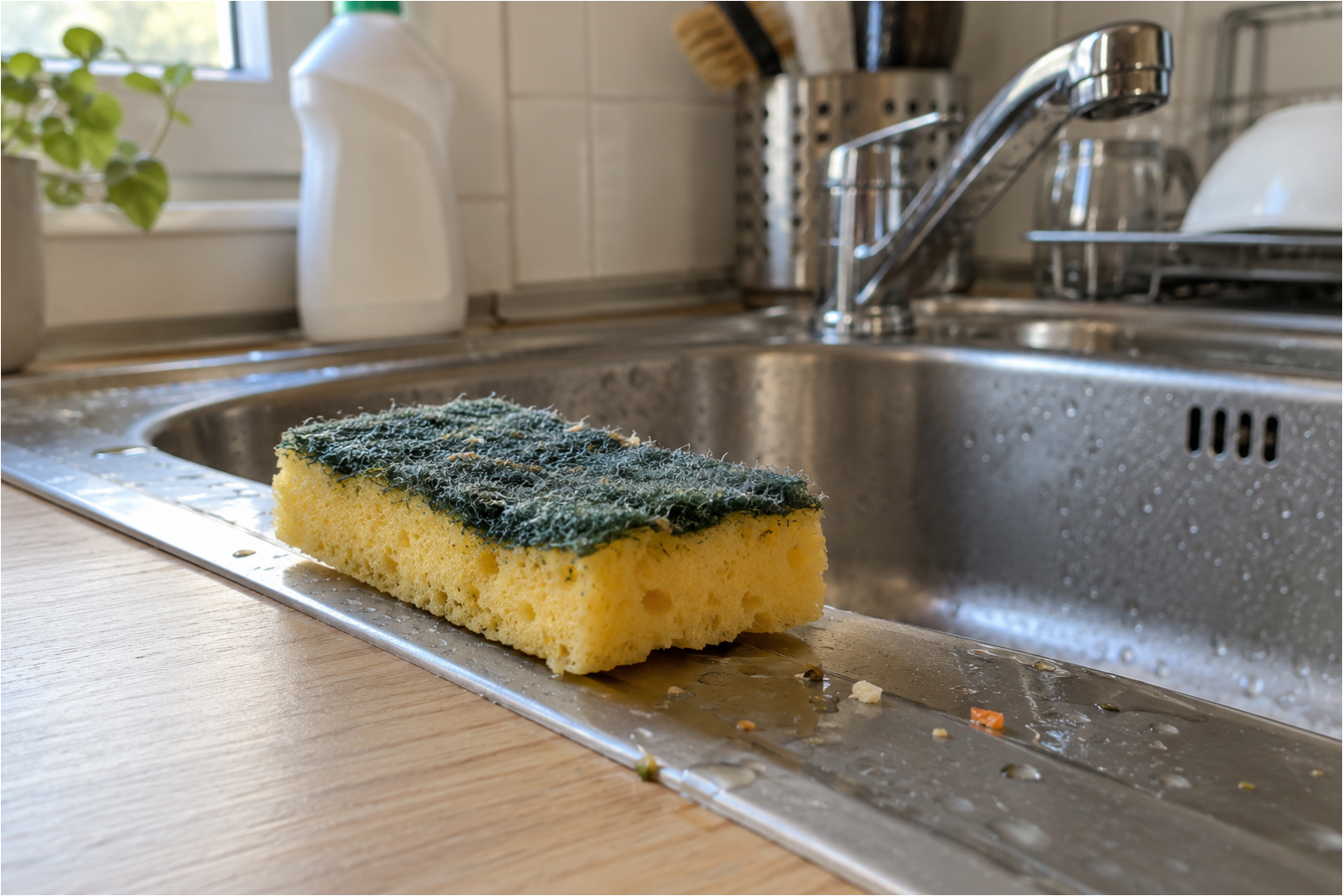
The American Food Safety and Inspection Service (FSIS) warns that microwaving or boiling can reduce bacterial load, but alone is not enough to prevent the transfer of microorganisms to hands, surfaces, or food. Don’t rely on one minute of microwaving as your entire kitchen hygiene strategy.
Dry or Metal Sponges Don’t Belong in the Microwave
Before you try this method, check the instructions for both your sponge and your appliance. The absence of metal doesn’t automatically mean the product is microwave-safe. If you can’t verify suitability, choose another cleaning method or replace the sponge.
- A dry or insufficiently wet sponge can catch fire when heated.
- Sponges with metal fibers, steel wool, or metal scrubbing layers should never go in the microwave.
- Heated material and the water inside can cause burns. Let the sponge cool down after microwaving.
A Sponge Without Odor Isn’t Necessarily Hygienically Clean
A bad smell is a good reason to replace a sponge. But the opposite isn’t true: if a sponge doesn’t smell musty, that doesn’t prove it’s safe. Research from the German BfR institute showed that harmful bacteria can multiply even without obvious odor or visible dirt.
Four Habits Worth Following After Every Wash
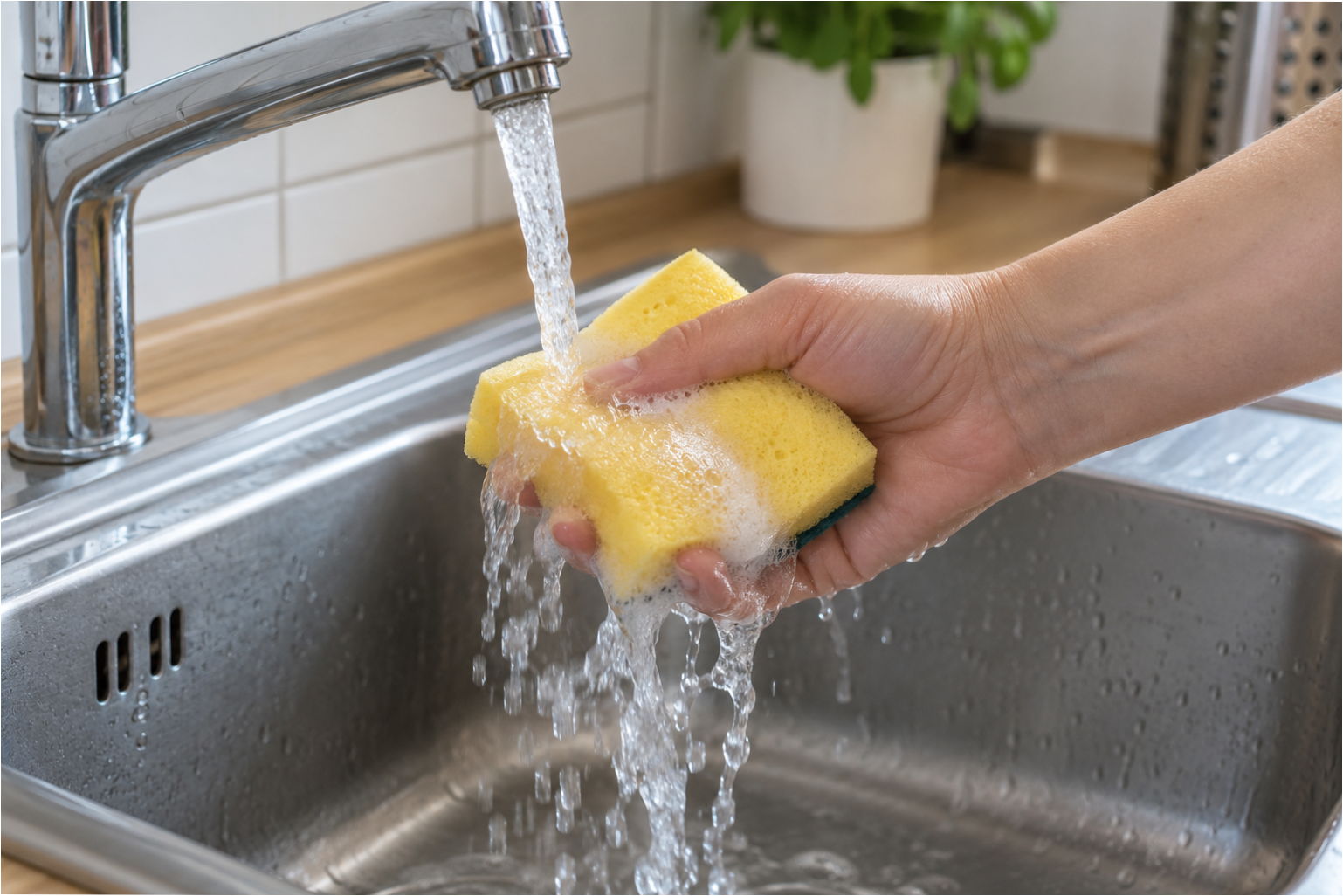
- Rinse out food residues. Rinse the sponge under running water to remove suds and visible dirt.
- Squeeze it out thoroughly. Don’t leave it soaked all day.
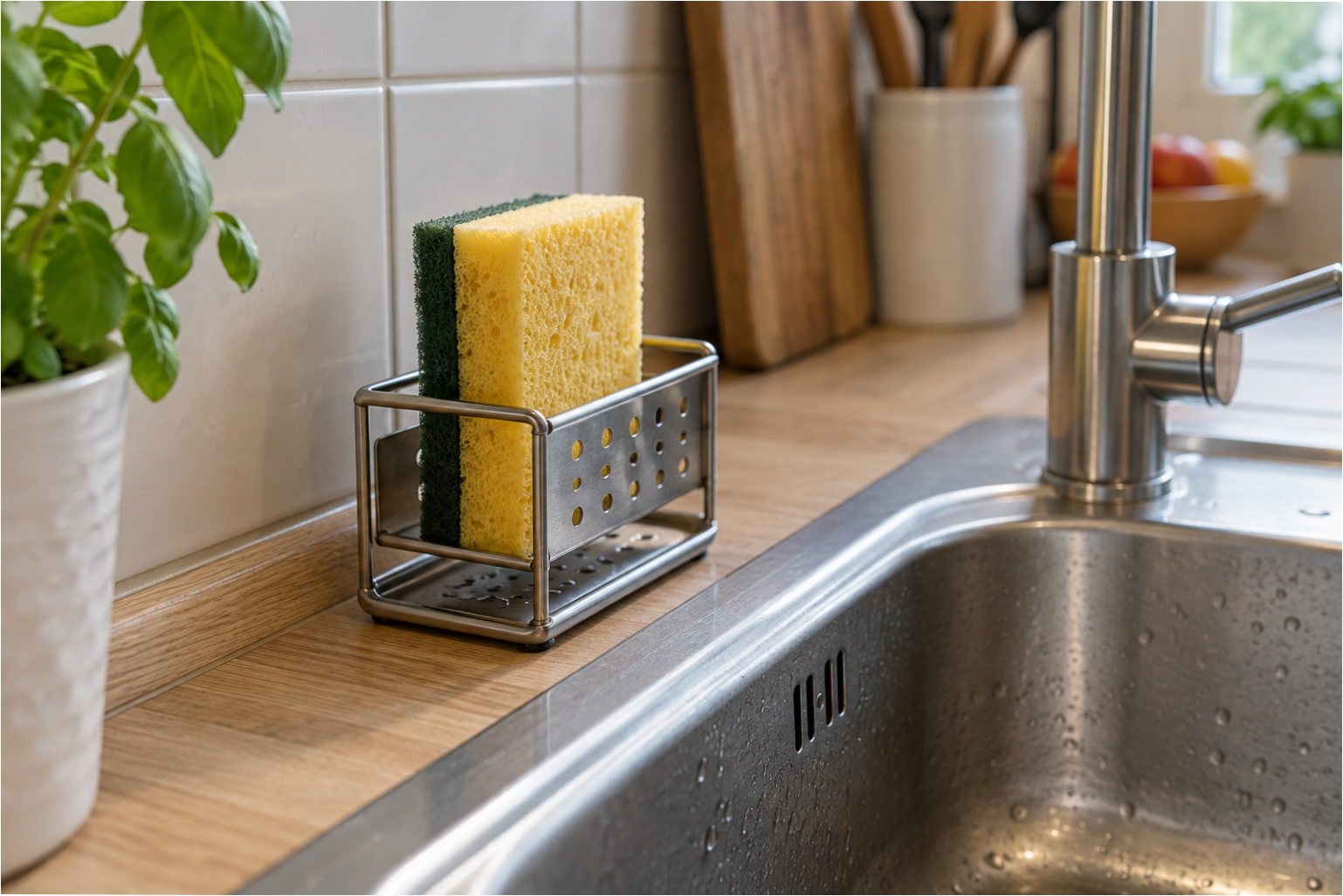
- Store it in a well-ventilated place. Use a holder with drainage so it doesn’t sit in water.
- Keep dishwashing separate from surface cleaning. Use a different tool for countertops and the sink.
Rinsing and drying are regular maintenance, not disinfection. Don’t forget to clean the holder as well: remove standing water and any buildup.
When to Replace the Sponge and Stop Trying to Save It
Replace it if it smells, feels slimy, has visible mold, or is falling apart. Don’t try to mask these signs with scented dish soap. BfR also recommends discarding the sponge after cleaning surfaces that have come into contact with raw meat.
Don’t wait for visible damage. Authors of a study in Scientific Reports suggested regular replacement, for example once a week. Take this as a practical reminder, not a guaranteed safe usage period. If the sponge is dirty or smells, replace it sooner.
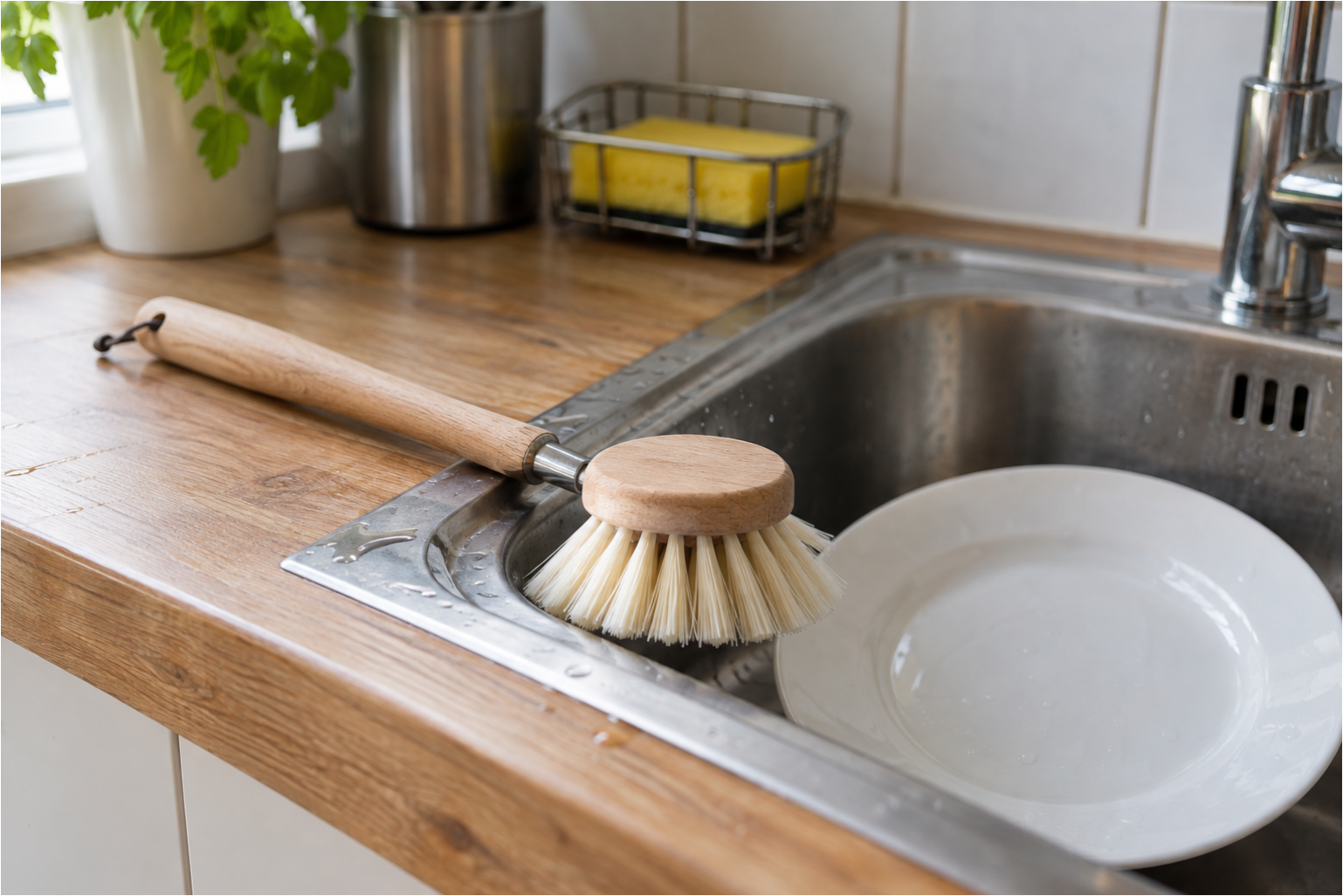
Try a Dish Brush Instead
If frequent replacements bother you, a dish brush might be more practical. According to BfR, it dries faster and studies have shown it harbors fewer bacteria than sponges. Clean the brush regularly according to the manufacturer’s instructions.
Dobrou chuť!