

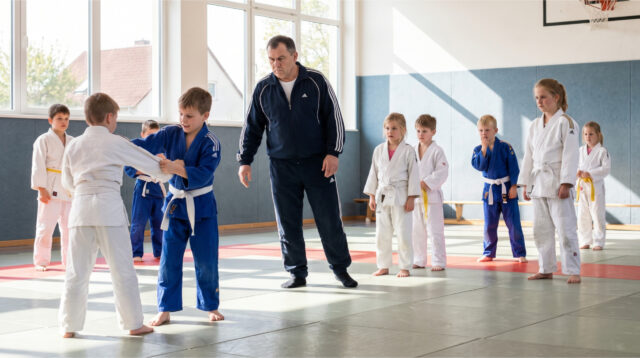
Children’s sports clubs should have one main goal – to build discipline, healthy self-esteem, respect for opponents, and a love of movement in boys and girls. Especially in martial arts like judo or karate, the coach’s personality plays an absolutely crucial role. Kids look up to them as unquestionable authorities, and parents entrust their most precious ones to them, believing they will raise resilient and fair individuals. But all it takes is for the club management to appoint someone with an unhealthy ego, and the gym suddenly becomes a place of psychological pressure and humiliation.
Our nine-year-old son had been attending training for his third year. He enjoyed it, loved the sport, and was making visible progress on the mat. Everything worked perfectly until the start of the new season, when the old coach retired and the club introduced a new addition – thirty-five-year-old Lukáš, a former league competitor who openly declared he was coming to the junior group to “enforce strict discipline and get results.”
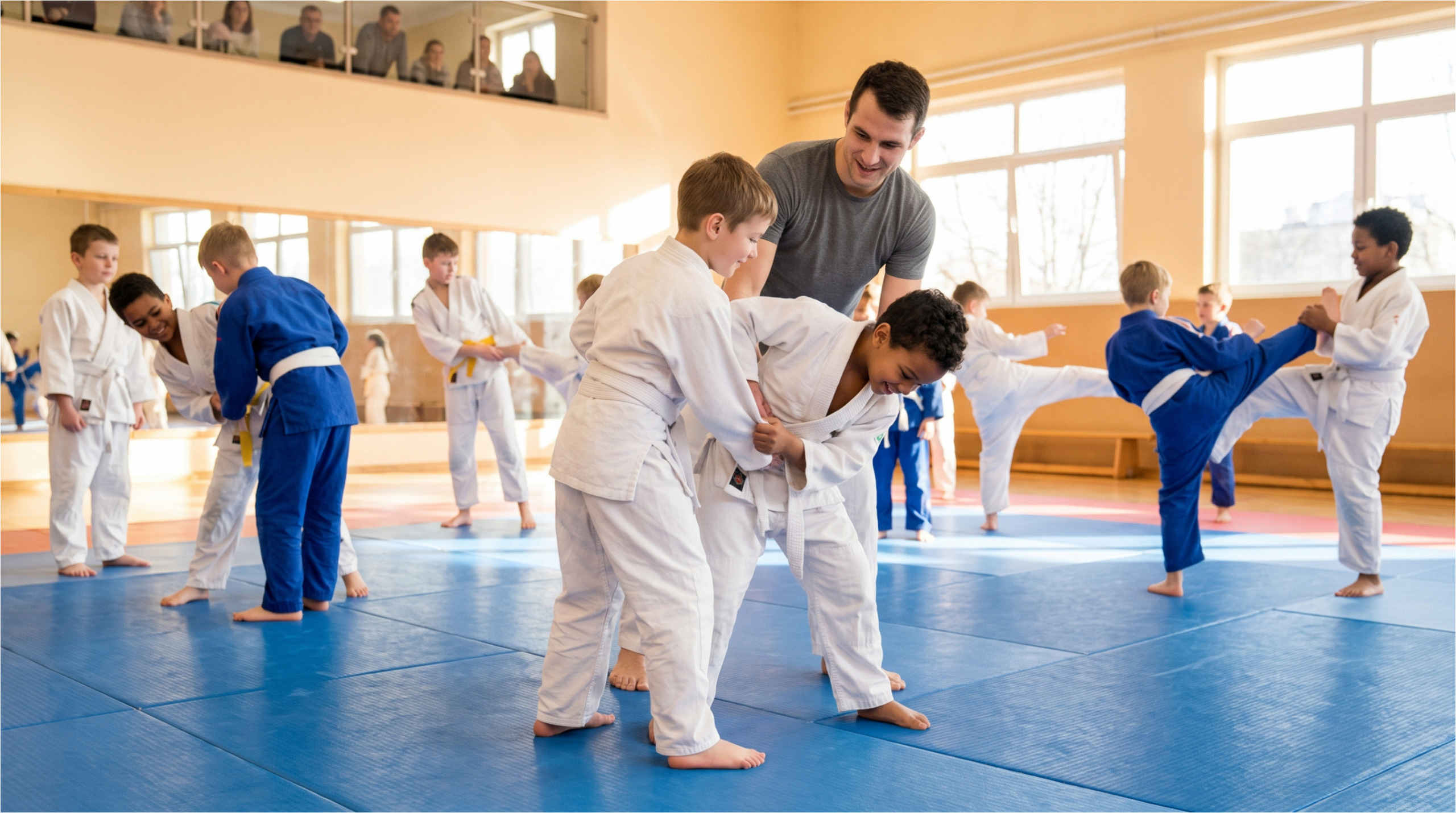
Instead of a professional and motivational approach, Lukáš brought nothing but boundless arrogance and bullying to the gym. He based his training sessions on publicly ridiculing those who didn’t master techniques on the first try. He had four favorites in the team – physically advanced boys he wanted to turn into regional champions at any cost. The rest of the kids were just inferior extras to him, on whom he took out his own frustrations in front of everyone.
When an eight-year-old, smaller boy grabbed his kimono wrong during a drill and fell before completing the throw, the coach stopped the entire session. He didn’t correct him or show him the right stance. Instead, he grabbed the boy by the collar in front of the line of thirty children and yelled: “Look at him! You look like a rag doll, you’re useless! What are you even doing here? Go play with dolls in the sandbox, this is a sport for men, not for losers!” The boy stood on the tatami with reddened eyes, his chin trembling as he tried to hold back tears, while the coach sent him to do fifty push-ups in the corner on the bare floor as punishment.
This terror repeated every week. Our son started coming home withdrawn, regularly complaining of stomachaches before training, and the once cheerful boy became a bundle of nerves, afraid to make any mistake for fear of becoming the coach’s next target.
Worst of all was the reaction of the other parents. Most of them sat on benches along the gym during training and saw everything with their own eyes. They heard the insults, witnessed the humiliation and inappropriate punishments. Yet everyone remained silent, lowered their eyes, and after practice, even tried to ingratiate themselves with the coach, offering him rides to tournaments. There was a complete, cowardly atmosphere of fear. Everyone knew very well that Lukáš decided who would be nominated for weekend competitions and who would get higher belts. Parents were afraid that if they spoke up, their son would immediately be dropped from the competition team and would never get a chance on the mat again. So they silently tolerated the bullying of both other people’s and their own children in exchange for the illusion of medal success.

The last straw came at a Thursday open training session. During a falling drill, one of the newcomers slapped his hand incorrectly and hurt his shoulder. He doubled over in pain. Coach Lukáš walked over, nudged him with his foot in front of the whole hall, and loudly said: “Stop whining, you faker, get up! If you want to lie around, go to your mom so she can give you a pacifier.”
At that moment, I couldn’t take it anymore. I stood up from the bench, stepped right to the edge of the tatami, and said firmly: “Stop this right now! Stop treating the kids like dirt and clean up your own act first.”
The gym fell completely silent. Lukáš marched over to me, chest puffed out and with an arrogant look: “You have no business being on the mat. I make the rules here. And if you don’t like my methods, pack up your boy and leave. He doesn’t have what it takes for competitions anyway, and I’m not taking him anywhere.”
I turned to the other parents on the benches. They sat there frozen, some staring at the floor, others pretending to read their phones. No one joined in. It was a textbook display of adult cowardice, where for a piece of tin from a district championship, they let a brute trample on their own children’s dignity.
I looked Lukáš straight in the eye: “My son won’t train under you for a single minute. But you won’t get away with this behavior.”
I took my son’s hand, we packed our things in the locker room, and left. But I didn’t want to let it go. That very evening, I wrote an official complaint to the chairman of the sports club and to the ethics committee of the national martial arts federation. In the letter, I described the vulgar language, humiliating punishments, and inappropriate physical contact in detail, and called on the management to review the coach’s license. In the end, two other parents, whose children had also been crying at home in the evenings, found the courage to join the complaint under the condition of anonymity.
Fortunately, the club management realized they were risking a huge scandal and loss of funding. Within two weeks, Lukáš was dismissed from the junior section without mercy, and training was taken over by an experienced coach from the regional center, who managed to establish natural discipline without a single insult.
We transferred our son to a neighboring club, where he quickly regained his lost joy and confidence. It was a huge life lesson for me about how easily a toxic environment can develop. Bullying and arrogance from people in power don’t grow from their own strength, but from the cowardice and silence of those around them. Anyone who tolerates the humiliation of children for the sake of worthless medals and recognition gives them the worst possible lesson in life: that you should obediently bow down to rudeness.
Dobrou chuť!