

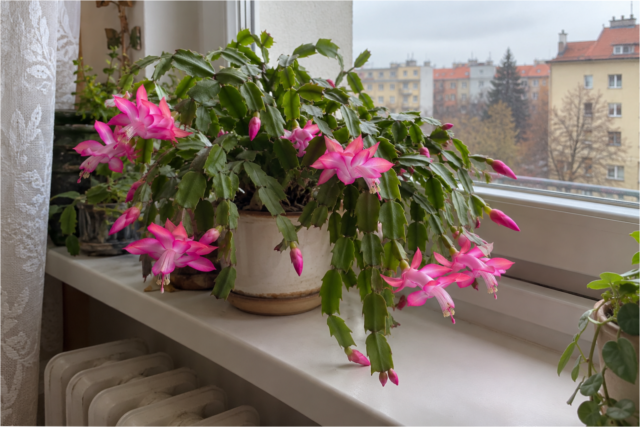
Your Christmas cactus can stay healthy and green all year, yet still refuse to bloom in winter. Late September and early October are the perfect time to change that. Several weeks of long nights, a cooler spot, and less frequent watering will help it form buds. We’ll advise you on what steps to take and how to prevent the buds from falling off.
During summer, it grows and looks happy, but when winter comes, there’s no sign of flowers. Good care throughout the year isn’t enough for the Christmas cactus. To set buds, it needs to sense shorter days and cooler temperatures in autumn.
In nature, the Christmas cactus (Schlumbergera) grows in Brazilian forests, often on trees. It’s not a desert cactus that thrives on long droughts. Indoors, it most often lacks long, uninterrupted nights and cooler temperatures to bloom.
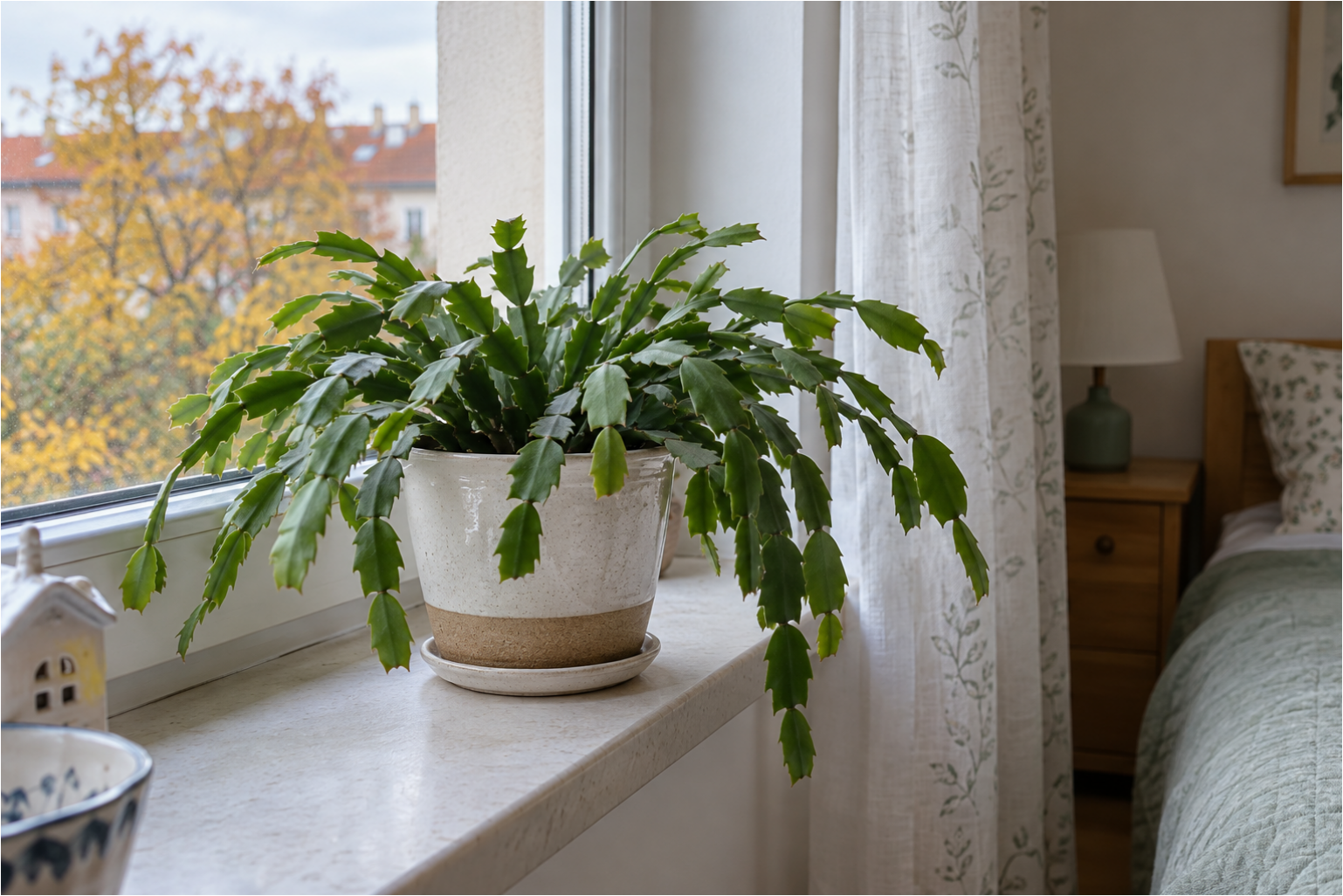
What to Do in Late September and October
1. Find a Spot Where It Stays Dark in the Evenings
For about six weeks, give your cactus roughly 14 hours of uninterrupted darkness each night. During the day, it should be in a bright spot, but out of direct midday sun.
A bright guest room or a cooler bedroom where you don’t turn on the lights after dark can work well. Be careful with lamps placed right next to the plant or streetlights shining in from outside.
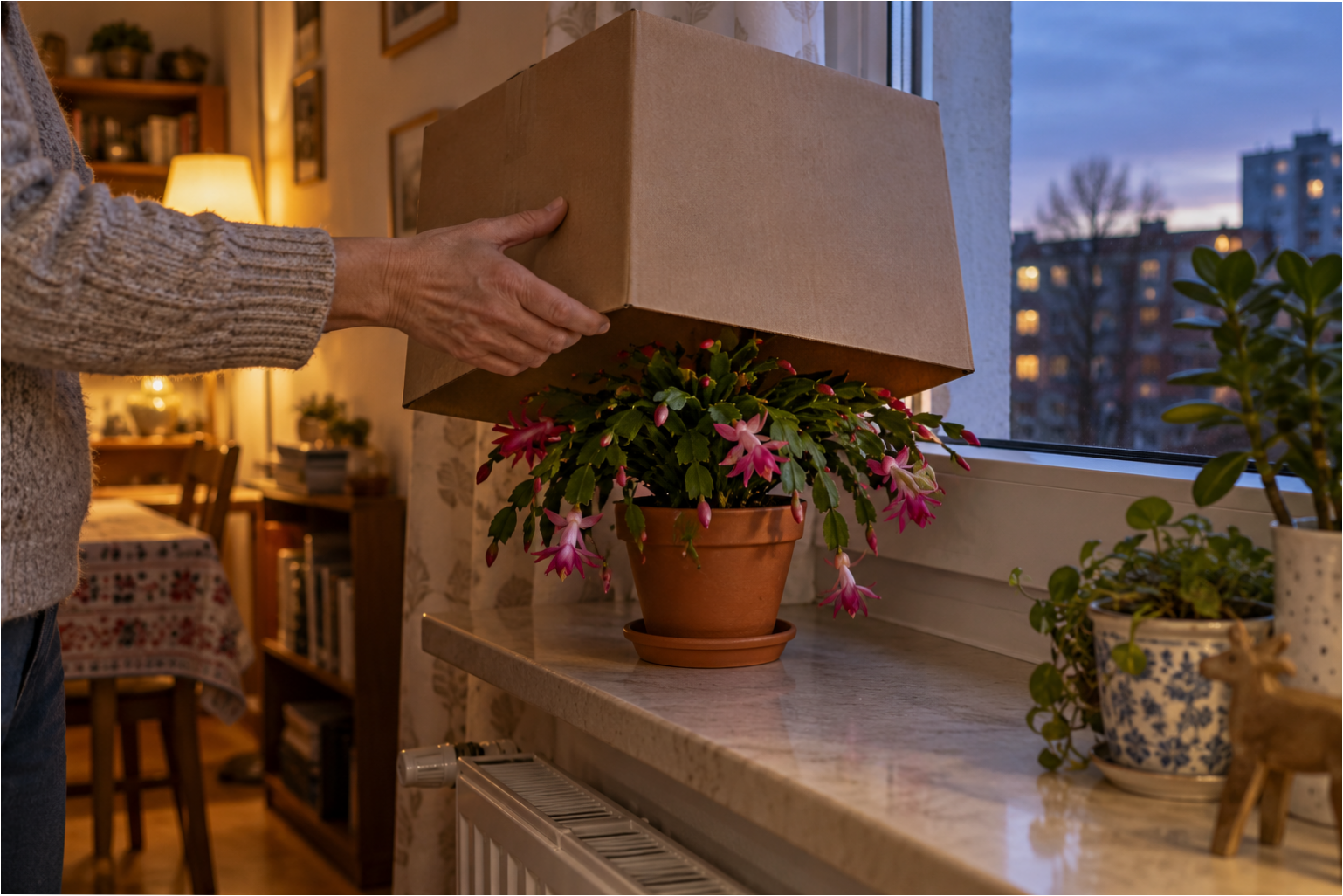
Don’t have such a room? You can cover the cactus every evening with an opaque cardboard box, for example, from 6 p.m. to 8 a.m. Remove it in the morning so the plant gets enough light during the day. Consistency is key: turning on lights in the evening can disrupt bud formation.
2. Give It Cooler Nights
When preparing to bloom, the cactus benefits from a cooler spot, ideally with nighttime temperatures around 12–16°C. It can be a bit warmer during the day. You don’t have to monitor every degree; what matters is that the cactus isn’t kept in an overheated room.
Don’t place it above a radiator or in a draft. If it was outside during summer, bring it indoors before temperatures drop below about 10°C. Frost would damage it.
3. Water Less, But Don’t Let It Dry Out Completely
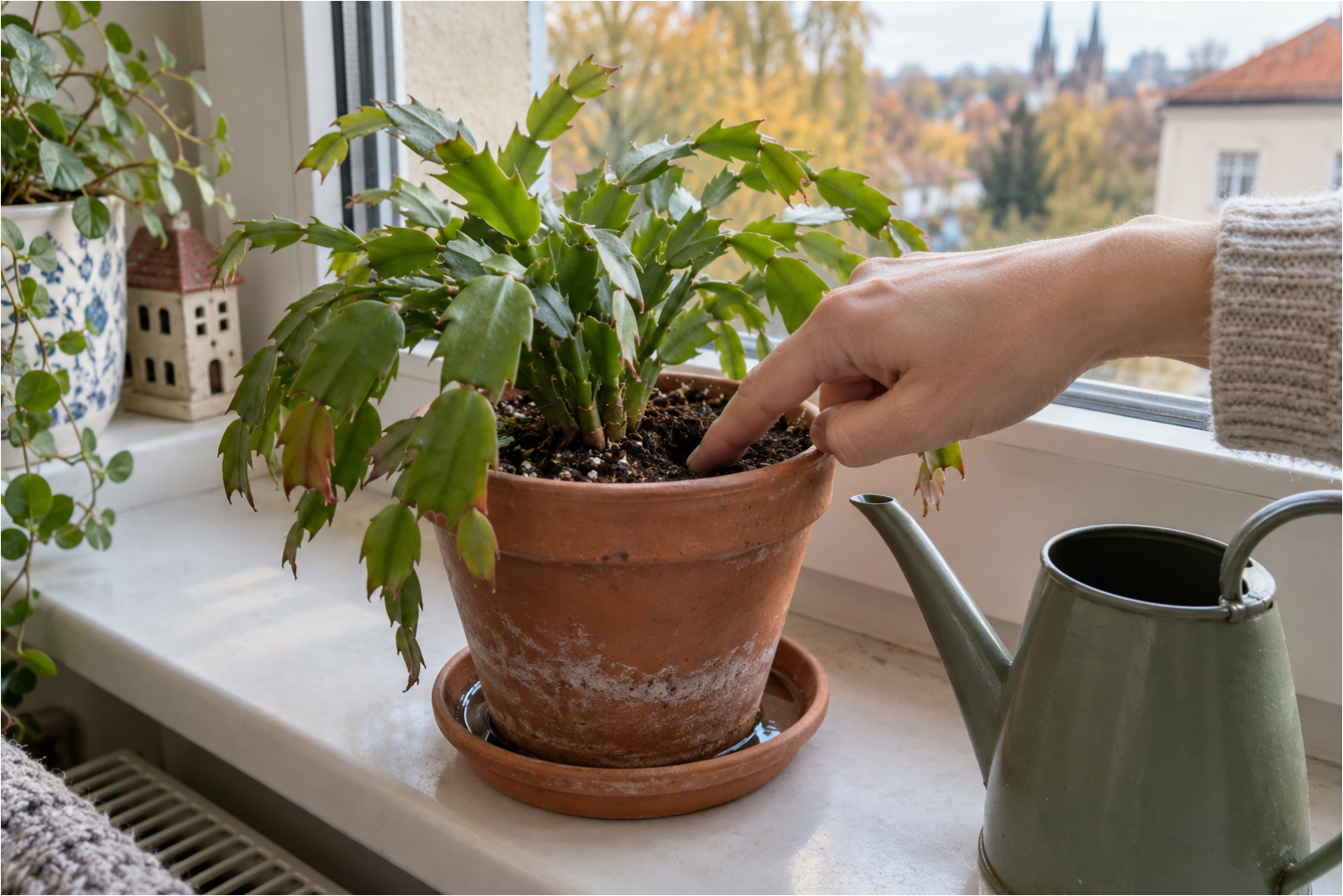
In autumn, reduce watering a bit. Let the top few centimeters of soil dry out before watering again. Pour out any water that collects in the saucer.
Letting the whole pot dry out completely isn’t good for it. Once it starts forming buds, water a bit more regularly again, but still avoid overwatering.
4. Save Regular Fertilizing for Spring and Summer
If you fertilized the cactus during its growth period, you can stop by late September. Now, focus mainly on proper light, temperature, and watering. Resume regular fertilizing in spring, once the plant starts growing again after flowering.
When Will Buds and Flowers Appear?
| Period | What to Watch and Do |
|---|---|
| Late September and October | Give your cactus long nights, a cooler spot, and less frequent watering. |
| After a Few Weeks | Small buds may appear at the ends of the segments. |
| When Buds Form | Maintain steady conditions and water more regularly. |
| Late Autumn and Winter | The plant will bloom depending on its type and the conditions you provide. |
Blooming exactly at Christmas can’t be guaranteed. Some cacti bloom as early as November, others in December or even later.
Does Your Cactus Already Have Buds? Watch Out for Sudden Changes
At this stage, consistent care is most important. Buds may drop if the plant is in a draft, near a heater, if the soil dries out too much, or if it stays too wet.
Also, don’t keep moving the cactus between a cool room and a warm living room. If you want to display it elsewhere, choose a spot with similar light and no drastic temperature changes. Wait to move it until the first flowers start to open.
Why Does One “Christmas” Cactus Bloom Earlier Than Another?
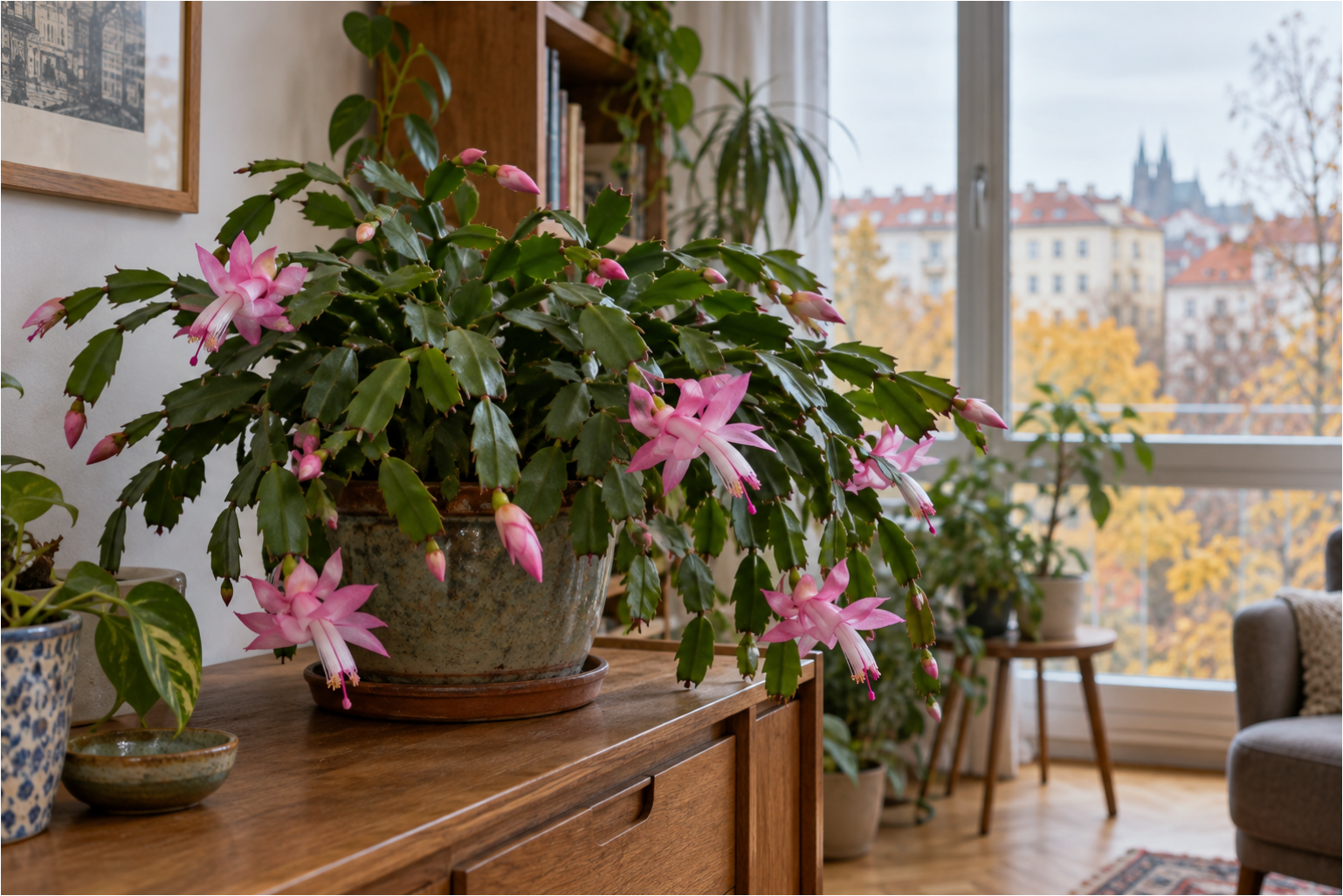
Several related plants and their hybrids are commonly sold under the same name. The shape of the stem segments can give you a clue:
- Pronounced pointed teeth along the edges usually indicate Schlumbergera truncata. It often blooms at the end of autumn and is very common in stores.
- Rounded, gently scalloped edges are typical of the true Christmas cactus Schlumbergera × buckleyi, which usually blooms later.
However, you can’t identify the plant for sure just by the blooming date. The variety, light, and temperature in your home also play a role. So if your “Christmas” cactus regularly blooms in November, there’s probably nothing wrong with it.
What to Do With the Cactus After Flowering
After flowering, let it rest for several weeks: give it a cooler spot and water less often. In spring, return to regular care.
Repot it when the roots have filled the pot or the soil has lost its structure. Choose a slightly larger container with drainage holes and an airy, well-draining substrate. The cactus is often happy even in a fairly tight pot.
Want to grow another one? In spring, you can take a cutting of two to three segments, let the cut end dry for a day or two, and then plant it in light, slightly moist soil.
Frequently Asked Questions
Can the Christmas cactus stay outside in summer?
Yes. It prefers a sheltered spot in partial shade. Bring it indoors before cold nights and frost arrive.
Is the Christmas cactus poisonous to cats and dogs?
The ASPCA lists it among plants that are not toxic to cats and dogs. However, eating the plant can still cause digestive issues, so it’s wise not to let pets nibble on it. If your pet feels unwell after eating it, contact your veterinarian.