
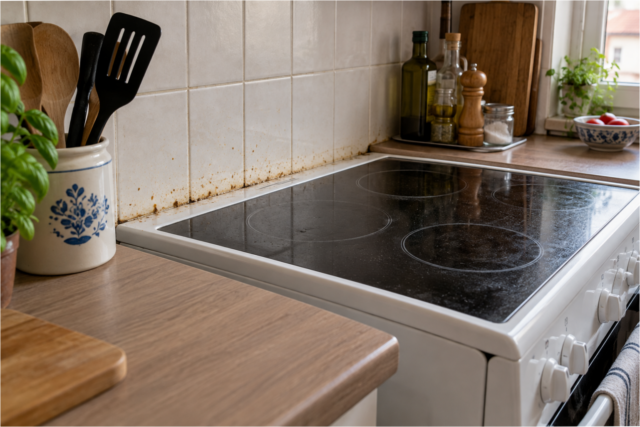
The stove may look sparkling clean at first glance, while crumbs, dust, and greasy splatters linger in the narrow gap behind it. Often, all you need to remove them is a crevice vacuum attachment and a cloth. However, the cleaning method depends on whether you have a freestanding stove or a built-in cooktop.
When cooking, tiny drops of fat can end up behind pots and pans. On the backsplash, you usually spot them right away. But in the gap between the stove and the countertop, the grease gradually mixes with dust and forms a sticky layer that a regular sponge can’t reach. Before you start moving the stove, try cleaning everything you can safely access first.
First, Shine a Light Into the Gap
Turn off all burners or hotplates and wait until the appliance has completely cooled down. Use a flashlight to look behind the top edge and into the side gaps. This will help you see whether the dirt is mainly on the backsplash, the side of the stove, or even on the floor behind it.
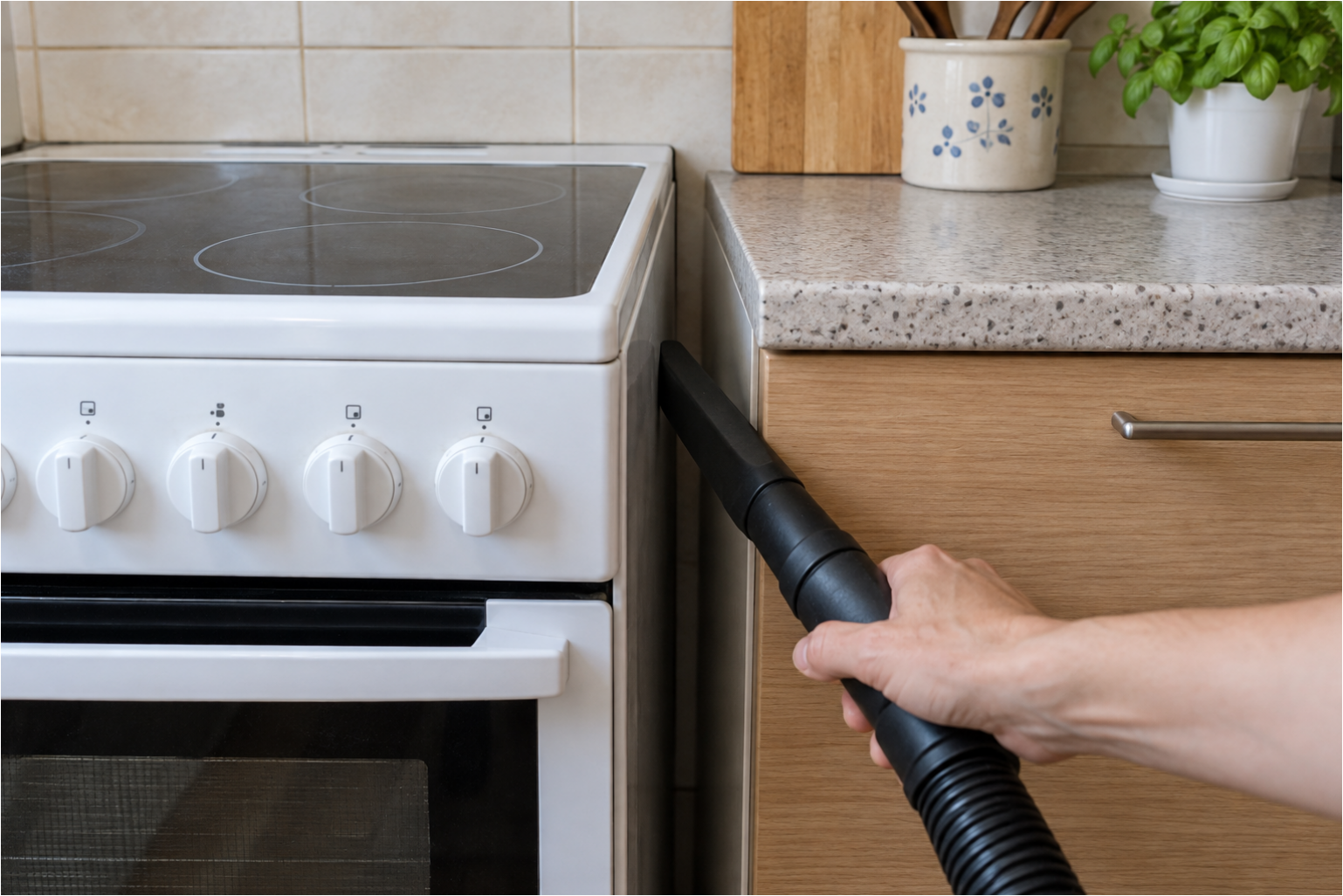
Prepare a vacuum cleaner with a crevice tool, a soft brush, two microfiber cloths, warm water, and a small amount of dish soap. For narrow spaces, a slim cleaning tool that can securely hold a cloth is also useful. It should have smooth edges to avoid scratching furniture or the appliance’s surface.
Work From Dry Dirt to Grease
- Vacuum up crumbs and dust. Slowly run the crevice tool along accessible edges. Use the soft brush to loosen stuck-on dirt, but don’t push it deeper behind the stove.
- Wipe away the greasy film. Lightly dampen a cloth with warm water and a bit of dish soap. Apply the cleaning solution to the cloth, not directly into the gap with a spray bottle. For stubborn stains, hold the cloth on the spot briefly, then gently wipe it clean.
- Reach into tight spots. Carefully slide the cloth, secured to a thin tool, along the wall or side of the stove. Keep checking where you’re reaching; don’t blindly run the tool over cables, outlets, or gas connections.
- Remove detergent residue and dry. Wipe accessible surfaces with a second, slightly damp cloth, and finally with a dry one. Water should not drip behind the appliance or into its controls.
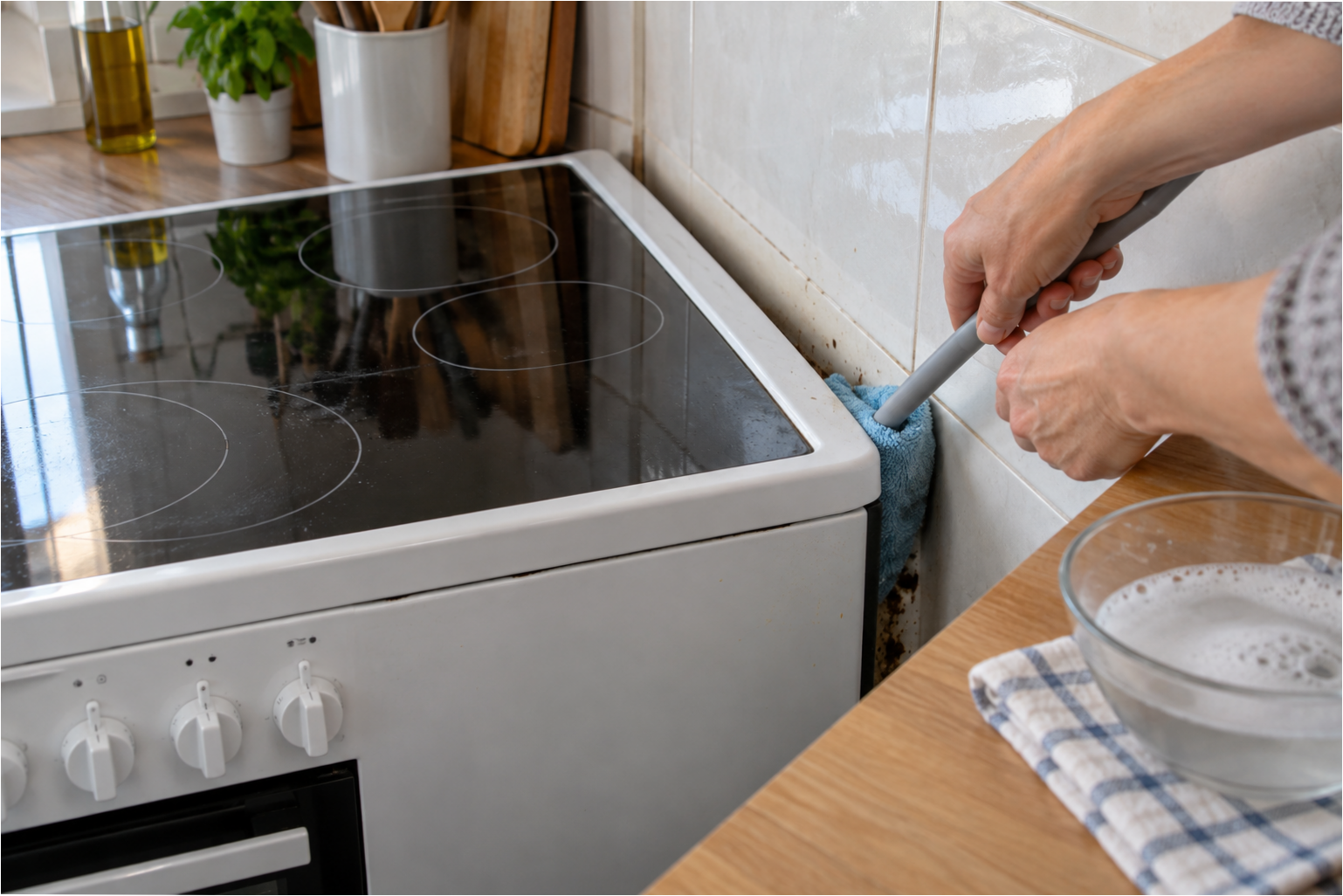
Depending on its surface, you can use a degreaser on the backsplash, but always follow the manufacturer’s instructions and test it on a discreet spot first. Be extra careful with painted walls, laminate, and seals: prolonged soaking or harsh cleaners can damage the surface. Avoid sharp knives, steel wool, and steam cleaners.
Do You Need to Move the Stove?
For built-in cooktops, do not attempt to remove them for cleaning. Clean the accessible backsplash and the surrounding countertop. If dirt has gotten under the appliance or you need to access its wiring, follow the manual and contact a service professional.
For freestanding stoves, it depends on the specific model and how it’s connected. Before moving it, read the manual and make sure you have clear access and that the connections won’t get stretched or caught when shifting the stove. Don’t pull on the oven door or handle. Never disconnect a gas line yourself just for cleaning. Some stoves also have an anti-tip bracket that must be properly reattached after moving the appliance. If you’re unsure, just clean the areas you can reach and ask a professional to help with moving it.
How to Prevent Grease From Coming Back Quickly
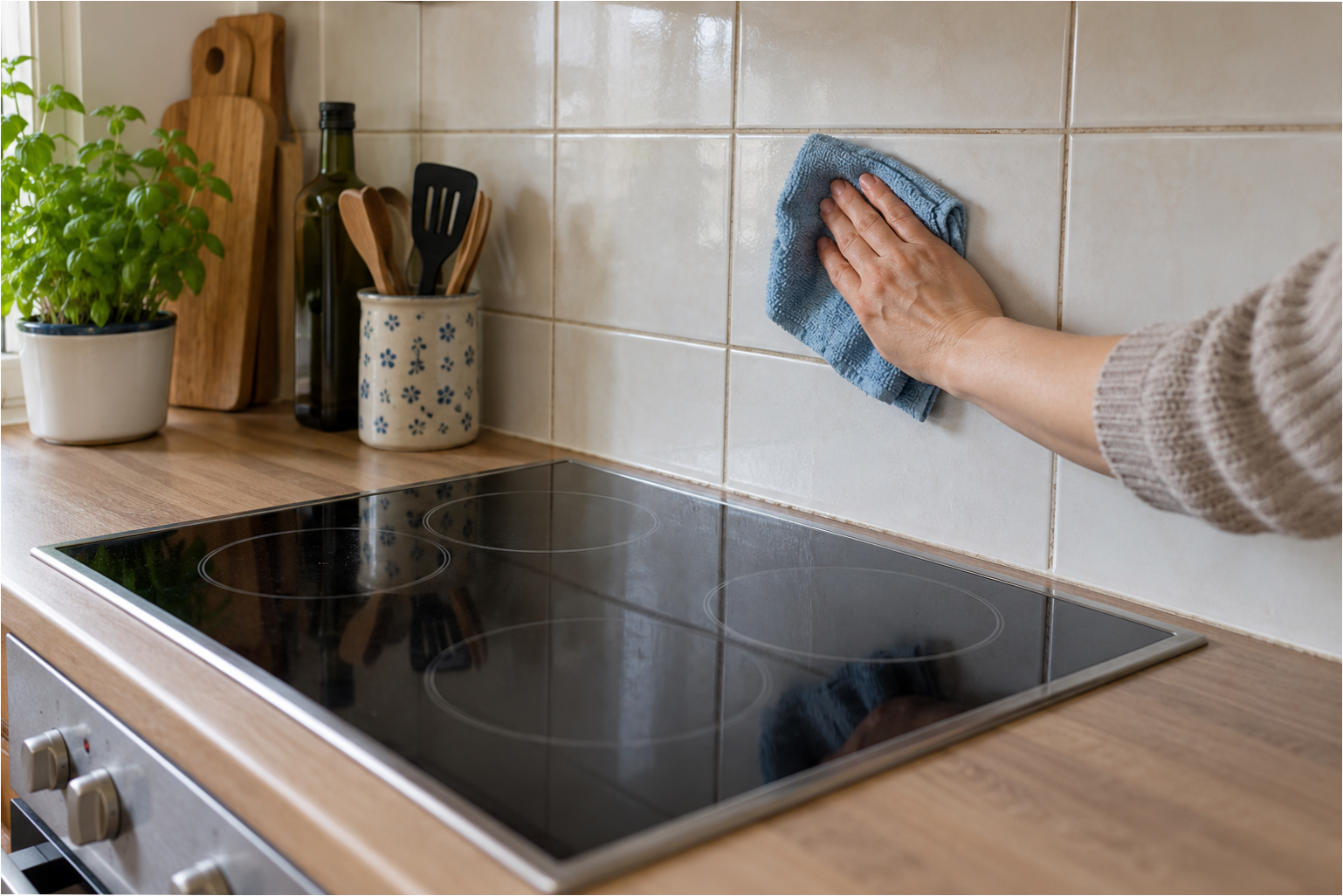
After frying, wipe away fresh splatters from the backsplash and the edge behind the cooktop as soon as everything has cooled down. When cooking, use the range hood and, depending on the dish, a lid as well. Occasionally check the gap with a flashlight: it’s much easier to remove a thin layer of grease than an old buildup mixed with dust.
The most important thing is to follow a simple order: first vacuum up dry dirt, then gently degrease accessible surfaces, and finally dry them. There’s no need to risk damaging the stove’s connections just to clean the floor behind it.
Dobrou chuť!