
The range hood hums as usual while cooking, yet steam spreads throughout the kitchen. Before you start suspecting a motor malfunction, take a look at the filter above the cooktop. This is where grease from cooking collects, and after prolonged use, it can restrict airflow.
How to Recognize a Clogged Grease Filter?
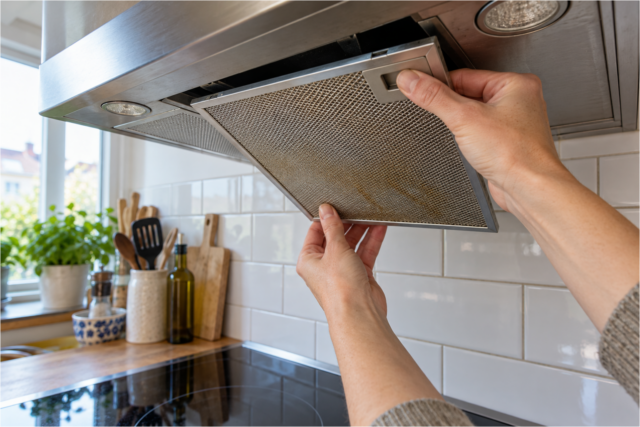
The most reliable way is to remove the filter and inspect it. Don’t postpone cleaning if:
- the metal mesh feels sticky to the touch or you can see layers of grease on it,
- greasy drops are forming on the underside of the hood,
- steam lingers more than usual even though you use the same extraction level as before,
- the hood sounds different or noisier than usual during operation,
- the maintenance indicator light for the filter is on.
Weaker extraction alone doesn’t always mean the filter is to blame. However, checking it is a simple first step. If grease covers the entire mesh, clean it even if the hood still seems to be working.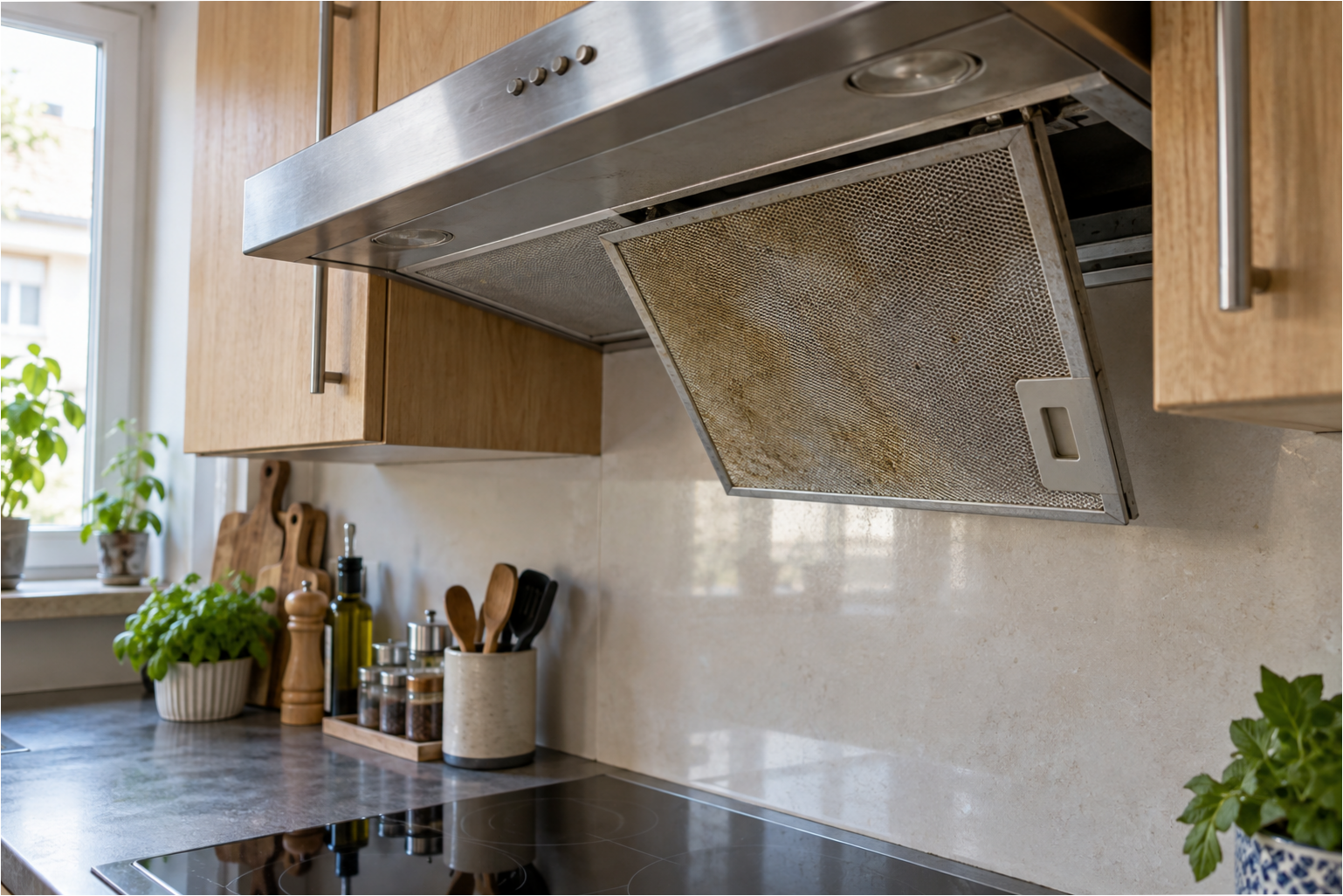
How to Clean a Metal Filter by Hand
- Turn off the hood and wait for it to cool down. Check your model’s manual for the correct way to remove the filter.
- Support the filter with your other hand as you release it. Try to keep it horizontal so accumulated grease doesn’t drip onto the cooktop.
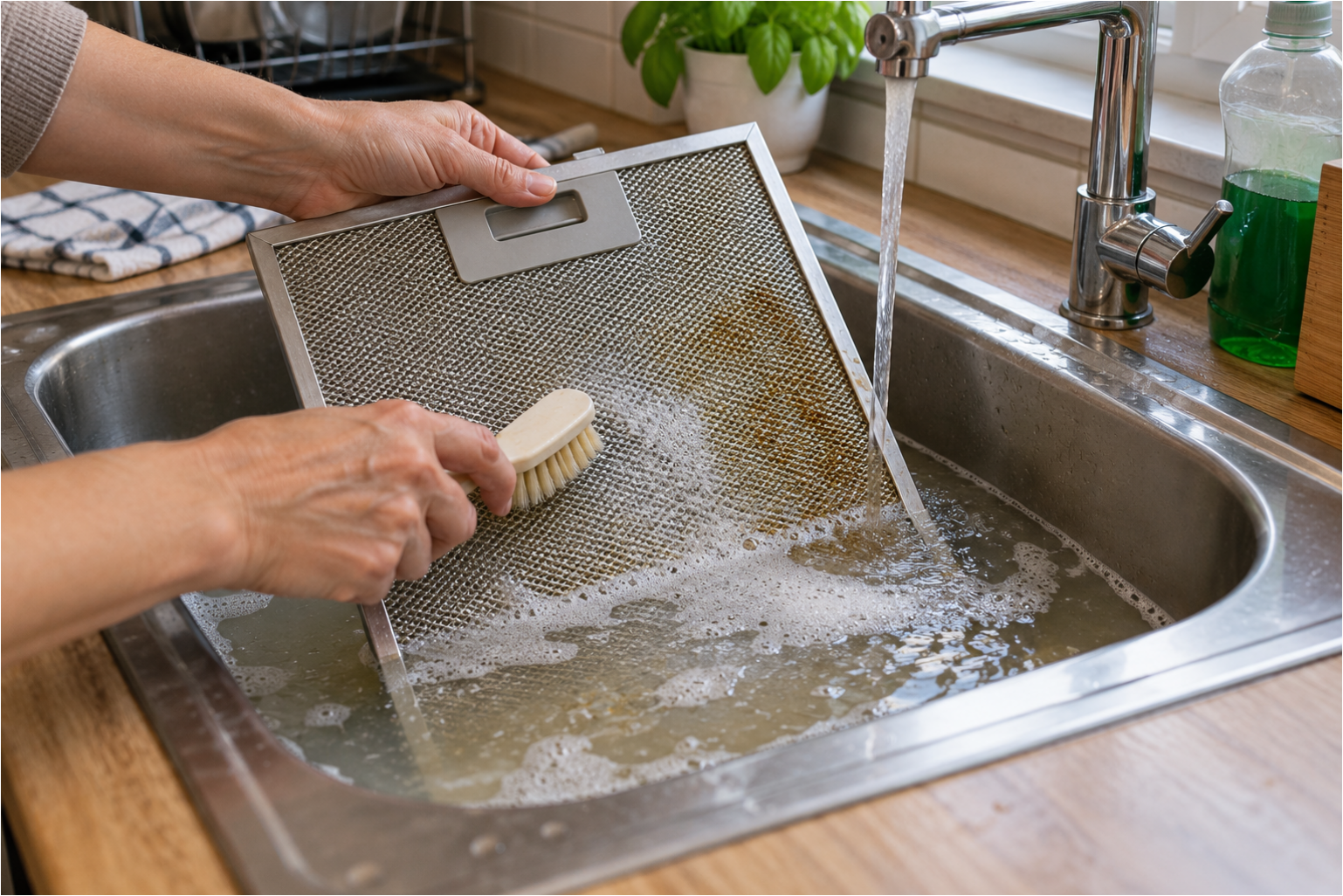
- Place it in warm water with dishwashing liquid. Let the grease loosen and gently clean the mesh with a soft brush. Don’t use aggressive cleaners with acids or strong alkalis unless specifically recommended by the manufacturer.
- Rinse the filter thoroughly and let it dry. Wipe the accessible parts of the holder with a damp cloth, as grease collects there too.
- Return the dry filter and check the latch. Never use the hood without the grease filter properly in place.
Can a Metal Filter Go in the Dishwasher?
For many range hoods, yes, but always follow your appliance’s manual. Manufacturers also differ in recommended program temperatures. If the filter is very greasy, wash it separately from dishes, especially glassware and delicate items.
After washing, the metal filter may change color slightly. If the manufacturer allows dishwasher cleaning, this discoloration usually doesn’t mean it’s no longer functional. What matters is that it’s not damaged or deformed and can be reattached properly.
How Often Should You Check the Filter?
As a simple home reminder, set a monthly check. If you fry food often, you may need to clean the filter sooner. The exact interval depends on the manual and how often and what you cook: some manufacturers recommend cleaning after about 30 hours of use, others suggest longer intervals.
Don’t always wait for a drop in performance. Regularly removing grease helps keep air flowing and limits fat buildup inside the hood.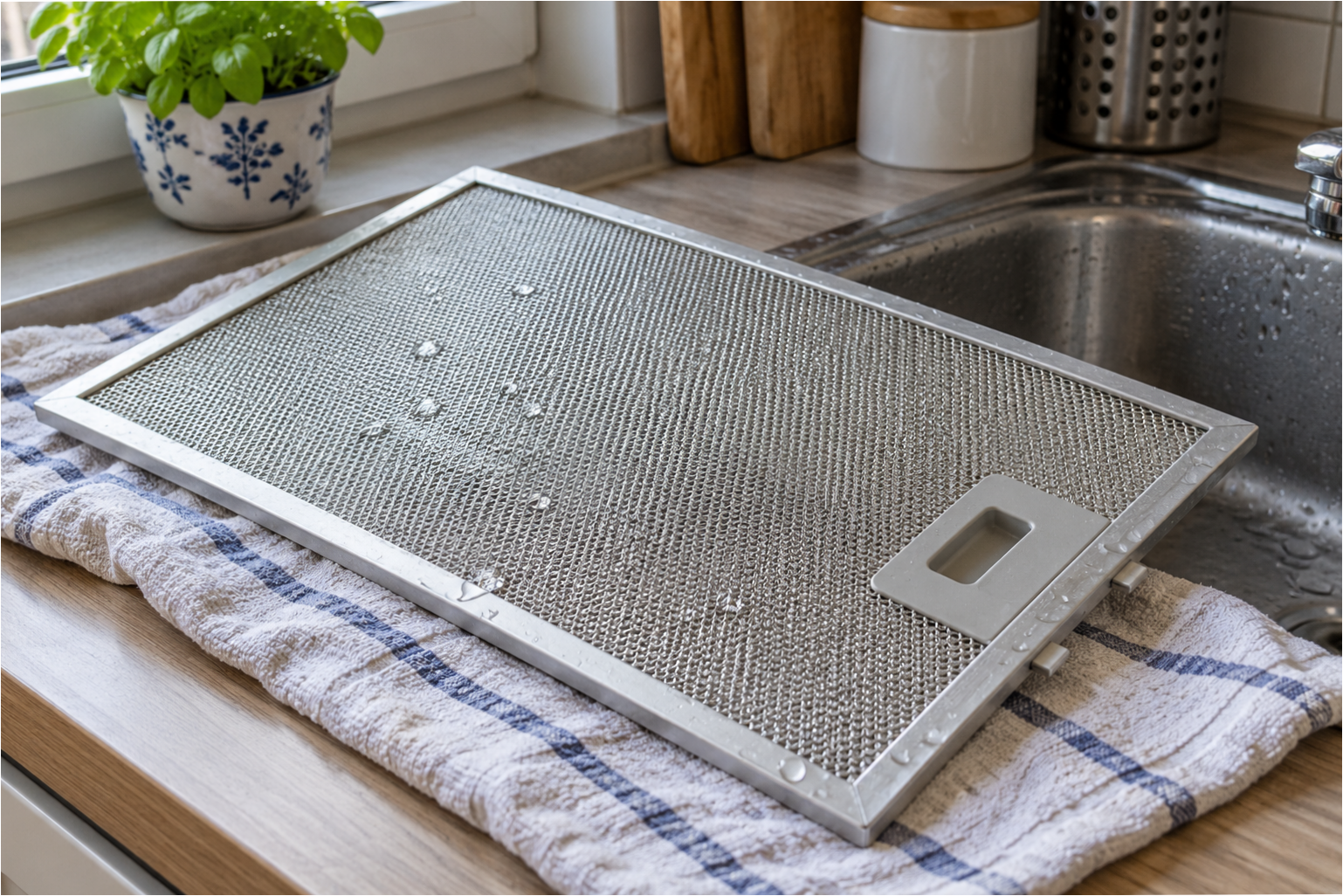
Note: The Carbon Filter Is Different
The visible metal mesh is the grease filter. If your hood returns air back into the kitchen, it may also have a carbon filter to absorb odors. Standard disposable carbon filters are not washable: once saturated, they need replacing. However, there are long-life filters that can be cleaned or regenerated—always follow the manufacturer’s instructions.
If, after cleaning the metal mesh, your hood extracts steam well but cooking smells remain in the room, check the carbon filter if you have a recirculating model.
What If Cleaning Didn’t Help?
Check that the filter is properly latched and not damaged. For hoods venting outside, the problem could also be in the ductwork; for recirculating models, a clogged carbon filter may be to blame. If performance doesn’t improve after basic maintenance, leave further disassembly of the motor or electrical parts to a service technician.
The simplest rule: If the filter is sticky, grease drips from it, or the hood has clearly started to extract steam less effectively, it’s time to remove and clean it. It takes less effort than dealing with grease all over your kitchen later.