You take out your winter duvet, spread it on the bed, and instead of the fresh scent of clean bedding, you notice a musty odor. The first reaction is often to throw it in the washing machine. But that might not be necessary—and with some fillings, careless washing can do more harm than good.
First, unfold and inspect the duvet. It’s important to check whether it’s completely dry, free of stains, and if the smell fades after airing. Based on this, you can decide what to do next.
When is airing enough?
Try airing as your first step if the duvet feels dry and clean to the touch, has no suspicious stains, and only carries a slight smell from long storage. With down fillings, you may also notice their natural scent, which often fades after unpacking.
Shake the duvet out thoroughly and drape it over a wide drying rack so it isn’t folded several times. On a dry day, you can put it outside in a sheltered spot. If it’s damp outside, leave it spread out indoors and air the room intensively for a short while. After a few hours, turn it over and check the middle of the filling as well.
Only leave it outside if it’s truly drying and airing out. Autumn fog, rain, or moist evening air could add more moisture to the duvet. If the smell disappears after airing and the filling is dry everywhere, you can put on the cover.

When is it time to wash?
Washing makes sense if the odor persists after thorough airing, there are common stains from use, or if you didn’t clean the duvet before storing it for summer. In such cases, don’t just mask the smell with fabric spray.
Before you start the washing machine, find the care label. This will tell you the correct washing temperature, whether tumble drying is allowed, and if the duvet can be washed at home at all. One temperature does not fit all—down, synthetic, and wool fillings each require different care.
How to wash a duvet without damaging the filling
- Check the seams and cover. If there’s a hole anywhere, repair it before washing so the filling doesn’t escape into the drum.
- Make sure the duvet fits loosely in the washing machine. It will get much heavier once soaked. If the drum is already packed when dry, use a larger machine or a professional laundry service.
- Choose the program and detergent according to the label. Don’t overdose the detergent; residue is hard to rinse out of bulky fillings.
- Start drying immediately after washing. Don’t leave the duvet wet in the machine or laundry basket for hours.
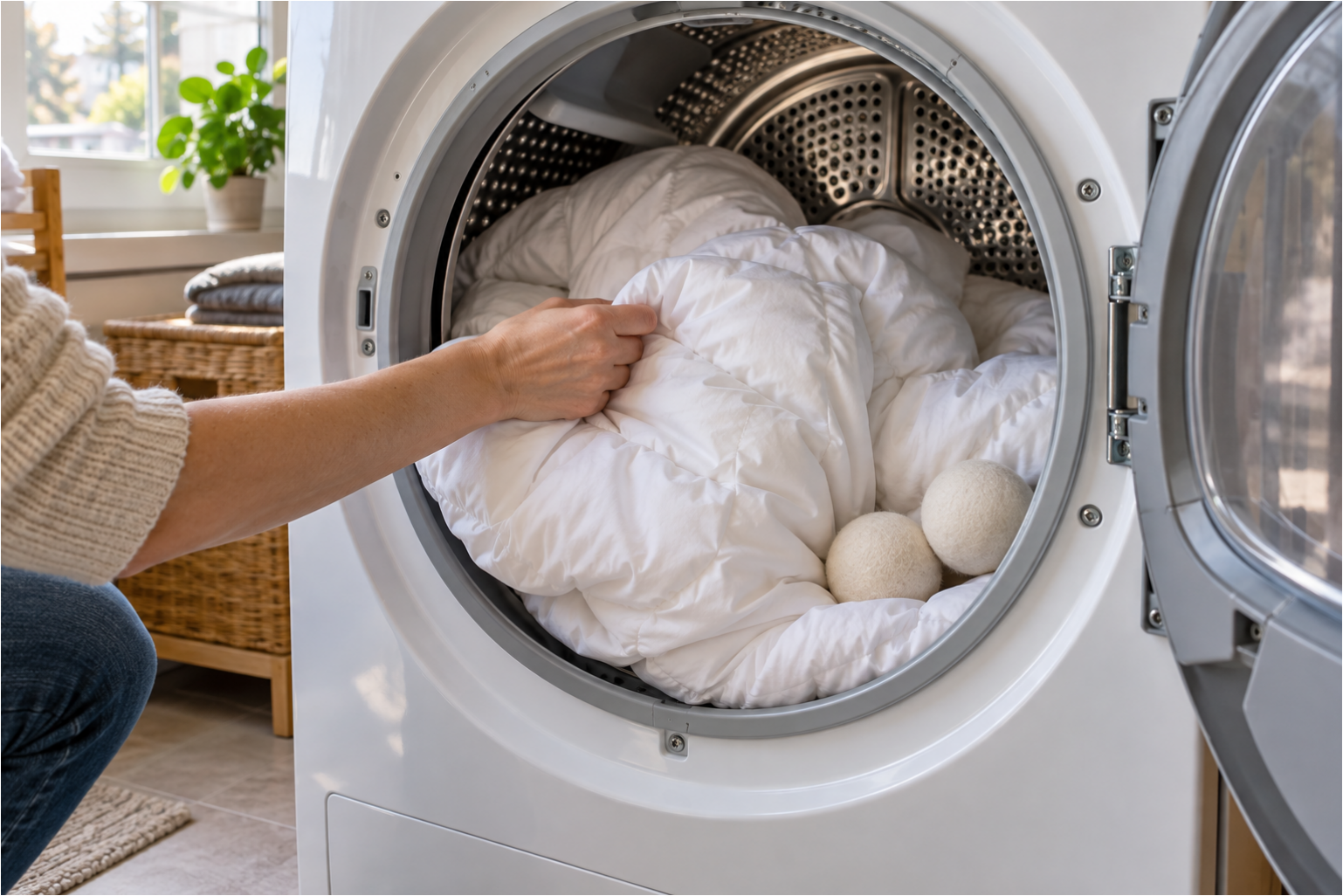
For duvets with hollow fiber filling, home washing is usually easier, and some can be air-dried. Down requires more attention: the inside can stay damp even if the surface feels dry. If the label allows tumble drying, use a spacious drum and the right program. Dryer balls can help fluff up the filling as it dries. Pause drying several times, shake out the duvet, and check the center.
Never put a duvet that’s still damp inside on the bed or back in the closet. If you can’t fully dry a bulky down duvet at home, it’s better to let a laundry service handle it. When drying indoors, also think about moisture removal; for more practical tips, see the article why laundry takes days to dry in autumn.

What if the smell is strong and you find stains?
If the duvet feels damp when you take it out, has stains resembling mold, or is strongly musty even after airing, don’t use it yet. Also check the bag, shelf, and closet wall where it was stored. The problem might not be just the duvet itself.
Visible mold in a bulky filling is a different issue than a typical closet smell. With porous materials, it may not be possible to reliably clean the affected area. For a valuable duvet, consult a professional cleaner; a heavily affected duvet may need to be replaced. If you’re also noticing moisture in your home, see why black spots keep appearing around windows.
How to prevent mustiness next time?
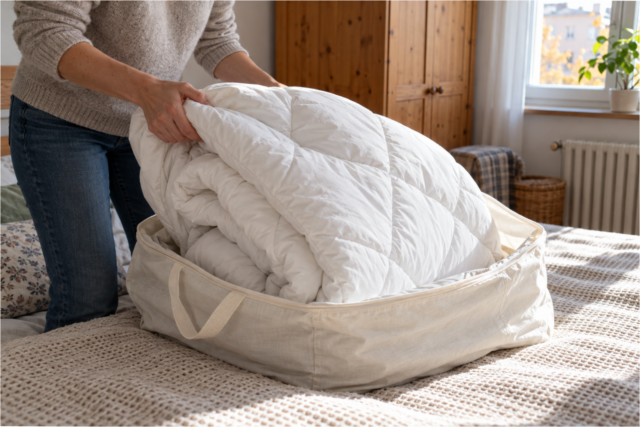
Only store your summer or winter duvet when it’s clean and completely dry. Choose a dry place and a cover that protects it from dust, but doesn’t keep it compressed and forgotten in a damp closet. Before the next season, unfold and air it out again.
Quick rule to finish: A dry and clean duvet with a slight storage smell deserves airing first. Persistent odor and common stains are a reason to check the label and wash the duvet. Moisture or suspicion of mold require more careful assessment.