
Homemade yeast watering is often recommended as a quick growth booster. It can be useful as an occasional supplement for healthy plants, but it should not replace good soil, compost, proper watering, or balanced nutrition. If a plant is yellowing, wilting, or not growing, it does not automatically mean that yeast will help.
The biggest mistake is using yeast repeatedly and for everything. Tomatoes, cucumbers, peppers, and flowers have different needs at various stages of the season. Sometimes they need to grow, sometimes to bloom and bear fruit, and sometimes they just need rest, warmth, and airy soil.
What Yeast Can Provide to Plants
Yeast contains substances that can support microbial activity in the soil and serve as a gentle care supplement. This is why people mainly use it when they want to encourage plants to grow. However, this does not mean that it is a complete fertilizer with everything the plant needs.
Yeast watering alone will not solve poor soil, lack of light, overwatering, cold, or damaged roots. If the basic conditions are not functioning, the homemade trick will have little or no effect.
When Yeast Watering Makes Sense
It can make sense for healthy plants that have already rooted well, are not overwatered, and need gentle support for growth. It is more suitable during the period when the plant is producing new leaves and shoots, not as the main solution for blooming and fruiting.
However, do not rush to use it on young plants after planting. If they are freshly transplanted, standing in cold soil, or do not yet have strong roots, they first need stable conditions. Only then does the nutrition make sense.
When to Avoid Using Yeast
Skip yeast if the soil is wet, heavy, and does not dry out for a long time. Roots in overwatered soil do not have enough air, and additional watering will worsen the problem. The plant may look wilted, but not due to a lack of nutrients.
Do not use yeast on plants that have suspicious spots, rot, damaged roots, or are stressed from cold or heat. In such cases, it is necessary to address the cause, not add another homemade mixture.
Note: Yeast is not a first aid for yellow leaves. First, check the water, soil, light, and pests.
How to Prepare Yeast Watering
If you want to try yeast, use a weaker solution and a small amount. Dissolve the yeast in water, let it activate briefly, and then dilute it. The watering should not be strong, thick, or smelly.
Do not prepare a large amount in advance. A mixture that stands for a long time in warmth can ferment, smell, and is not suitable for the garden bed or container. Use it fresh and pour it at the roots.
Water at the Roots, Not Over the Leaves
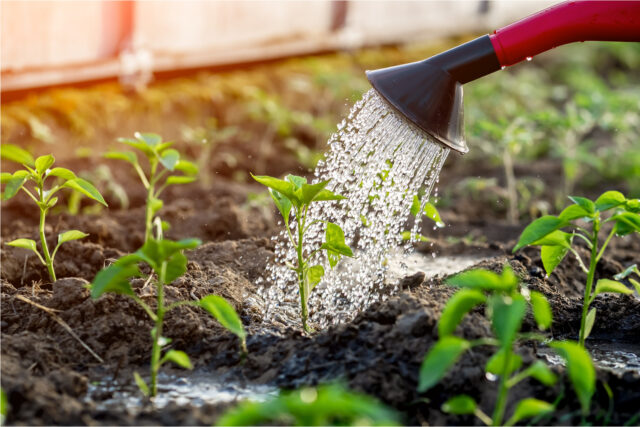
Do not pour yeast watering on the leaves, flowers, or fruits. Plants do not need it on the surface but in the soil at the roots. Wet leaves can also be more prone to problems, especially in a greenhouse, dense growth, or humid weather.
Be more cautious with containers and pots than with garden beds. A small volume of substrate can easily become overwatered, and any homemade watering acts more strongly in it.
Yeast for Tomatoes
Tomatoes can tolerate yeast watering as an occasional supplement if they are healthy, rooted, and growing in good conditions. However, it is not a solution for tomatoes that have a lot of leaves and few fruits. The problem there may be over-fertilization, shade, poor ventilation, or excess nitrogen.
If tomatoes are blooming but not setting fruit, first check the temperature, watering, pollination, and the condition of the plant. Yeast alone will not save the flowers.
Yeast for Cucumbers
Cucumbers like regular moisture and nutrition but do not tolerate fluctuations. If they are yellowing or wilting, the problem may be overwatering, drought, cold, or damaged roots. Therefore, do not automatically use yeast just because the leaves are not perfectly green.
For healthy cucumbers, a weak yeast watering can serve as an occasional growth support. However, if the soil holds water after rain or the plant wilts even in moist soil, first address the roots and watering.
Yeast for Peppers
Peppers are sensitive to overdoing it. If they are standing still after planting, it is often due to cold soil, lack of warmth, or overwatering. Strong yeast watering will not help in such a situation.
Use yeast for peppers only very cautiously and rather rarely. More sense often comes from compost, stable warmth, regular watering, and gentle nutrition. If you do use a homemade watering, choose a weaker dose and monitor the plant’s reaction.
Yeast for Geraniums and Balcony Flowers
With geraniums and balcony flowers, the biggest risk is overwatering the container and excessive care. Yeast can be an occasional supplement, but if geraniums are not blooming, it is usually necessary to first address light, dead flower removal, water drainage, and the type of fertilizer.
If geraniums have a lot of leaves and few flowers, additional growth support may not be a good idea. In such cases, more sunlight, moderate watering, and proper nutrition for blooming often help more.
Houseplants: Be Cautious Due to Substrate
Be very cautious with yeast for houseplants. A pot is a closed space where organic mixtures can easily manifest as odors, overwatering, or the presence of gnats. Yeast is not suitable for frequent or strong use.
If a houseplant is yellowing, first check the watering, light, root condition, and pot size. The problem is often overwatering, not a lack of nutrition.
Orchids Do Not Need Yeast
With orchids, I would rather skip yeast. Orchids grow in airy substrates and are sensitive to overwatering and organic residues around the roots. If they are not blooming, it is usually more important to ensure light, healthy roots, and proper watering by immersion.
Homemade organic mixtures can easily become a problem for orchids if they start to ferment in the substrate or get stuck between the roots. For these plants, it is better to stick to cautious and clean care.
Yeast Is Not a Substitute for Compost
Compost improves the soil in the long term. It adds organic matter, helps retain moisture, and supports soil life. In contrast, yeast is more of a short-term homemade supplement. It cannot replace a well-prepared garden bed.
If you have the option, prefer mature compost, mulch, and reasonable fertilization according to the type of plant. Use yeast only as a supplement, not as the primary nutrition for the garden.
The Most Common Mistake: Combining Yeast with Other Tricks
A big problem arises when people combine yeast, nettles, banana peels, eggshells, ash, and even regular fertilizer. The plants then receive too many different interventions, and you do not know what actually helped or harmed them.
Choose one method, use it sparingly, and monitor the results. With homemade fertilizers, it is not true that more is better. Often, it is exactly the opposite.
When Yeast May Harm Plants
- When the soil is overwatered.
- When the plant is standing in cold and not growing due to temperature.
- When the roots are damaged or rotting.
- When the mixture has been standing for a long time, smells, or ferments.
- When you use it too often.
- When you combine it with several other homemade fertilizers.
- When the plant has a lot of leaves and few flowers.
Quick Rule for Using Yeast
Use yeast only on a healthy plant that is not overwatered and has good conditions. Prepare a weak fresh watering, apply it at the roots, and do not use it too often. If you are unsure whether the plant needs nutrition, first check the soil and roots.
Be cautious with plants in the flowering and fruiting phase. Yeast is not a special fertilizer for flowers or fruits. If the plant needs balance, mature compost, mulch, stable watering, and fewer experiments may be better.
Yeast Can Help, But It Is Not for Every Situation
Yeast as plant nutrition can make sense if used sparingly, fresh, and on healthy plants. It works best as an occasional supplement, not as the main fertilizer. In overwatered soil, with weak roots, or with plants that are not blooming due to poor conditions, it will not perform miracles.
Before using yeast, ask yourself a simple question: is the plant really hungry, or is it dealing with water, light, cold, roots, or over-fertilization? When you identify the real cause, you will help it much more than with another homemade trick.
It can serve as an occasional homemade supplement, but it is not a complete fertilizer. It cannot replace compost, quality substrate, or balanced nutrition.
It can be used cautiously on healthy tomatoes, cucumbers, peppers, or some balcony plants. Always weakly, freshly, and at the roots.
Do not give it in overwatered soil, on weakened plants with damaged roots, to orchids, or to plants that have a lot of leaves but few flowers.
Only occasionally. Yeast should not be a regular weekly routine for the entire garden. Too frequent use can unnecessarily burden the soil and plants.
For healthy plants, it can be a gentle growth support. However, if tomatoes or cucumbers are yellowing, wilting, or producing few fruits, first check the watering, soil, light, and roots.