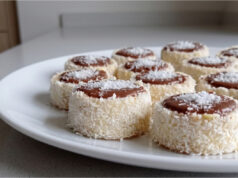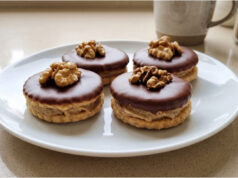

Did unexpected guests drop by, or are you simply craving something sweet but don’t want to spend two hours waiting for dough to rise? These quick pastries from no-rise dough are the perfect solution. They belong to the category of so-called “instant” pastries – you make the dough with a classic yeast starter, but instead of letting it rise in a warm place, you immediately shape and bake it.
The genius of this recipe lies in the combination of two types of fat: real butter and pork lard. While butter gives the pastries that beloved milky aroma, lard ensures the dough is incredibly tender, delicate, and literally melts in your mouth. And when you combine quark, plum jam, and rum butter after baking, you get a dessert that will disappear from the tray in no time. Let’s get started!
| Parameter | Value |
|---|---|
| Preparation Time | 20 minutes (no dough rising) |
| Baking Time | 15–20 minutes (until golden) at 180 °C |
| Difficulty | Very easy |
| Main Flavors | Tender lard dough, vanilla quark, plum jam, and rum |
Ingredients You’ll Need
For the tender no-rise dough:
- 500 g semi-coarse flour: Sifted to lighten the dough.
- 1 cube fresh yeast: (About 42 g, ¾ of a cube is enough too).
- 125 ml lukewarm milk: To activate the yeast.
- 3 egg yolks: For richness and beautiful color.
- 100 g granulated sugar: To sweeten the base.
- 125 g softened butter: For a delicate milky flavor.
- 125 g pork lard: The key to incredible tenderness and moistness.
- A pinch of salt: Essential in any sweet baking.
For the rich filling and topping:
- Quark cream: 1 soft quark (ideally in a block), 1 egg yolk, sugar to taste, grated lemon zest, and a handful of raisins soaked in good-quality rum.
- Plum jam: For a decorative drop in the center of each pastry.
- Crispy streusel: Semi-coarse flour, powdered sugar, and cold butter rubbed together with your fingers.
For the final brushing:
- Melted butter mixed with a generous splash of rum, brushed on immediately after baking.
Step-by-Step Preparation
1. Preparing a Rich Yeast Starter
Pour 125 ml of lukewarm milk into a small bowl or cup. Add a teaspoon of granulated sugar, one tablespoon of semi-coarse flour, and crumble in the fresh yeast. Stir gently and let it sit in a warm place for about 10 minutes. Once a thick, foamy yeast cap forms on the surface, your starter is ready.
2. Quickly Making the No-Rise Dough
Sift the remaining semi-coarse flour into a large bowl, add the granulated sugar, pinch of salt, three egg yolks, and both types of fat – softened butter and lard. Pour in the risen yeast starter. Using your hands or a stand mixer, work the dough until it’s smooth, glossy, and perfectly non-sticky. The magic of this recipe is that you don’t set the bowl aside to rise, but start working with the dough on the counter right away.
3. Shaping and Double Filling
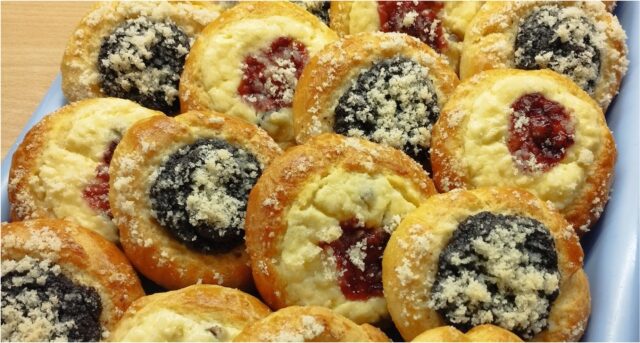
Take small pieces of the finished dough and roll them into neat balls in your hands. Arrange the balls on a baking tray lined with parchment paper, leaving a little space between them. Using your fingers or the bottom of a small glass, make a deep indentation in the center of each ball. Fill the hollow generously with the quark mixture and raisins. For the perfect look and a flavor contrast, add a small spoonful of plum jam in the middle of the quark mound. Generously sprinkle the entire pastry with the prepared streusel.
4. Baking and the Quick Rum Trick
Place the tray with the pastries into an oven preheated to 180 °C and bake for about 15 to 20 minutes, until the edges are beautifully golden. Meanwhile, melt a piece of butter in a saucepan and mix it with a splash of good-quality rum. Immediately after taking the pastries out of the oven, while they’re still hot, generously brush or drizzle them with this rum-butter mixture. Let the pastries cool slightly and serve.
Frequently Asked Questions (FAQ)
You can use only butter (a total of 250 g), the pastries will have an amazing milky aroma. However, you will miss out on the unique flakiness that lard provides. Lard has a different fat structure and works wonders in non-yeasted dough – it makes the pastries incredibly flaky and moist even after a few days. Don’t be afraid of lard in the recipe; it is not noticeable in the finished pastry at all.
Always opt for traditional soft cottage cheese in a block (in foil). Tub-style cottage cheese contains too much water and whey, which would cause the filling to thin out in the oven and escape from the pastries. The block cottage cheese is enough to mash with a fork along with the yolk and sugar, and it will hold its shape perfectly on the pastry.
The dough and fillings in this recipe are balanced for about two standard trays of small pastries. If you happen to have a bit of jam or cottage cheese left over, you can mix them together and use them as a great spread for sweet bread, or bake the mixture in puff pastry.
Quick pastries from no-rise dough with lard and butter are perfect proof that you can conjure up luxurious, tender, and fragrant homemade treats in no time, without a long wait. Enjoy!