
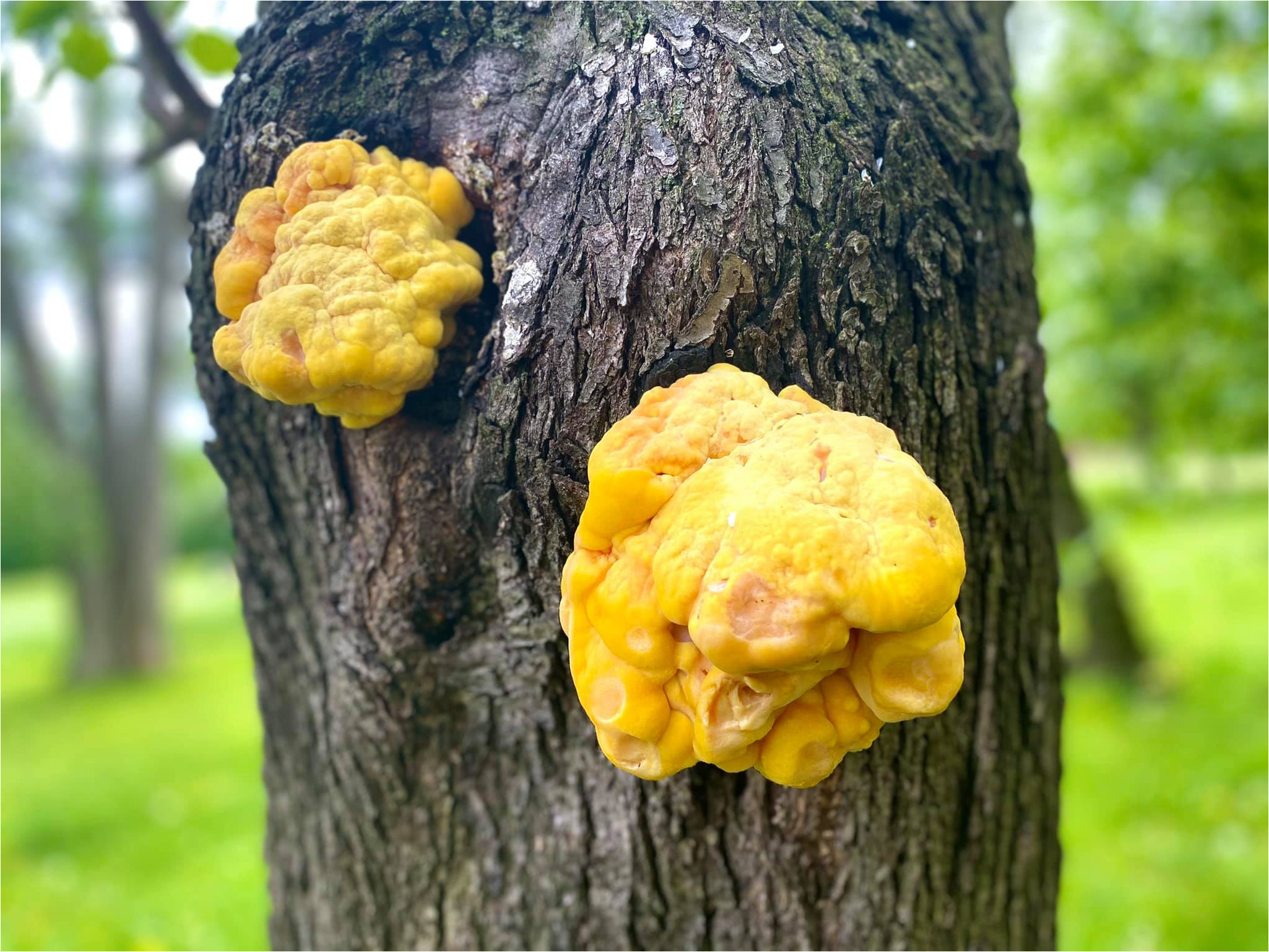
Unlike boletes, you don’t have to look down at your feet for chicken of the woods. This mushroom grows on wood, often on trunks or stumps of deciduous trees. That’s why even people who might overlook classic mushrooms in grass or moss will notice it.
It’s bold, photogenic, and at first glance almost looks exotic. The large yellow-orange fans on a tree seem like something that doesn’t even belong in our nature. That’s what makes it a mushroom that spreads easily in photos and sparks a lot of curiosity.
Important warning: Never eat mushrooms based only on a photo or internet description. If you are unsure about identification, consult an experienced forager or a mycological advisory center.
Why Chicken of the Woods Is Getting So Much Attention Now
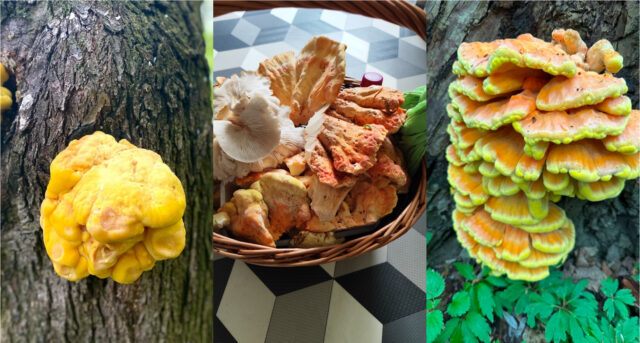
Chicken of the woods is a mushroom that’s hard to miss. Its vivid yellow to orange coloring, its striking clusters, and the way it often forms entire “shelves” of fruiting bodies on a tree make it stand out. When it appears in larger numbers, it looks truly impressive.
People often know it by the nickname “chicken mushroom” or its English name “chicken of the woods.” The nickname comes from the fact that young fruiting bodies have a meatier texture after cooking. But that doesn’t mean you should experiment without certainty.
Where to Find Chicken of the Woods
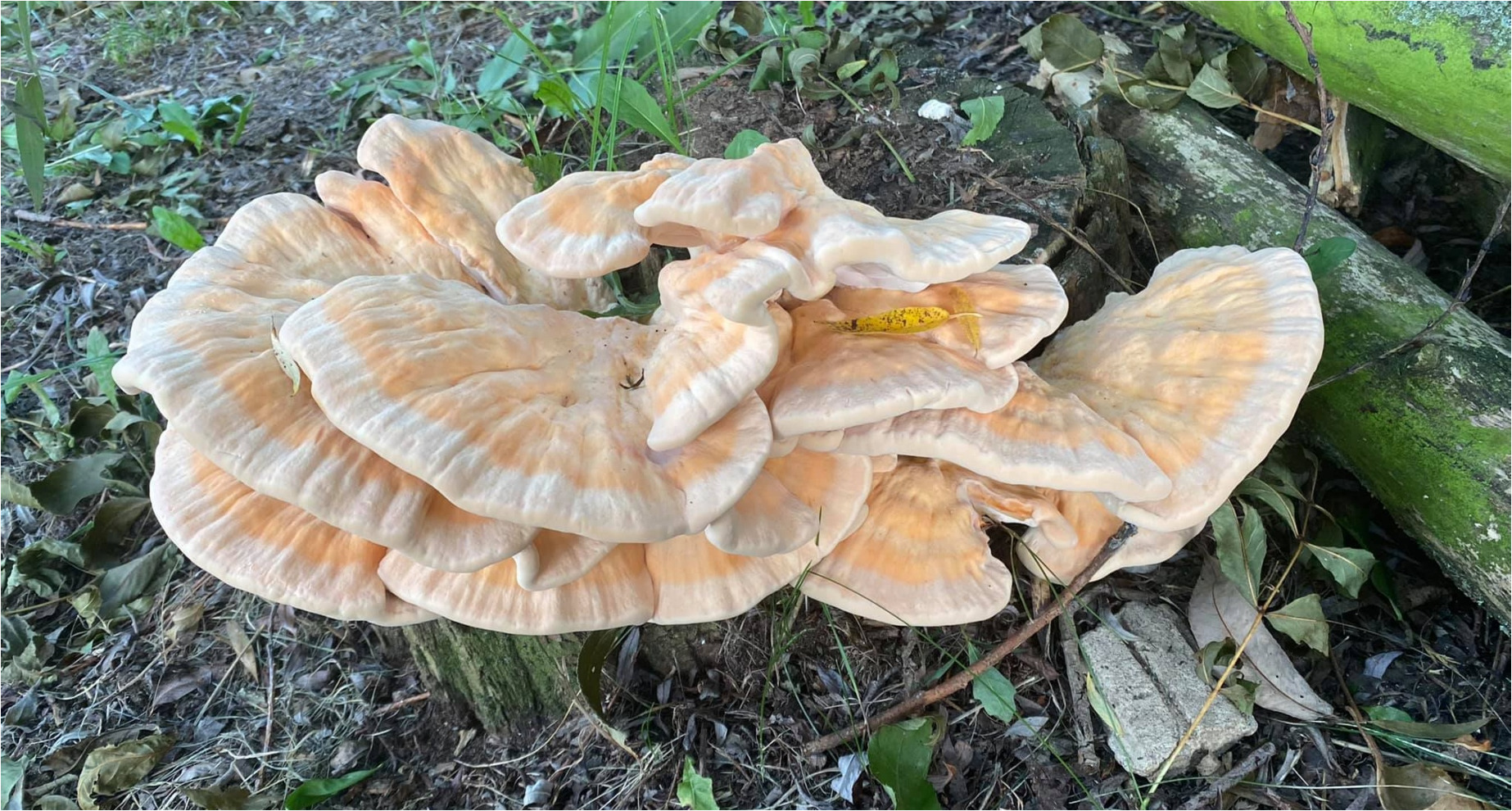
Chicken of the woods doesn’t grow in the ground like classic boletes. You’ll find it on wood. It appears on living or dying deciduous trees, stumps, and trunks. It’s often found on fruit trees, black locust, oak, willow, or other hardwoods.
It’s worth checking older trees in orchards, parks, alleys, gardens, along paths, and near water. Sometimes it grows low to the ground, other times high up on the trunk, so mushroom hunters need to look up from the ground.
When Does Chicken of the Woods Grow
Chicken of the woods usually appears from spring to autumn. Many field guides list its season as roughly May to October, depending on weather and location. It thrives in damp, warmer weather and on suitable host trees.
Growth can be rapid. Young fruiting bodies appear rather inconspicuously, but in a short time form large fan-shaped clusters. The young specimens are the most interesting for foragers, as older fruiting bodies become tough and are unsuitable for cooking.
What Does Chicken of the Woods Look Like
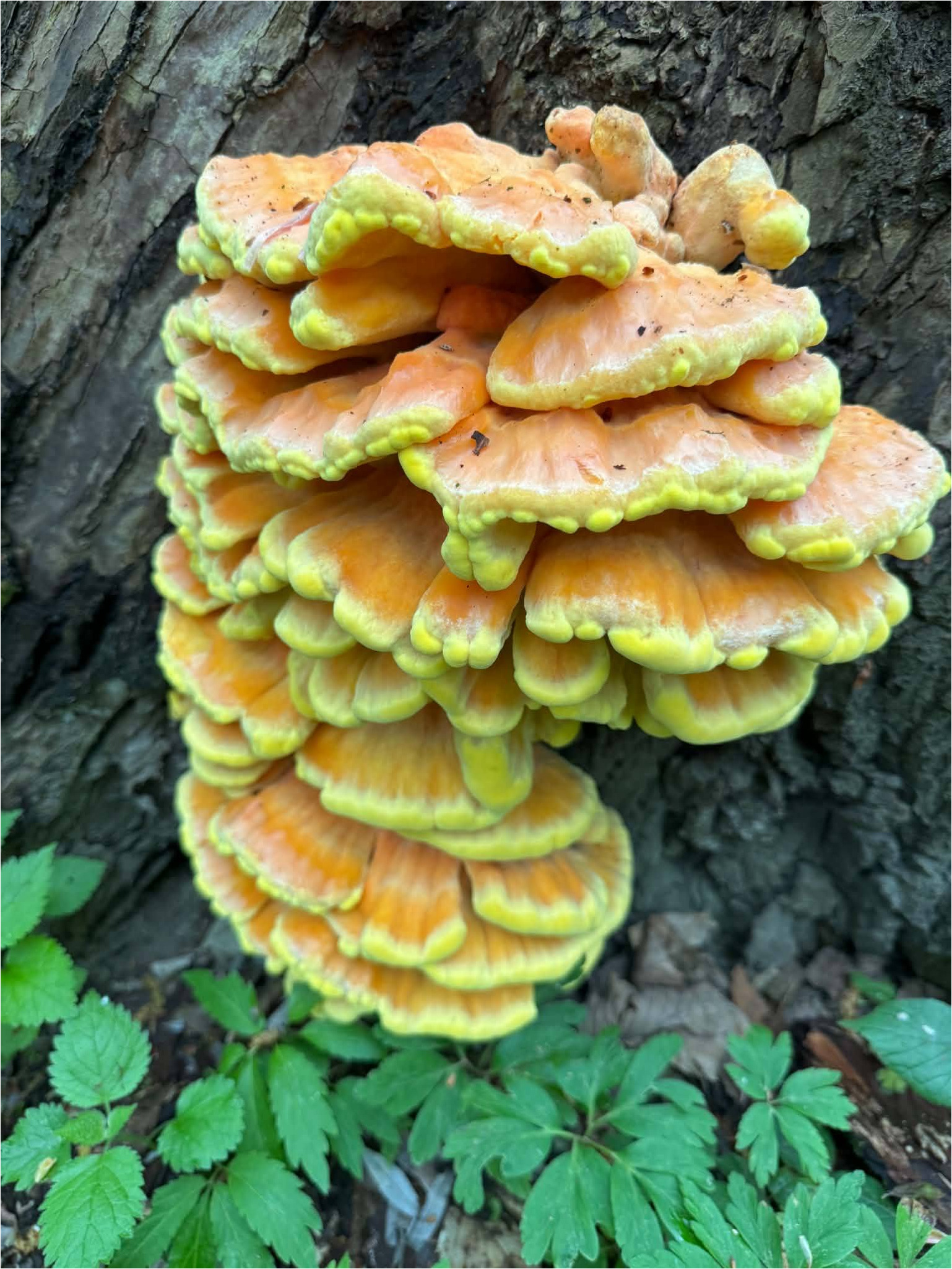
Young chicken of the woods is bright yellow, orange, or yellow-orange. It grows in flat or fan-shaped fruiting bodies, often overlapping like roof tiles. The surface is striking, fleshy, and young specimens look juicy.
The underside is porous, not gilled. That means you won’t find classic gills under the cap like with amanitas or champignons, but a fine porous layer. Still, you must be absolutely certain about your identification.
Why Only Pick Young Fruiting Bodies
With chicken of the woods, the age of the fruiting body is crucial. Young specimens are soft, juicy, and can be sliced quite easily. Older fruiting bodies become tough, woody, may taste bitter, and are not suitable for eating.
If the mushroom is dry, hard, crumbly, or has lost its bright color, leave it where it is. Chicken of the woods can still look beautiful on the tree even when it’s already too old for the kitchen.
Pay Attention to the Tree It Grows On
With chicken of the woods, it’s good to watch not only the mushroom itself but also the tree. The mushroom grows on wood, and its properties may be affected by the host tree and the environment. Some foragers are especially cautious with fruiting bodies from trees in polluted areas, near roads, or in parks with unclear maintenance.
If the mushroom grows on a tree you can’t identify, or in a place where you’re unsure about cleanliness, it’s better not to pick it. It’s not worth the risk with mushrooms.
Don’t Pick Mushrooms from Busy Areas
Mushrooms can absorb undesirable substances from their environment. That’s why it’s not a good idea to pick them near busy roads, industrial sites, dumps, or other polluted places. Even a beautiful fruiting body may come from an unsuitable environment.
This applies to chicken of the woods just like other mushrooms. A nice photo doesn’t mean it’s a good catch for the kitchen.
How to Handle It After Picking
If you can safely identify chicken of the woods and pick young fruiting bodies from a clean place, process them as soon as possible. Mushrooms in general are not suitable for long storage in warm conditions. Clean the fruiting bodies, check them, and discard any hard or damaged parts.
Chicken of the woods should always be cooked. Do not eat it raw. People sensitive to mushrooms may experience digestive issues, so it’s wise to try a small amount first and not experiment with a large portion right away.
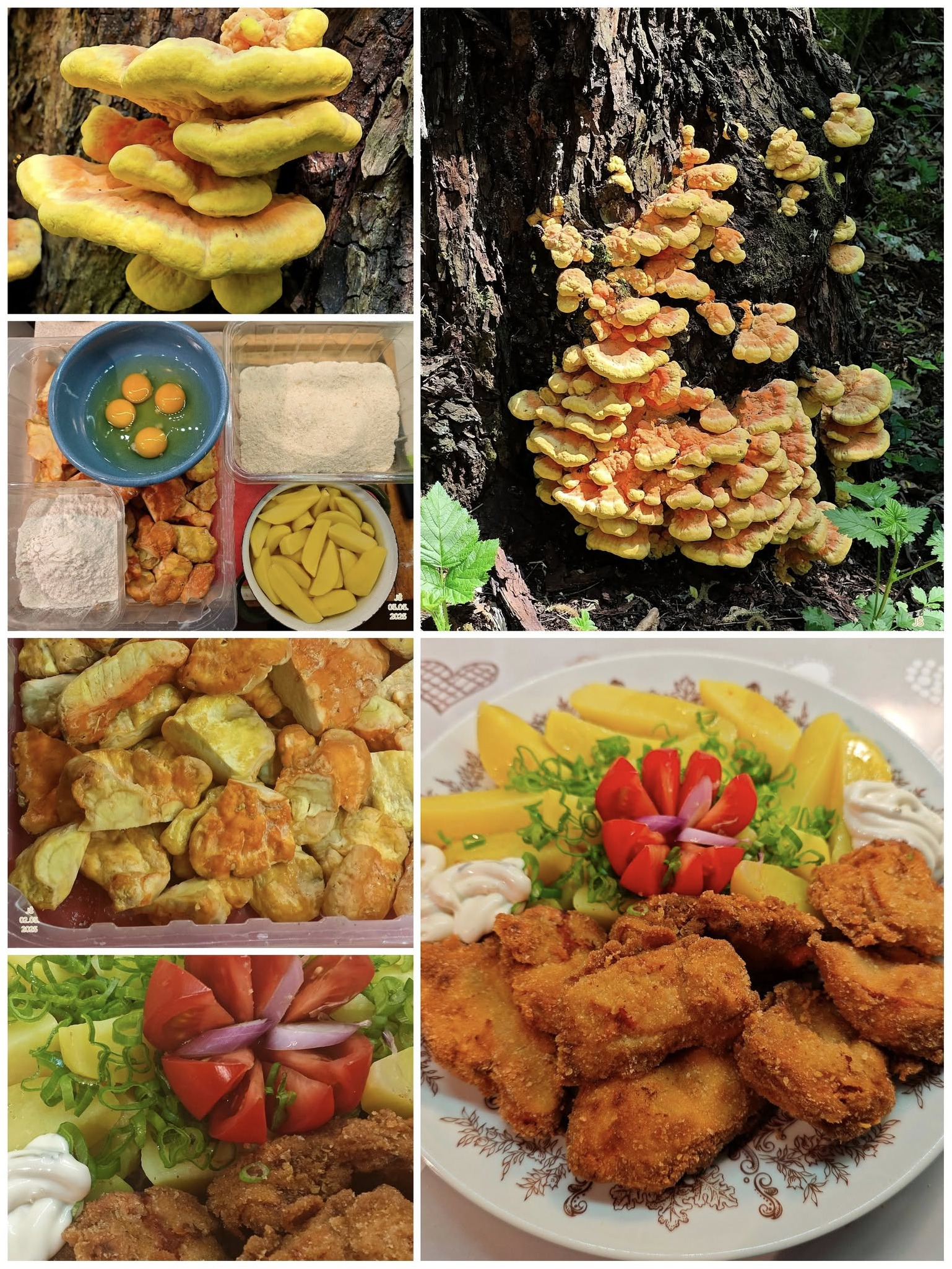
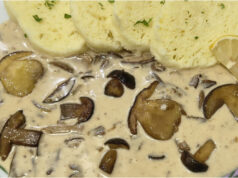
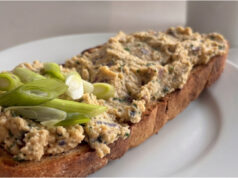
You can simply bread and fry it like mushroom schnitzels.
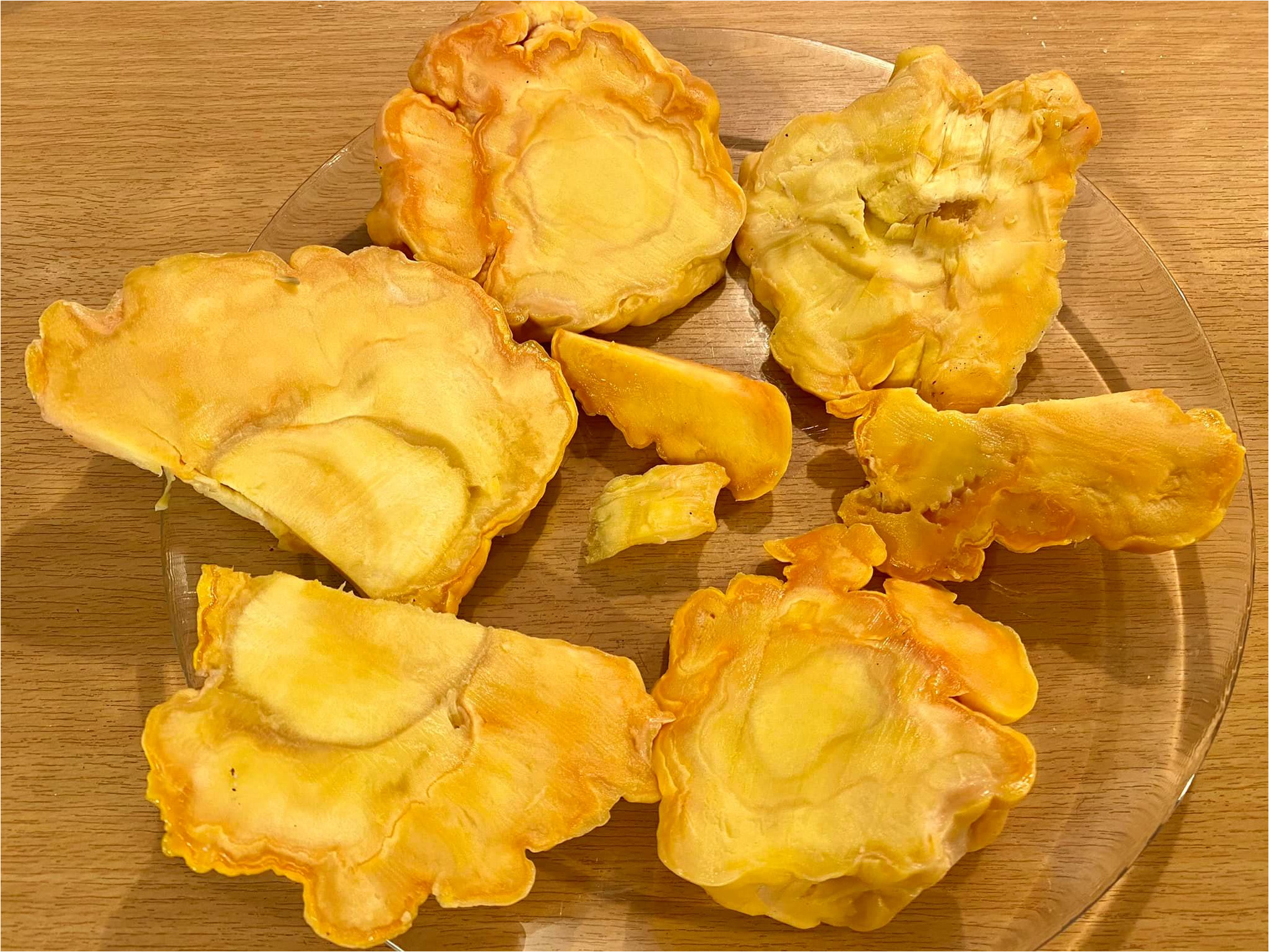

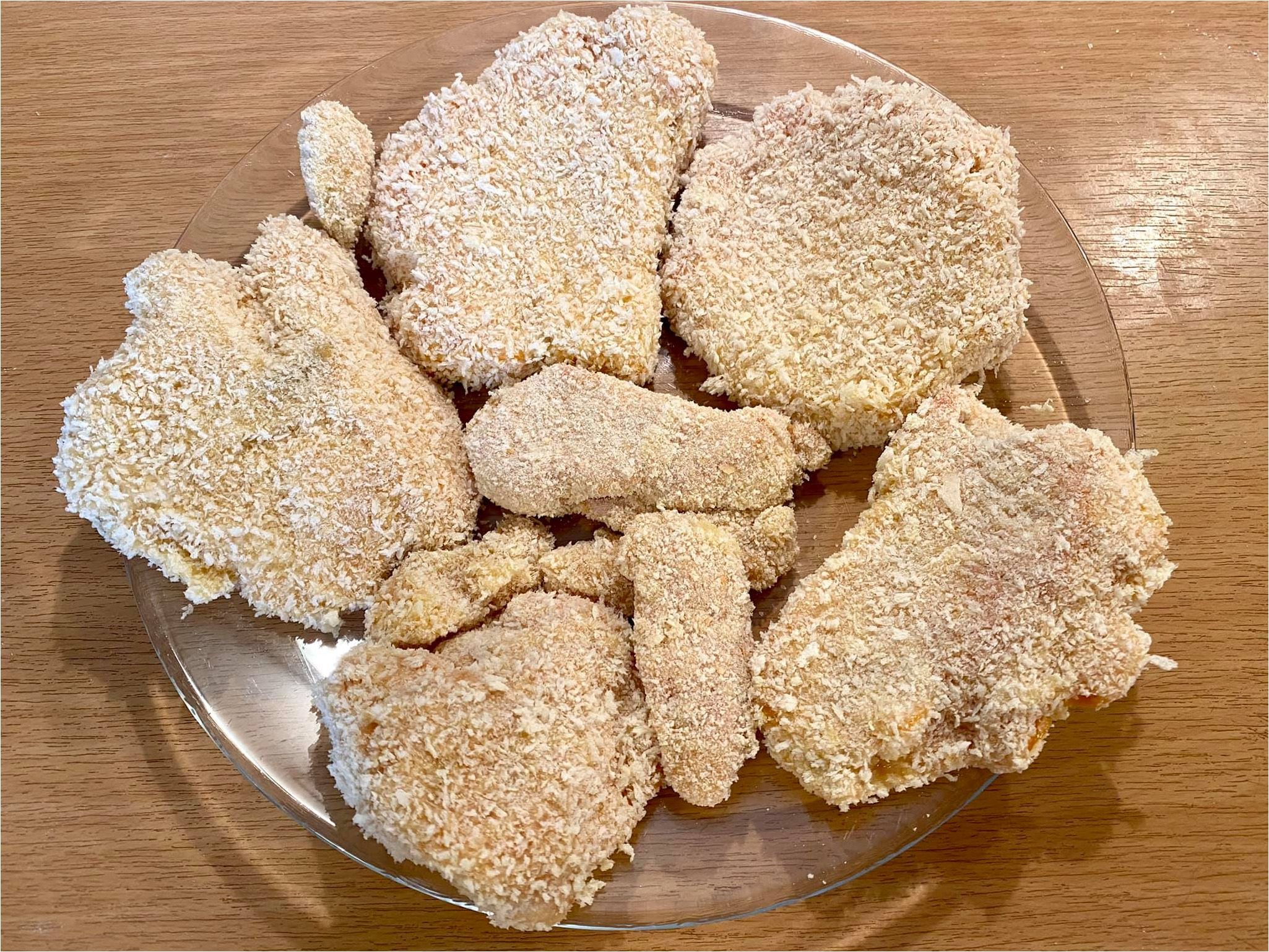
Who Should Be Careful
Caution is advised for children, pregnant women, seniors, people with sensitive digestion, or allergies. Even edible mushrooms may not agree with everyone. If you don’t usually eat mushrooms or are trying a new type for the first time, start very carefully.
Never combine an uncertain find with bravery. With mushrooms, the rule is simple: if I’m not sure, I don’t eat it.
The Most Common Mistakes with Chicken of the Woods
- Picking old, tough, and dry fruiting bodies.
- Identifying the mushroom based on a single internet photo.
- Not paying attention to the tree and location where it grows.
- Picking near roads or in polluted areas.
- Eating a large amount of a new species right away.
- Underestimating the need for proper cooking.
- Assuming every orange mushroom on a tree is chicken of the woods.
What to Watch for When Foraging Now
After rain and in warmer weather, it’s worth checking not only forest paths but also older trees, stumps, and the edges of parks or orchards. Chicken of the woods is a mushroom that can surprise you even in places where you’d never expect to find mushrooms.
At the same time, remember that mushroom hunting is not a contest for the fullest basket. With striking species, it’s easy to get carried away, but safe identification is always more important than the catch.
Why It’s Good to Know Chicken of the Woods, Even If You Don’t Pick It
Chicken of the woods is interesting even for people who don’t eat mushrooms. It’s beautiful to observe, photographs well, and shows how diverse life on old trees can be. At the same time, it’s a wood-decaying fungus, so its presence can signal a weakened tree.
If you find it in your garden on a fruit tree, it’s not just a forager’s curiosity. It may be a sign that the tree’s wood is no longer healthy. For large trees near a house, path, or seating area, it’s wise to keep an eye on safety.
A Beautiful Find, But Don’t Take Unnecessary Risks
Chicken of the woods is one of the most striking mushrooms that can now appear on trees. Its color, size, and the fact that it grows differently than classic mushrooms people are used to make its photos spread quickly among foragers.
If you find it, take a photo, look at the tree and surroundings, and only pick it if you are certain. With mushrooms, caution pays off. A beautiful orange cluster can be a great find, but only for someone who knows what they’re picking, where it’s from, and how to handle it safely.

The chicken of the woods grows on wood, most commonly on the trunks and stumps of deciduous trees. It can appear in orchards, parks, avenues, gardens, and forests.
It is usually reported to be from spring to autumn, often approximately from May to October. However, it depends on the weather, humidity, and location.
Young fruiting bodies of the chicken of the woods are considered edible, but they must be correctly identified and cooked. Do not collect old, tough, or ambiguously identified fruiting bodies.
No. A photo can provide hints, but it is not sufficient for safe mushroom identification. If you are unsure, consult an experienced mushroom picker or a mycological advisory service.
Mushrooms can absorb undesirable substances from the environment. Therefore, it is better not to collect mushrooms near busy roads, landfills, industrial sites, or otherwise polluted areas.