

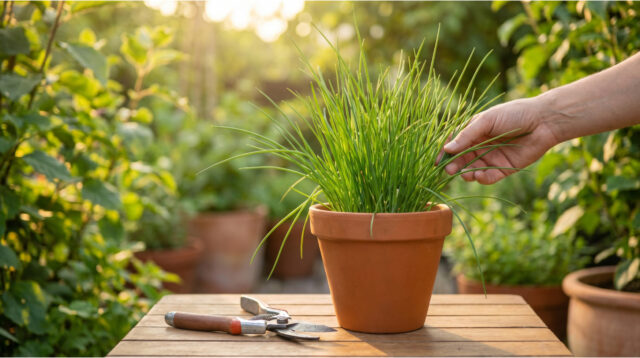
At first glance, chives seem like an undemanding herb. Just plant them, water occasionally, and snip them for your spreads. But if you grow them in a pot, harvest often, or leave them without rejuvenation for too long, you’ll quickly find that even chives have their limits.
The good news is that most problems can be fixed. Chives can regrow, thicken up, and form a nice green clump again. But first, you need to figure out why they’re weakening.
Why Are My Chives Turning Yellow?
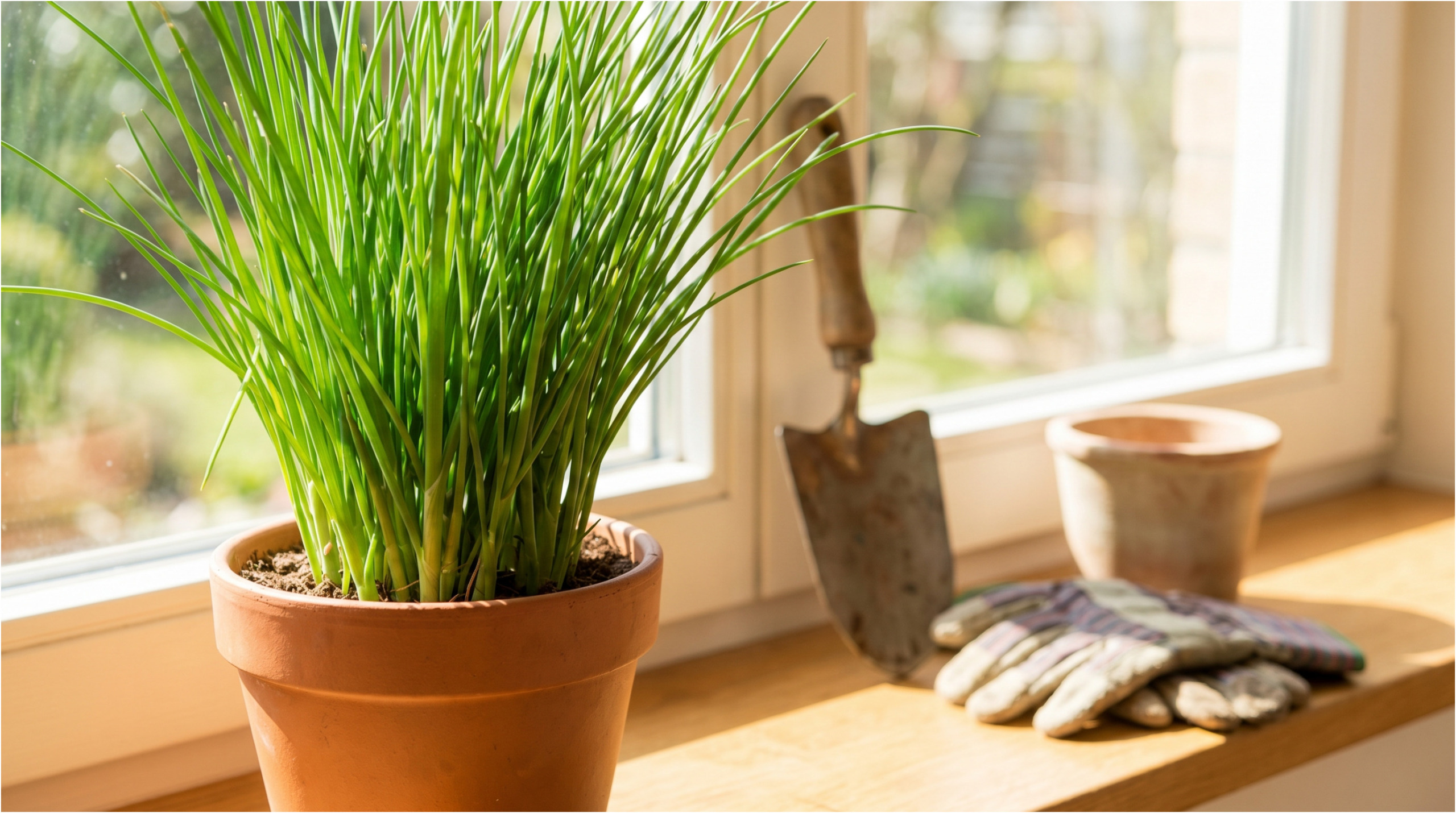
There are several reasons why chives turn yellow. The most common are drought, overwatering, lack of light, depleted soil, or an old, exhausted clump. In a pot, these problems are often even more pronounced, as the soil dries out and nutrients are used up much faster.
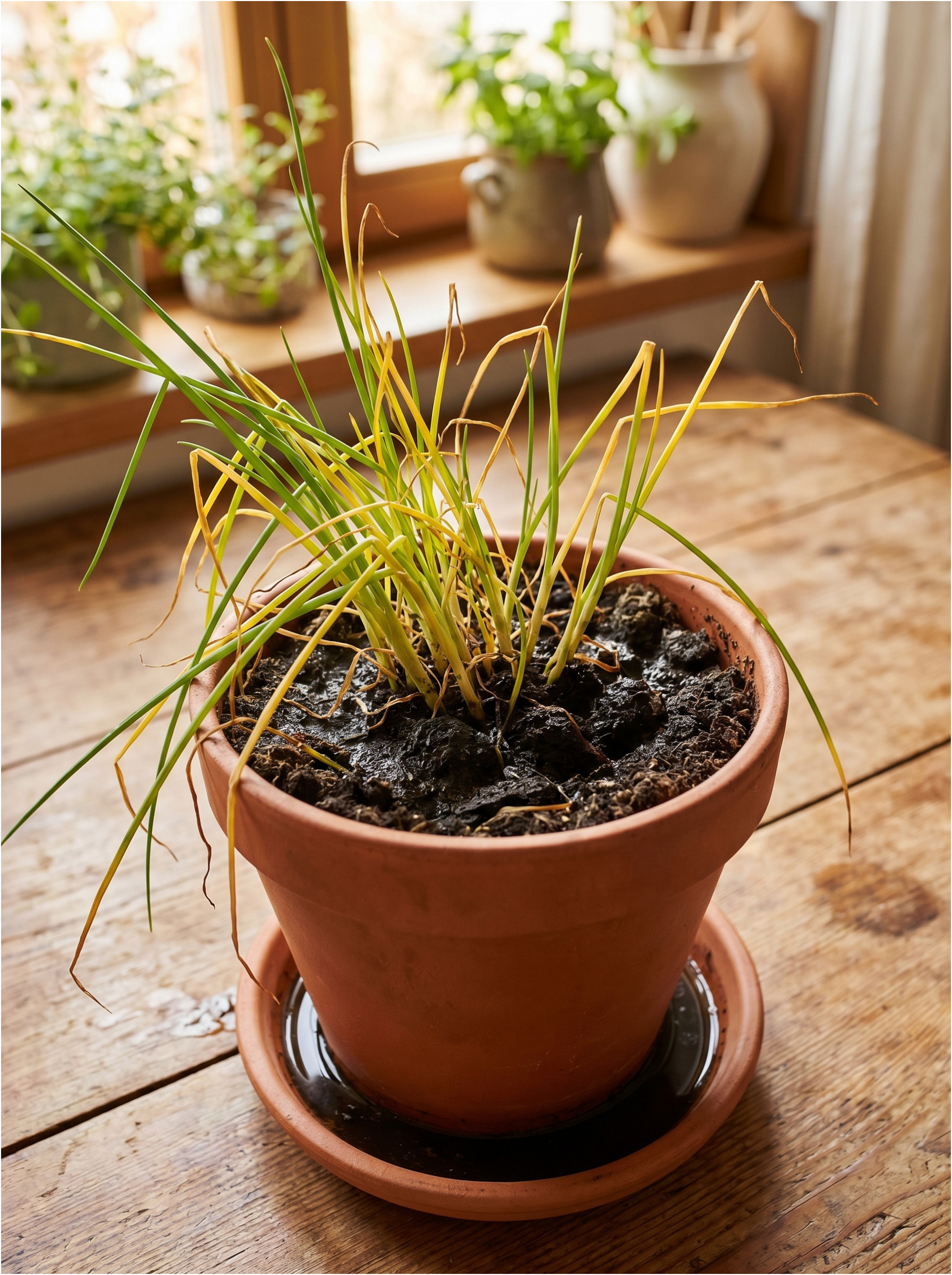
If the blades are yellow, weak, and drooping, first check the soil. Dry soil means a lack of water. Wet, heavy, or smelly soil, on the other hand, points to overwatering and root problems.
Drought Makes Blades Tougher and Weaker
Chives like slightly moist soil. If they dry out for too long, the blades become thinner, tougher, lose their fresh color, and the plant struggles to regrow after cutting. This is very common in pots, especially on a sunny balcony or windowsill.
Water regularly, but don’t let the roots sit in water. It’s better to water little and often than to let the soil dry out and then flood it all at once.
Overwatering Is Just as Dangerous
Chives can’t stand constantly wet soil. If your pot doesn’t have drainage holes, water collects around the roots and the plant starts to weaken. The blades turn yellow, the clump thins out, and the soil may start to smell.
Don’t fertilize in this situation. First, fix the drainage, let the soil dry out, and if needed, repot the plant into lighter, airier soil. Fertilizer won’t save chives in soggy soil.
A Small Pot Quickly Exhausts Chives
Store-bought chives often only look nice for a short time. They’re usually crammed into a small pot with little room for roots, and the soil is quickly depleted. After a few harvests, the plant starts thinning out, turning yellow, and producing weaker blades.
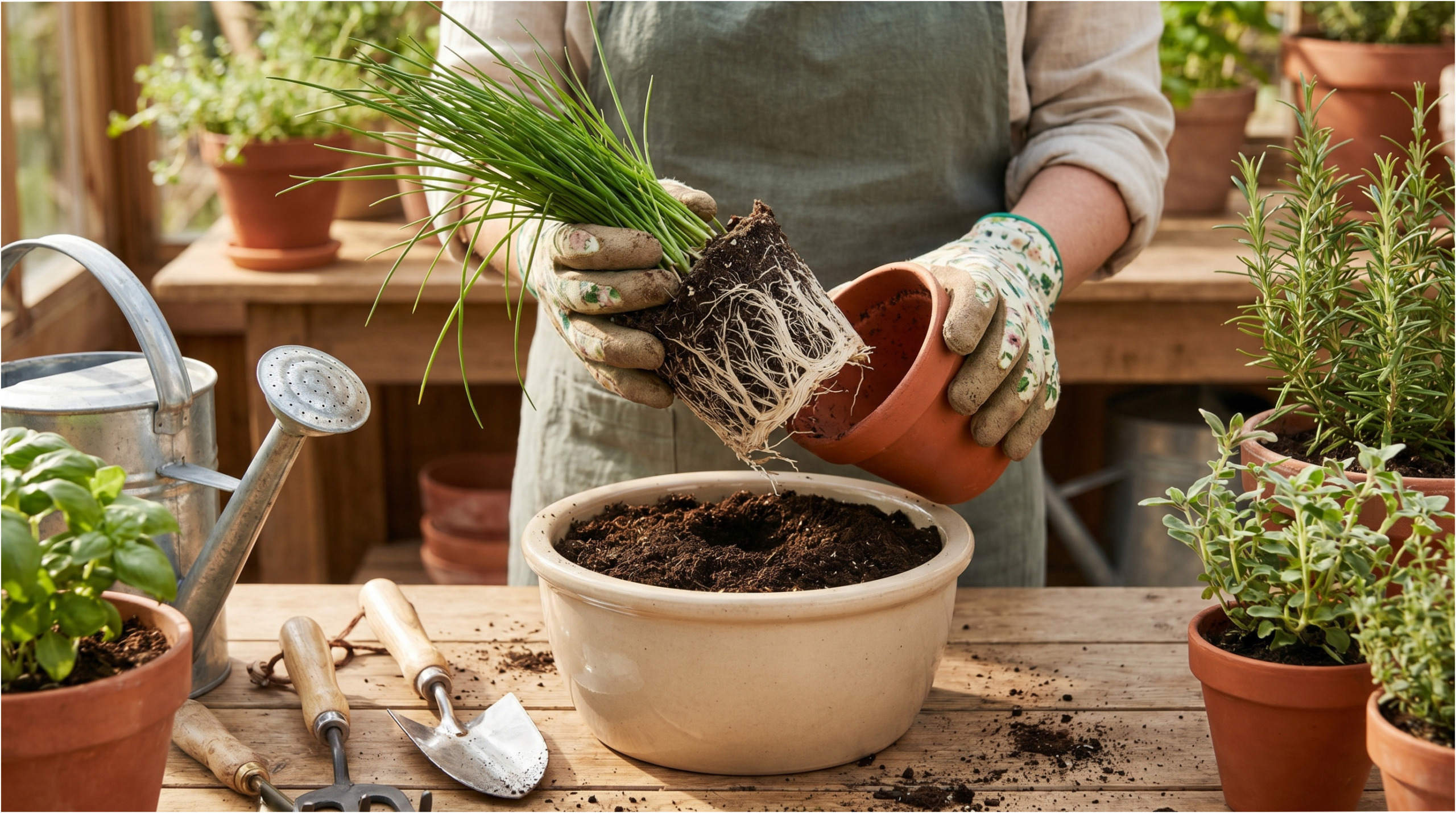
Repotting into a larger container helps. If the clump is very dense, you can divide it into several parts and plant them with some space between. The plants will have more room and recover better.
For a detailed guide, see the article How to Care for Chives: From a Few Blades to a Lush Green Clump.
Chives Not Regrowing After Cutting? You Might Be Cutting Them Wrong
One of the most common mistakes is pulling the blades out by hand. This can damage the weaker parts of the clump or disturb the roots. Always use sharp scissors to cut chives.
Don’t cut them right down to the soil. Leave a few centimeters of green so the plant can regrow more quickly. If the clump is weak, don’t cut it all at once. Take only part and let the rest recover.
Flowers Are Beautiful, But Drain Energy
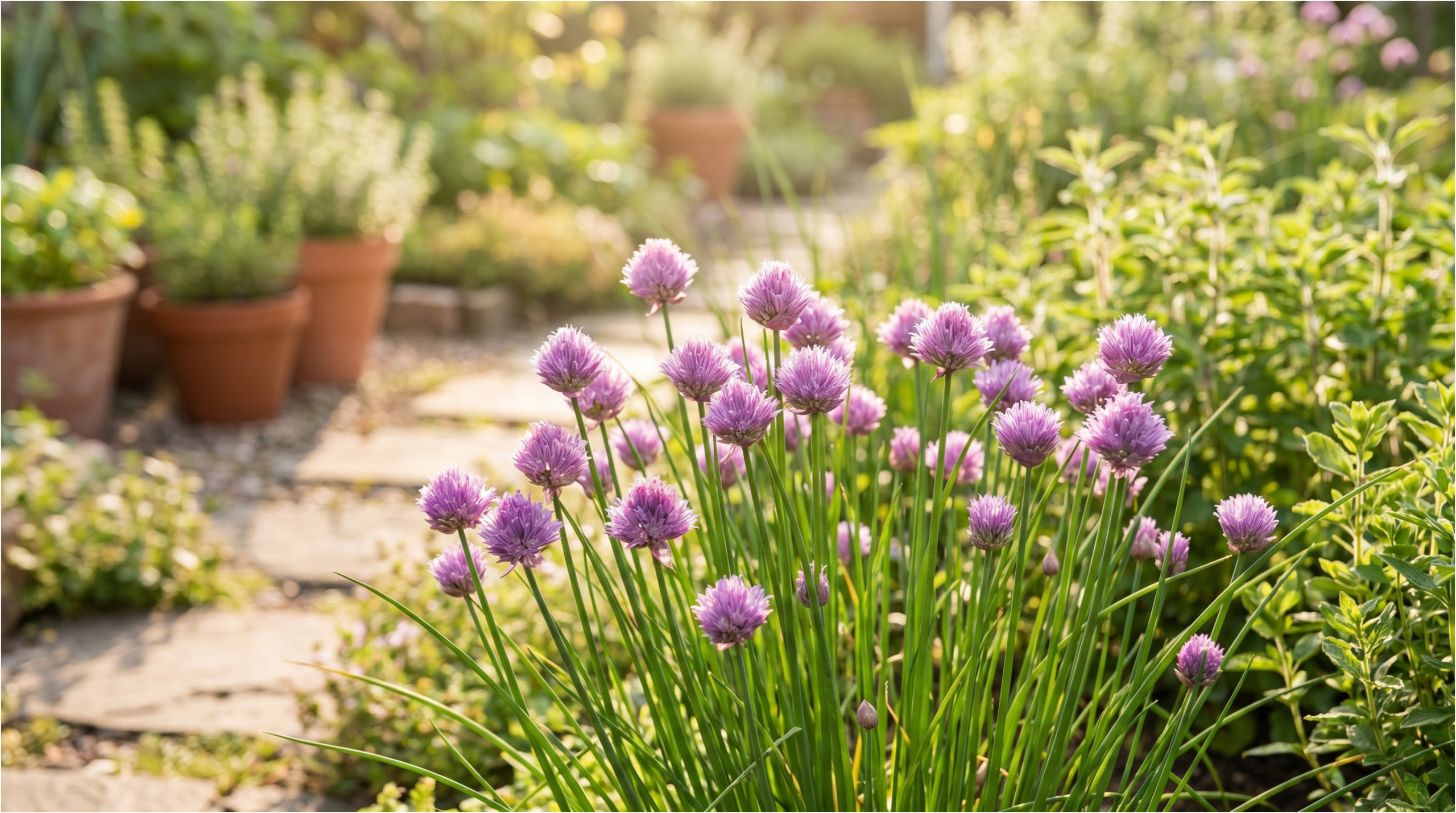
Chive flowers are edible and look lovely in the garden bed. But if you mainly want tender green blades, don’t let the plant flower for too long. Once chives start forming flower stalks, they send some of their energy into flowers and seeds.
You can cut off the flower stalks and use them in salads, spreads, or as a garnish. This encourages the plant to produce new young leaves.
Not Enough Light Causes Thin, Leggy Blades
Chives need a bright spot. In deep shade, they get leggy, pale, and produce weak blades. On the other hand, in hot summer weather, all-day direct sun in a small pot can be too much, as the soil dries out quickly.
The ideal is a bright spot with a few hours of sun each day. On a balcony, morning or forenoon sun and light afternoon shade work well.
How to Fertilize Chives
Chives don’t need heavy feeding. If you cut them often, they’ll appreciate a gentle feed. In the garden bed, a little well-rotted compost is usually enough. In a pot, nutrients are used up faster, so you can occasionally use a weak organic liquid feed.
Avoid strong doses of nitrogen. Chives may grow quickly, but the blades can become softer and less flavorful. Regular, gentle care is better than heavy, occasional feeding.
When Not to Fertilize Chives
Don’t fertilize if the soil is wet, the plant has just been repotted, or you suspect root rot. At this time, chives mainly need airy soil, proper watering, and time.
Also, hold off on fertilizing after a heavy cut of a weak clump. Let the plant regrow a bit first, then give it a gentle feed.
An Old Clump Needs Rejuvenation
Chives can last for several years in one spot, but older clumps gradually get dense, exhausted, and sometimes thin out in the middle. That’s a sign they need to be divided and rejuvenated.
Carefully lift the clump, divide it into smaller parts, and replant. Each part should have healthy roots and a few blades. Water well after replanting and give the plants time to root.
Supermarket Chives Need a Different Approach
Supermarket herbs are often grown quickly and densely. They’ll last a few days in the kitchen, but if you want to keep them long-term, it’s best to repot them. You can divide chives into smaller clumps and plant them in a larger container with fresh soil.
After repotting, don’t cut them right down straight away. Let them root first, and only then start harvesting regularly. If you cut them immediately and the roots are damaged, it can take a long time for them to recover.
How to Harvest Chives to Keep Them Tender
Harvest chives regularly. Older blades tend to be tougher and less tender. Regular cutting encourages new shoots, which are tastier and fresher.
The best way is to cut part of the clump a few centimeters above the soil. If you want chives available all the time, cut them gradually in sections, not the whole clump at once.
The Most Common Mistakes That Weaken Chives
- Pulling blades by hand instead of cutting with scissors.
- Cutting right down to the soil.
- A small pot with no room for roots.
- Constantly wet soil with no drainage.
- Long periods of drought on a sunny balcony.
- Not enough light and leggy blades.
- Leaving flower stalks on a weak clump.
- Heavy feeding instead of repotting or rejuvenating.
Quick Steps to Save Your Chives
- Check soil moisture.
- Make sure the pot has drainage holes.
- Move chives to a brighter, but not scorching, spot.
- Remove flower stalks if the clump is weakening.
- Cut with scissors a few centimeters above the soil.
- Don’t cut the whole weak clump at once.
- Repot into a larger container if crowded.
- Divide and rejuvenate old clumps.
- Fertilize only gently and only after the plant recovers.
Chives Can Bounce Back
If your chives are turning yellow, thinning out, or not regrowing after cutting, all is not lost. Usually, they just need better conditions. A bigger pot, proper watering, regular cutting, and removing flowers can make a huge difference.
Don’t expect a miracle overnight. Chives need time to root again, thicken up, and start producing new blades. But if you give them light, the right amount of moisture, and space, even a few weak blades can grow back into a lush green clump.
Most often due to drought, overwatering, insufficient light, a small pot, exhausted substrate, or an old clump. First, check the soil and water drainage.
It may be weakened, cut too low, overwatered, dried out, or exhausted. Do not cut a weak clump all at once and give it time to recover.
Cut with sharp scissors a few centimeters above the ground. Do not tear chives by hand and with a weak clump, harvest gradually in parts.
The flowers are edible and attract bees, but if you mainly want tender stems, cut most of the flower stalks. The plant then regrows better.
A light feed is sufficient. In the garden, use mature compost, in a pot, a weak organic watering. Strong fertilization is not necessary and can unnecessarily burden the plant.