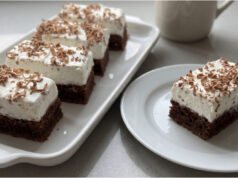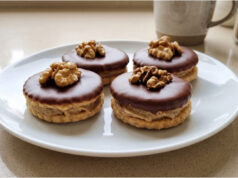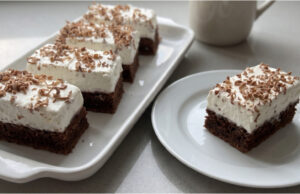

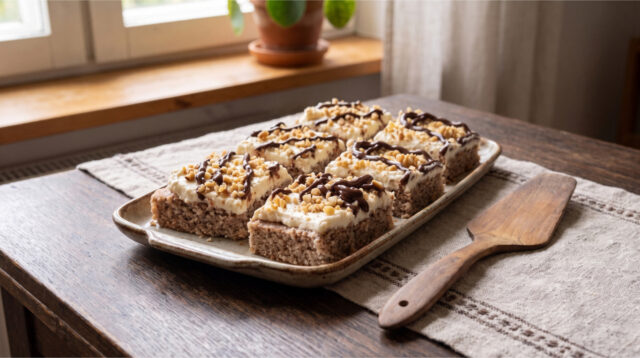
Ground nuts, a fluffy sponge base, and a delicate butter cream with a hint of rum make up this simple dessert, perfect for serving with coffee. The nut slices are finished with a layer of chopped nuts, which adds a richer flavor and a pleasant texture.
The preparation is not complicated, but it is important to let both the baked sponge and the flour porridge cool completely. This ensures the cream binds well and stays on the slices. Finally, just chill the finished dessert in the fridge so it firms up and can be easily sliced.
What You’ll Need
For the sponge:
- 4 eggs,
- 200 g granulated sugar,
- 10 tablespoons hot water,
- 200 g coarse flour,
- 100 g ground nuts,
- 1/2 packet baking powder.
For the cream:
- 250 ml milk,
- 50 g plain flour,
- 200 g icing sugar,
- 3/4 block of butter,
- a splash of rum.
For finishing:
- chopped nuts to taste.
The original recipe does not specify the exact amount of nuts for sprinkling, so adjust according to the desired layer.
Step-by-Step Preparation:
1. Separating the eggs: Separate the eggs into yolks and whites. Whip the egg whites into stiff peaks and set aside to gently fold into the base later.
2. Beating the yolks: Combine the yolks with granulated sugar and hot water. Beat thoroughly until you get a pale, fluffy mixture—this forms the base of the nut sponge and helps achieve a finer texture.
3. Finishing the batter: Add the coarse flour, ground nuts, and baking powder to the yolk mixture. Finally, gently fold in the whipped egg whites to keep the batter as airy as possible.
4. Preparing the baking tray: Carefully grease a deep baking tray and spread the prepared batter evenly over it. Smooth the surface so the baked sponge has an even height throughout.
5. Baking the sponge: Place the tray in a preheated oven and bake until the sponge turns golden and is cooked through. The original recipe does not specify the exact temperature or baking time, so rely on your oven and the appearance of the sponge.
6. Cooling: Remove the baked sponge from the oven and let it cool completely. Do not spread the cream on a warm cake, as the butter layer could melt and fail to set properly.
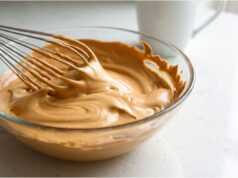
7. Cooking the flour porridge: Thoroughly mix the milk with the plain flour and cook, stirring constantly, until you have a thick porridge. Make sure there are no lumps, then let it cool completely.
8. Preparing the cream: Add the icing sugar, butter, and a splash of rum to the cooled flour porridge. Mix or beat everything together until you have a smooth, well-combined cream.
9. Finishing the slices: Spread the prepared cream evenly over the cooled sponge. Then sprinkle the top with chopped nuts to taste, which will complement the delicate creamy layer.
10. Chilling and serving: Place the finished dessert in the fridge and let it set. Once the cream is firm enough, cut the cake into individual slices and serve, for example, with a cup of coffee.
Why Both the Sponge and Flour Porridge Must Cool
Letting both parts cool is crucial for the right cream consistency. If you add butter to warm flour porridge or spread the finished cream onto a warm sponge, the butter could melt, thin out, and run off.
Before mixing the cream, also check that the flour porridge is lump-free. A smooth base will combine better with the butter and icing sugar, resulting in a finer cream layer.
How to Tell When the Sponge Is Baked Properly
Since the original recipe does not specify the exact temperature or baking time, focus mainly on the appearance of the batter. The finished sponge should be golden and cooked through in the center, not just around the edges.
Avoid overbaking the sponge so it doesn’t dry out. Leave it in the tray until it has completely cooled before spreading the cream.
Final Tip
For neat portions, let the slices set thoroughly in the fridge. Cut them with a clean knife, wiping the blade between slices as needed to prevent the cream from smearing along the edges.