

Living in a six-story brick building from the late 1960s has its unique charm, but also technical limitations that, after decades of use, simply can’t be ignored forever. The most problematic part of our building was undoubtedly the elevator. The original lattice cabin from 1971 was long past its prime. For the last two years, it had become a game of Russian roulette: it would get stuck between floors at any moment, the doors wouldn’t close properly, and when it stopped, the whole shaft jolted so much it made your blood run cold. The service technician was coming out practically every other week, but there were no spare parts left for the old relay system. After the last inspection report, it was clear—either the building would invest in a complete overhaul and replacement of the technology to meet safety standards, or the inspector would definitively shut down and seal the elevator.
For a building where two families with small children and several elderly pensioners live on the fifth and sixth floors—people who struggle even with the few steps at the entrance—the idea of life without an elevator was an absolute disaster. The HOA board therefore prepared a tender, obtained three concrete price offers, and found a contractor who could modernize the entire shaft for a reasonable price.
The budget for a new cabin and a quiet gearless motor was 1.2 million crowns. Half of that amount had already been saved in the repair fund over previous years. The remaining six hundred thousand was to be covered by a short-term increase in monthly contributions to the fund—seven hundred crowns per unit for three years. For most people in the building, this was an obvious and necessary choice.
The problem arose when calculating the voting shares. According to the bylaws, approving this extraordinary expense and increasing the fund required a majority of all owners’ votes. In our entrance with twenty apartments, three units on the first and second floors—small studios—are owned by Mr. Kříž. Kříž has never lived in our building and never planned to. He bought all three apartments years ago purely as an investment, constantly rotating students on short-term leases and collecting clean rent every month, without caring about the state of the entrance, basement, or roof. With his three apartments, he held almost twenty percent of all votes in the building.

At the spring owners’ meeting in the laundry room, Kříž arrived last. Dressed in an expensive jacket, business phone glued to his ear, he wore the expression of someone deeply annoyed to be spending time among “ordinary people.” He sat on the bench, ignored the chairman’s explanation about the elevator’s emergency state, and just scrolled through his phone.
When the chairman opened the vote on approving the elevator renovation and increasing the repair fund, almost everyone present raised their hands. Mrs. Dvořáková from the sixth floor, who is nearing eighty, even burst into tears of relief that she wouldn’t have to fear her trips to the doctor. At that moment, Kříž spoke up. He put down his phone, theatrically sighed, and demonstratively kept his hand down.
“I’m obviously against it,” he said in a cold, curt voice.
The chairman looked at him in surprise: “Mr. Kříž, in two months the inspector will prohibit the elevator’s operation. It’s a matter of safety for the whole building.”
Kříž just smirked arrogantly, leaned against the wall, and dryly declared to the whole room: “I don’t care. I live somewhere else, I don’t live in this building, and my tenants in the studios are on the first and second floors, so they don’t need the elevator. I’m not going to subsidize the comfort of people upstairs out of my own pocket. I have these apartments as an investment for profit, not to pour tens of thousands into a new cabin. Seven hundred crowns a month per apartment is an unnecessary expense that reduces my yield. So for me, it’s a resolute no, and I vote against it.”
The laundry room fell completely silent, quickly replaced by a wave of anger. A young mother from the fourth floor, holding her child, confronted him, asking if he realized that his tenants regularly use the elevator and that the building is a shared structure where you can’t just pick which floor pays for what. Kříž just laughed in her face. He repeated that he doesn’t physically live in the building, the law allows him to vote as he wishes, and no one can force him to pay for something he personally doesn’t use.
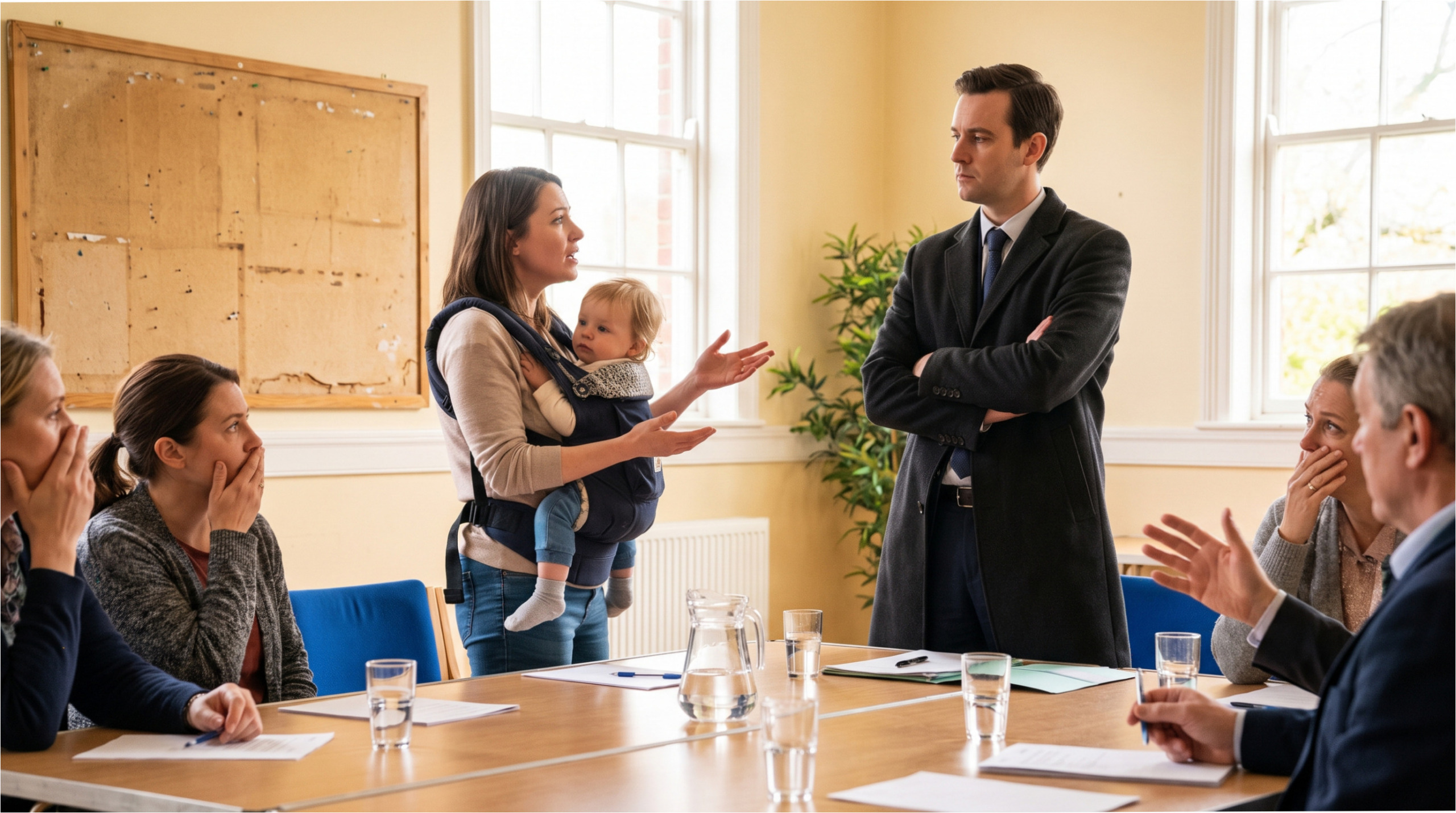
His twenty percent share meant only one thing: the proposal didn’t get the required majority and failed.
It was a textbook example of the raw cynicism of investment property owners for whom real estate is just numbers in a spreadsheet. Kříž packed up his folder, got in his car, and drove back to his home, leaving despair in our entrance. Two months later, the inspector definitively shut down and sealed the elevator. Elderly residents from the upper floors are now trapped in their apartments, and families haul strollers and heavy groceries up the stairs on foot—all because a man who doesn’t even live in the building refused to give up a few hundred crowns of his monthly profit. This bitter experience showed us just how vulnerable neighborly coexistence is when the fate of a building is decided by people who see it only as a business, with not a shred of human conscience.