
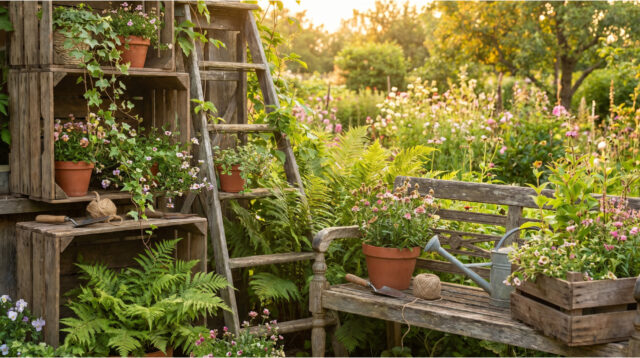
Maybe you have an old pallet behind the shed, a few planks, a wooden ladder, a broken flowerpot, or an unused crate. At first glance, it’s just junk, but on second thought, it’s a treasure. The garden doesn’t have to be perfect or straight out of a catalog. It’s most beautiful when it has personality, a story, and a few ideas that no one else has exactly the same.
The advantage of decorations made from old things is not only the low cost, but also their natural look. Wood, metal, stone, wicker, or terracotta fit into the garden much better than plastic ornaments. Just clean them up a bit, adjust, plant flowers, or place them in an interesting way.
Why Old Things Work in the Garden
The garden is a living place. Plants grow, change, bloom, fade, and look a little different throughout the year. That’s why materials that don’t look too new or artificial fit in so well. Old wood, patina, rusty metal, or chipped containers can add coziness and a natural country feel to the space.
You don’t have to make complicated projects. Sometimes it’s enough to just move an old thing, plant flowers in it, or use it differently than it was originally intended. An unused crate becomes a planter, a ladder turns into a flower stand, and old planks make a small decorative sign.
1. Old Wooden Ladder as a Flower Stand
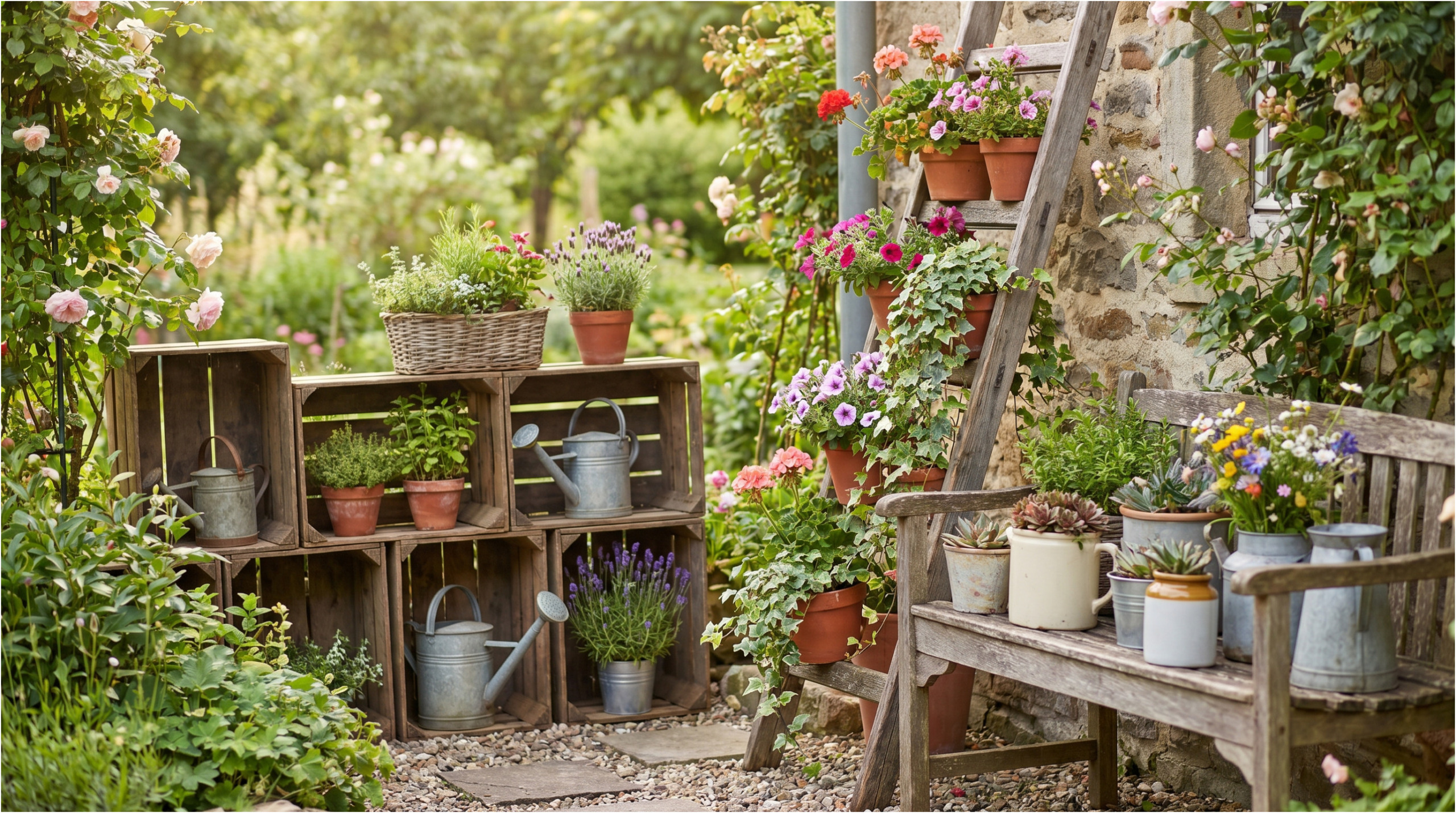
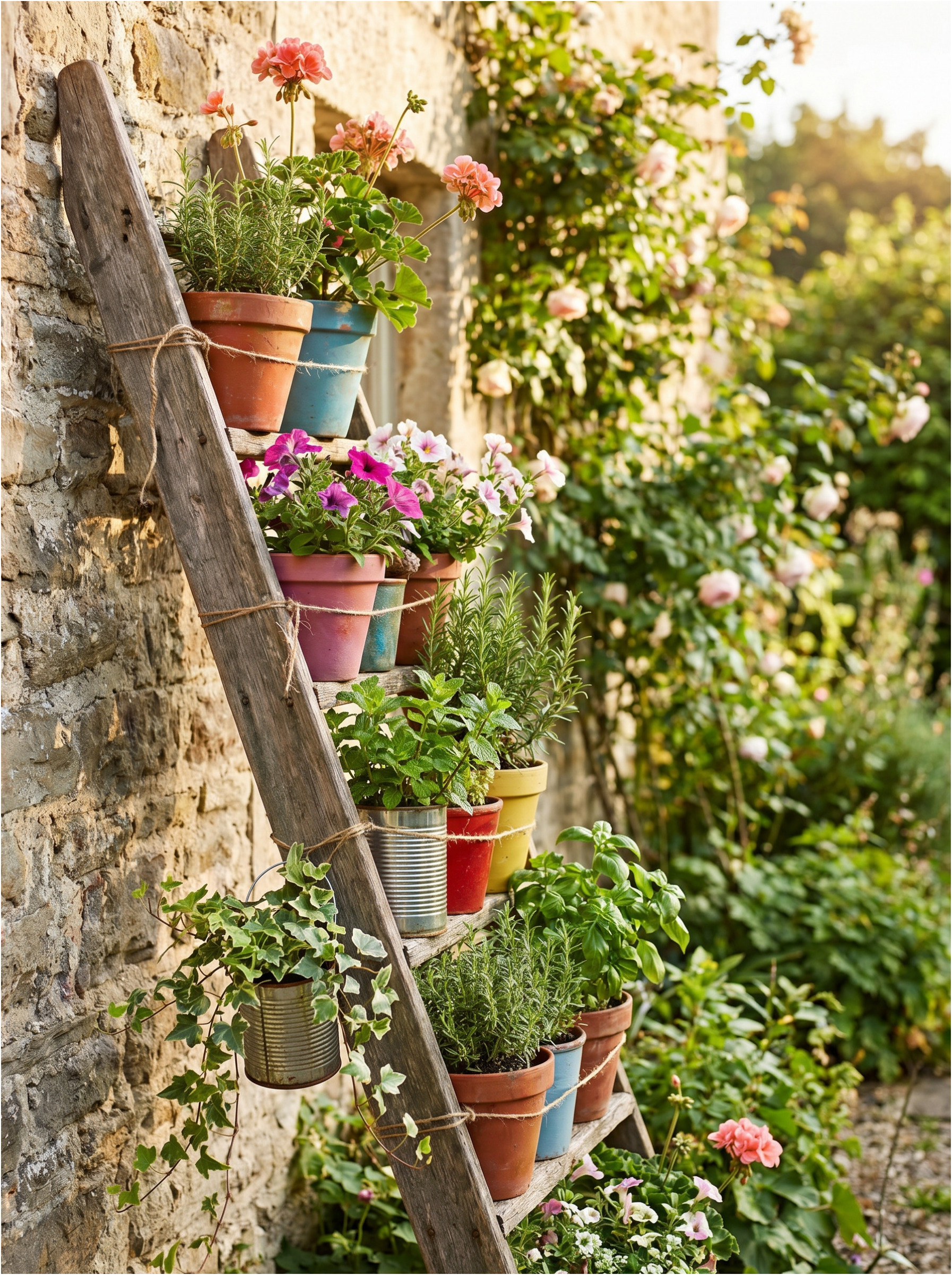
An old wooden ladder is one of the most versatile pieces you can use in the garden. Lean it against a wall, fence, or pergola, and hang flowerpots, small baskets, lanterns, or herbs in metal containers on the rungs.
A ladder works especially well where you need a vertical decoration. It’s perfect by the terrace, garden house, entrance, or in a corner that feels empty. You can let the wood age naturally or paint it a soft color to match your garden style.
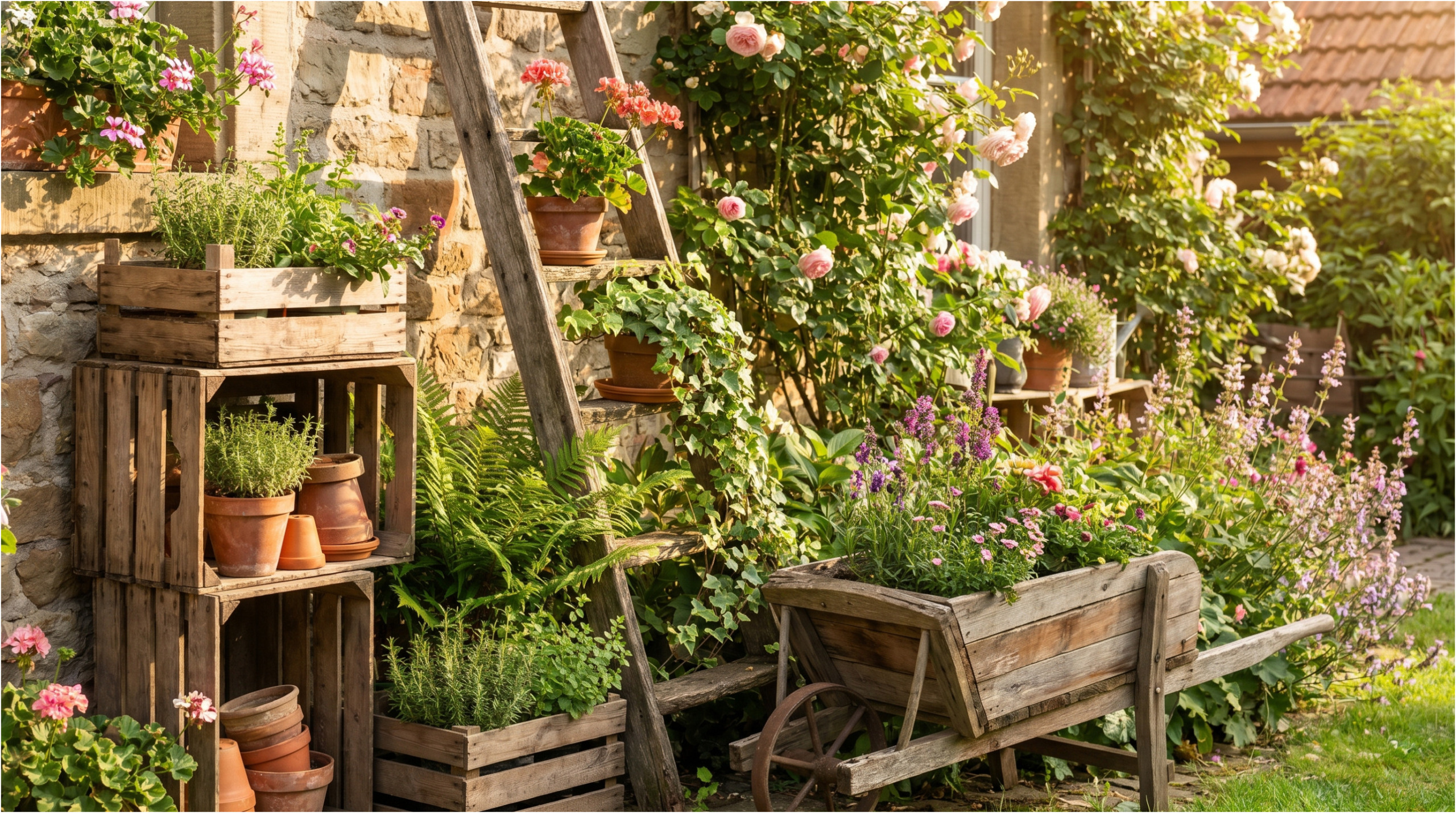
The best combinations are trailing plants, geraniums, lobelias, herbs, or smaller perennials. If the ladder is unstable, secure it well so the wind doesn’t knock it over.
2. Fruit Crates as Rustic Planters
Wooden fruit or vegetable crates have countless uses. You can turn them into planters, shelves, small raised beds, or a decorative corner full of flowers. Just clean them, maybe sand them lightly, and line the inside with nonwoven fabric or foil with holes for water drainage.
Crates look great with herbs, lavender, annuals, and small ornamental grasses. If you stack them at different heights, you create a simple garden composition that feels natural and cozy.
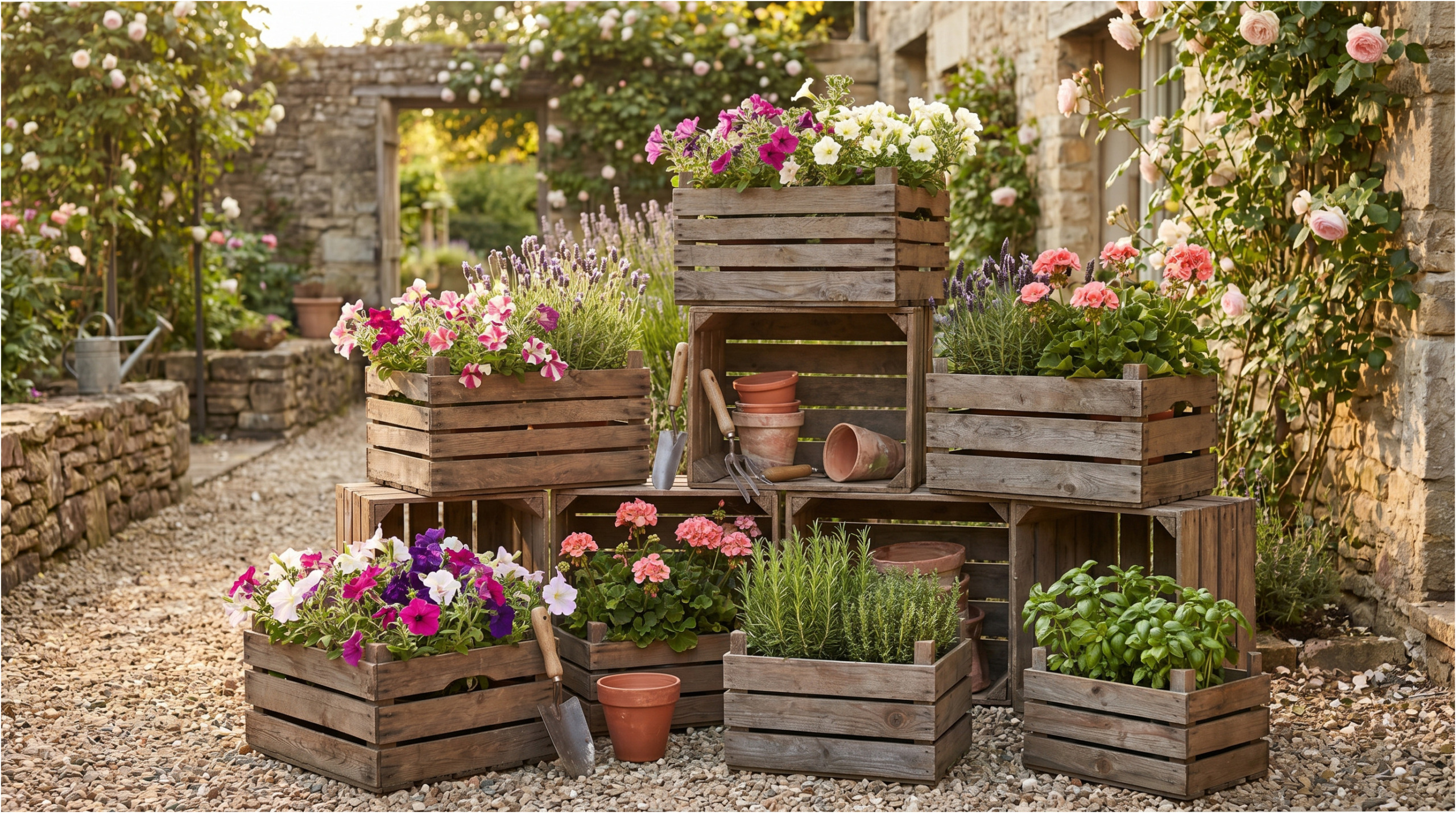
Note: If you’re planting in a crate, don’t forget about water drainage. Without it, roots will sit in water after rain and the plants will start to weaken.
3. Pallets as Vertical Gardens
Old pallets can be turned into a vertical garden, a flower stand, or a practical herb holder. You can lean the pallet against a wall, attach it to a fence, or lay it flat and use it as a low decorative bed.
Vertical pallets are best for easy-care plants that don’t need deep root space. Herbs, strawberries, houseleeks, small annuals, or trailing plants work great. It’s important to properly design the pockets for soil and watering.
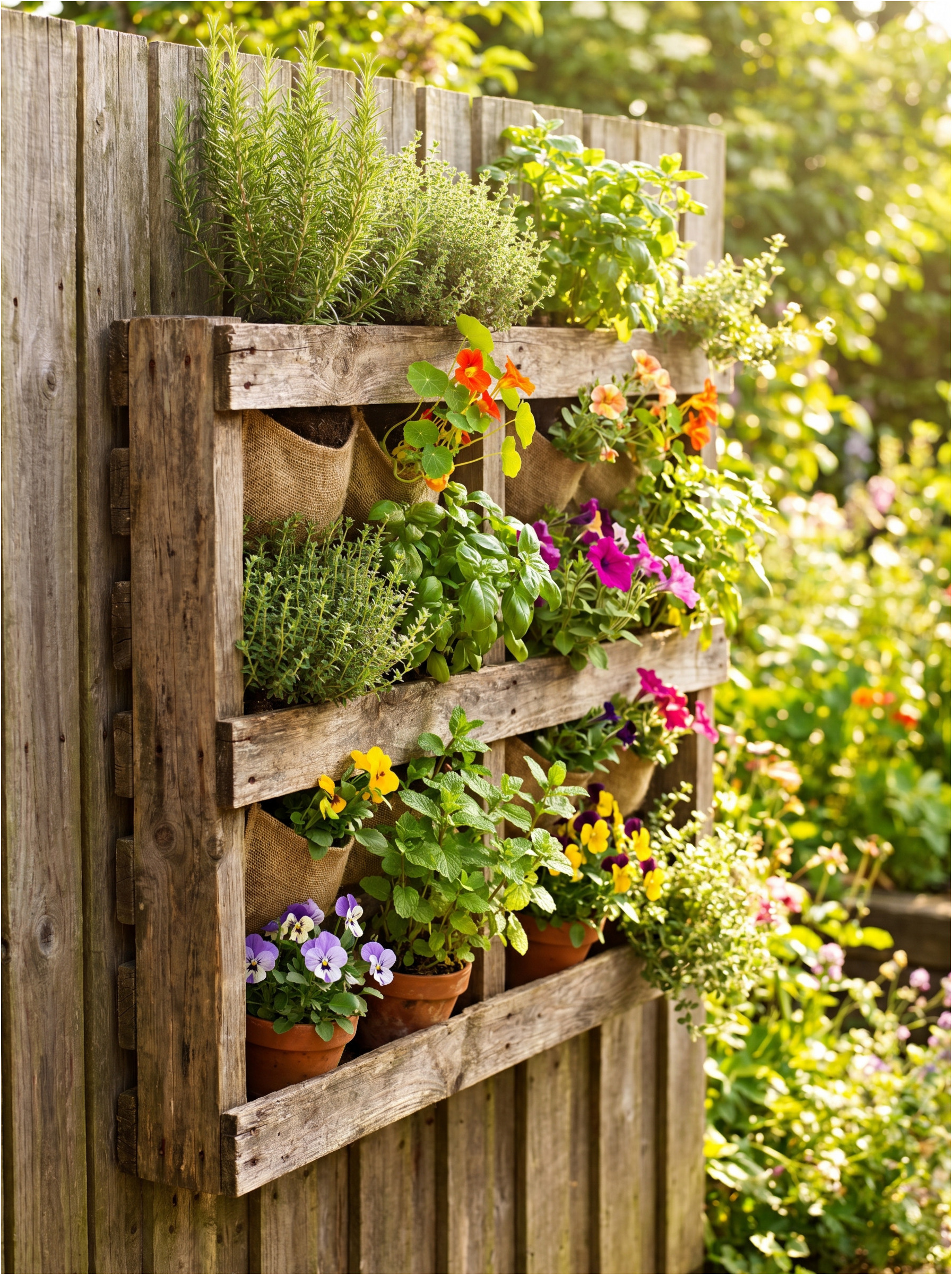
Check the pallet before using it. It shouldn’t be moldy, chemically contaminated, or treated with unknown substances. For growing edible plants, use only clean and safe materials.
4. Old Pots, Watering Cans, and Metal Containers as Flowerpots
An old enamel pot, metal watering can, metal bucket, or dented washbasin can look surprisingly beautiful in the garden. Just plant flowers in them and place them in a visible spot. Their imperfection is what gives them charm.
These containers are great for geraniums, petunias, lobelias, herbs, succulents, or small annuals. However, metal containers can heat up a lot in the sun, so it’s better to place them where they’re not exposed to direct sunlight all day.
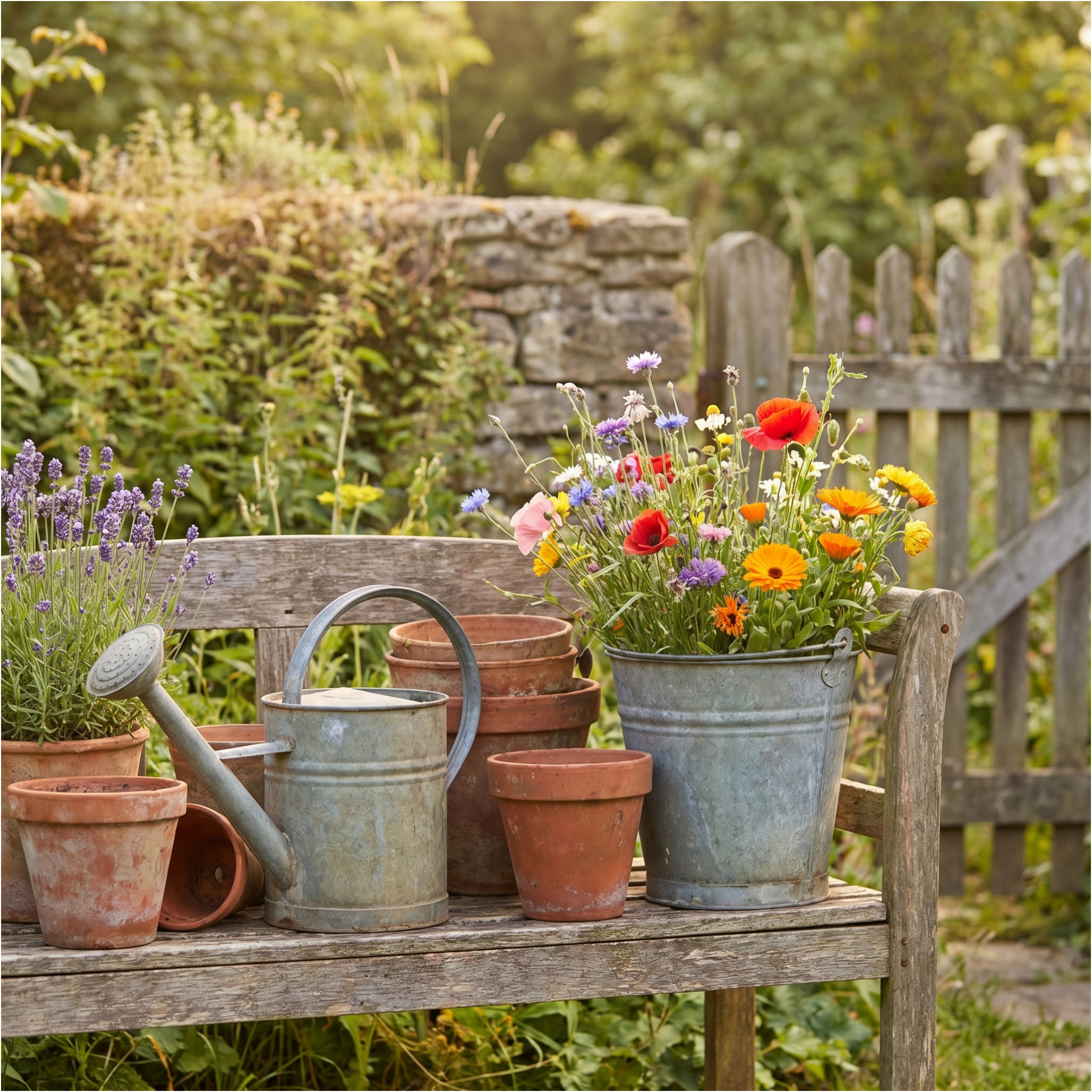
Again, the most important thing is water drainage. Make several holes in the bottom, or add a drainage layer and water very carefully. Plants must not stand in water.
5. Old Plank as a Sign or Welcome Decoration
You can create a simple garden sign from an old plank. You don’t have to be a painter or carpenter. Just clean the plank, maybe treat it with a wood stain, and write a short message on it. For example, “Welcome to the Garden,” “Herbs,” “Strawberries,” “Grandma’s Garden,” or just the name of your favorite corner.
A sign is a lovely addition to a herb bed, garden entrance, seating area, or greenhouse. If you don’t want to write by hand, you can use a stencil. But a natural look often works better than perfectly straight letters.
6. Broken Flowerpot as a Mini Garden
A broken flowerpot doesn’t have to end up in the trash. If larger pieces are intact, you can turn it into a small decorative garden. The shards can serve as steps, edges, or little terraces. Plant houseleeks, sedums, moss, small stones, or tiny rock plants in the pot.
The result is a miniature garden that looks beautiful on the terrace, steps, by the pergola, or among other flowerpots. It’s an ideal project for children too, because imagination knows no bounds.
But be careful with sharp edges on broken pots. If the decoration is in a place where children or pets move around, smooth the edges or place the pot safely aside.
7. Old Tools as Decorations for the Fence or Garden Shed
Rusty rakes, an old spade, a metal watering can, old scissors, or broken gardening tools can serve as original decorations. Hang them on a fence, the wooden wall of a shed, or a garden house. Combined with flowers, wicker, or a lantern, they create a beautiful country corner.
Old rakes can also be used practically as a hanger for small tools, herbs for drying, gloves, or hanging decorations. Just attach them with the tines down to a wooden wall.
These decorations work best when they’re not randomly scattered, but form a thoughtful whole. One wall with several old pieces can look like a beautiful garden gallery.
How to Prepare Old Things Before Putting Them in the Garden
Before using an old item as a decoration, always check it. The wood shouldn’t be completely rotten, containers shouldn’t have sharp dangerous edges, and the material shouldn’t be contaminated with chemicals. This is especially important for things you want to plant edible plants in.
You can lightly sand and treat wooden decorations with a wood stain. Clean metal containers of sharp parts. For everything that will serve as a flowerpot, remember water drainage. That’s what decides whether the decoration will be not only pretty but also functional.
Where to Place Decorations So They Don’t Look Like Clutter
The difference between a beautiful rustic decoration and a messy look is often just in placement. If you scatter old things all over the garden without order, they can look chaotic. But if you group them in one corner, you create a thoughtful composition.
Spaces by the pergola, garden house, fence, garden entrance, or seating area work well. Use an odd number of elements, different heights, and connect them with plants. Wood, flowers, and stone usually blend together very naturally.
What Doesn’t Belong in Garden Decorations
Not everything old is suitable for use. Avoid materials contaminated with oil, chemicals, paints of unknown origin, or treated wood that could release harmful substances. Especially if you want to plant herbs, strawberries, or vegetables in the container.
Be careful with plastics too, as they become brittle in the sun and look cheap. If you use them, try to hide them inside a wooden crate, wicker basket, or another more natural container.
Which Plants Suit These Decorations
Easy-care plants are best for containers made from old things. Geraniums, lobelias, verbena, lavender, sedums, houseleeks, ornamental grasses, herbs, calendula, marigolds, or small annuals are all great choices.
If the container dries out quickly, choose plants that can handle drier conditions. If the decoration is in the shade, go for plants suitable for partial shade. Always choose based on the location, not just appearance.
The Most Common Mistakes When Making Decorations from Old Things
- No water drainage in containers.
- You use rotten or chemically contaminated wood.
- There are too many decorations in the garden and it looks messy.
- Containers are in direct sunlight and overheat quickly.
- Plants don’t have enough space for roots.
- Sharp edges are not secured.
- Items are unstable and can be knocked over by the wind.
Small Budget, Big Effect
Garden decorations don’t have to cost thousands. Beauty often comes from an idea, not a price tag. An old ladder, crate, watering can, or plank can make a bigger impression than an expensive store-bought decoration if you incorporate them well among the plants.
The most charming decorations are those that look natural and fit your garden’s style. They don’t have to be perfect. It’s the patina, little imperfections, and handmade touches that give them character.
Start with What You Already Have at Home
Before you head to the DIY store, go through your shed, attic, garage, or the corner behind your house. You might find exactly what can be turned into a beautiful garden accessory. Old wood, crates, containers, flowerpots, or tools can get a second life.
Just start with one corner. Make a small composition from a crate, flowers, stones, and an old watering can. If you like the result, you can gradually add more elements. Your garden will feel cozy, original, and most importantly—uniquely yours.
Old wood, crates, pallets, boards, ladders, metal containers, watering cans, broken flower pots, stones, or old gardening tools work great.
Clean the wood, remove splinters, lightly sand if necessary, and treat it with wood stain or outdoor varnish. Do not use chemically contaminated or heavily rotted wood.
Yes, but the container must have drainage. Without drainage, roots can sit in water after rain, and plants may start to rot.
Group them in one corner, combine different heights, and connect them with plants. Fewer prominent elements often look better than many things scattered throughout the garden.
Suitable plants include geraniums, lavender, lobelias, verbena, sedums, stonecrops, herbs, marigolds, calendula, or ornamental grasses. Always choose based on light and the size of the container.