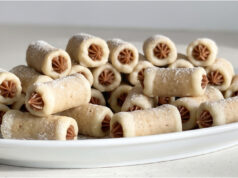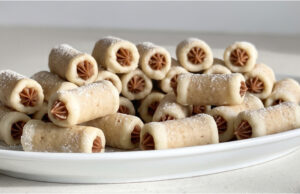

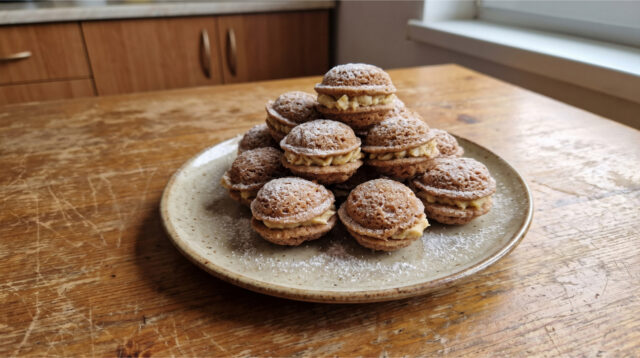
Walnuts, delicate buttery shells, and a smooth cream with a hint of rum create a classic Christmas cookie that tastes of butter and nuts. Once rested, stuffed walnuts become pleasantly soft, moist, and are perfect for any festive table.
This recipe was sent in by a reader who prepares it every year for Christmas. The key to success is cold butter, well-rested dough, and filling the completely cooled shells. Once finished, simply let the walnuts rest for 24–48 hours so the flavors meld and the cookies reach the perfect consistency.
What You’ll Need
For the walnut shells:
- 300 g plain flour,
- 120 g powdered sugar,
- 200 g cold butter, cut into cubes,
- 1 whole egg,
- 120 g finely ground walnuts,
- a pinch of salt,
- 1 teaspoon vanilla extract, optional.
For the walnut cream:
- 150 g softened butter,
- 100–120 g powdered sugar, to taste,
- 80–100 g finely ground walnuts,
- 1–2 tablespoons cream or milk to smooth,
- 1–2 teaspoons quality rum, optional but recommended.
For finishing:
- powdered sugar for dusting or quality chocolate for dipping the edges.
Step-by-Step Preparation:
1. Preparing the dough: Mix the plain flour with powdered sugar, salt, and finely ground walnuts. Add the cold butter and quickly work it in to form a crumbly mixture.
2. Finishing and resting the dough: Add the whole egg and, if using, vanilla extract to the crumb mixture. Quickly combine into a smooth dough, wrap it, and let it rest in the fridge for at least 1–2 hours, ideally overnight.
3. Shaping the shells: Roll the rested dough into a sheet about 3–4 mm thick. Cut out small ovals or circles and press them into walnut molds. If you don’t have these, you can use small tartlet molds. Gently prick the bottom with a skewer to prevent bubbles during baking.
4. Baking: Bake the shells at 170°C for about 8–10 minutes, until lightly golden. Let them cool in the molds for a few minutes, then carefully turn them out and allow to cool completely.
5. Preparing the cream: Beat the softened butter with powdered sugar until fluffy. Stir in the ground walnuts, cream or milk, and rum to taste. The cream should be smooth, moist, and firm enough to hold its shape.
6. Filling the walnuts: Place an appropriate amount of cream on one cooled shell, top with another shell, and gently press together. If some cream squeezes out, smooth it carefully with a small spatula.
7. Finishing and maturing: Dust the filled walnuts with powdered sugar or lightly dip the edges in quality chocolate. Store them in an airtight container and let them rest for 24–48 hours so the dough softens and the flavors blend.
How to Achieve Tender Shells
Cold butter helps create a tender dough and clean shell edges. Work the dough quickly and let it rest well in the fridge before shaping, which helps it hold its shape in the molds.
If you want the shells to be truly tender and not crumble when filling, let them rest in a box for at least a day after baking before adding the cream. Always fill only completely cooled pieces so the butter filling doesn’t start to melt.
Possible Variations of Walnuts and Cream
For cocoa shells, add 1–2 tablespoons of cocoa and 1 extra tablespoon of cream to the dough. For a coffee version, stir 1 teaspoon of instant coffee dissolved in 1 teaspoon of hot water into the cream. You can also replace part of the walnuts with ground pecans, which will make the cream smoother and sweeter.
Storage and Common Issues
In an airtight container and kept cool, stuffed walnuts will last 7–10 days, but they’re best after 2 days of maturing. You can prepare the baked shells ahead and freeze them for up to 2 months. After thawing, fill them with fresh cream.
If the shells break when turning out, let them cool in the molds for a few minutes and handle gently. Lightly greasing and dusting the molds with flour can also help. To prevent the dough from puffing up, prick the bottom and avoid overfilling the molds.
A cream that’s too runny may be caused by very soft butter or overbeating. In that case, chill it in the fridge for 10 minutes and then briefly beat again.