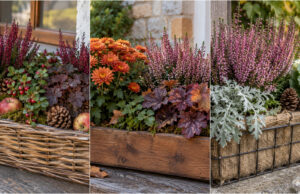

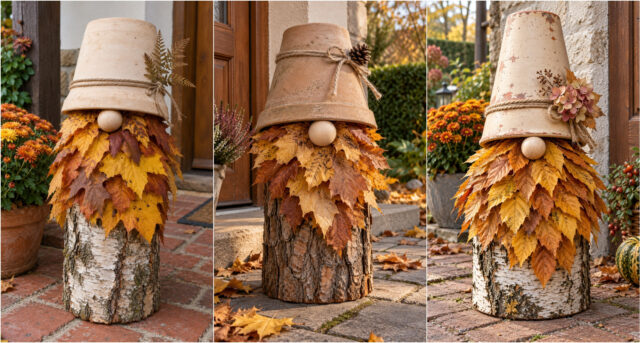
An autumn gnome made from a log, colorful leaves, and an upside-down flowerpot creates an eye-catching decoration for your doorway, steps, or garden gate. The basic version is simple, and you can easily adapt the final look to the natural materials you have on hand and the colors of your fall decor.
What You’ll Need
- a wooden log with bark, cut flat on both ends
- dry autumn leaves in various colors
- a flowerpot suitable as a hat
- a wooden ball or round wooden piece for the nose
- natural twine
- pinecones, acorns, rose hips, dried flowers, or other small natural items as available
- a suitable way to attach the individual parts
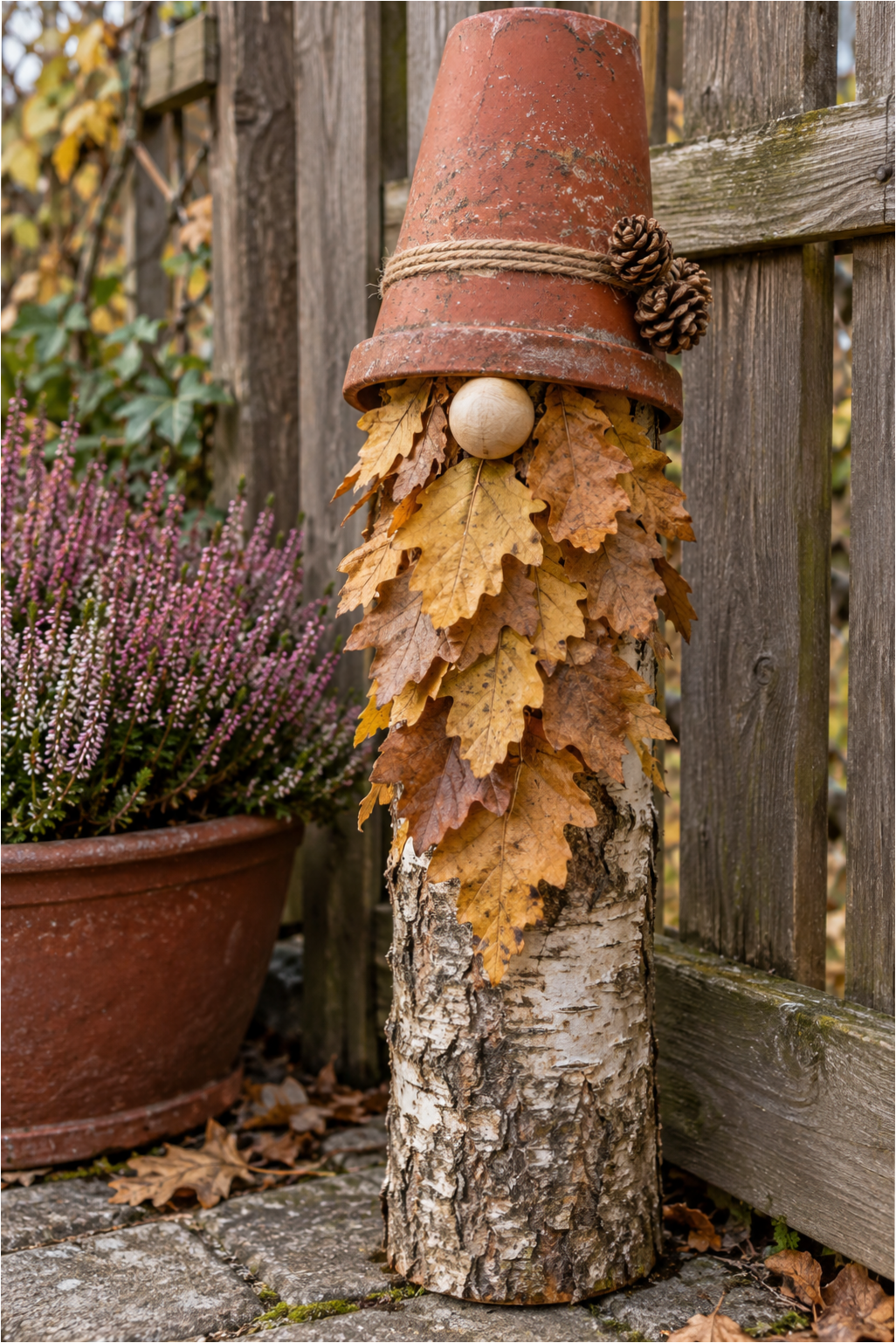
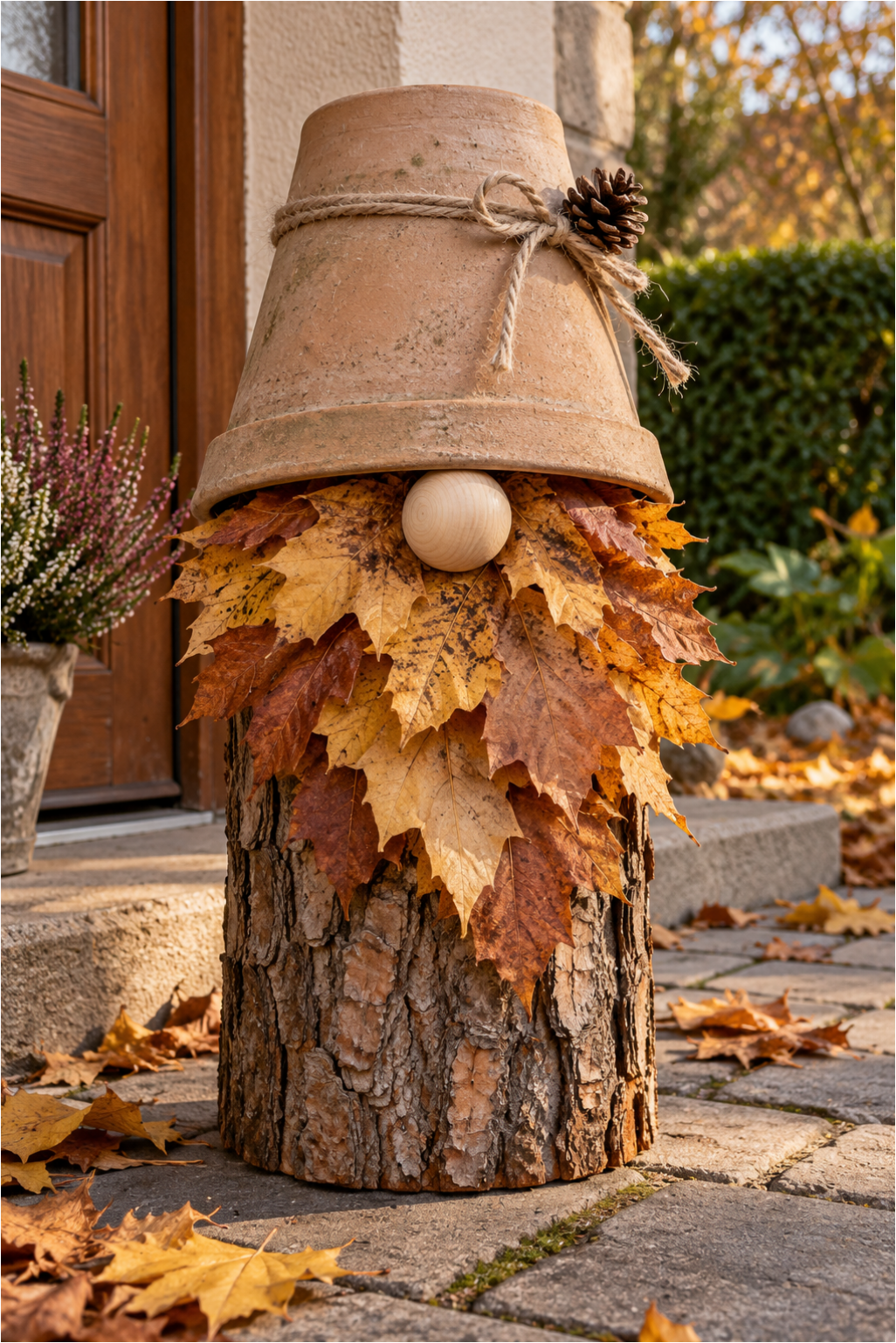
1. Prepare the gnome base: Choose a sturdy log with a flat bottom so the decoration won’t tip over. The photo shows a taller piece of wood with prominent bark, which forms the body and gives the gnome a rustic look.
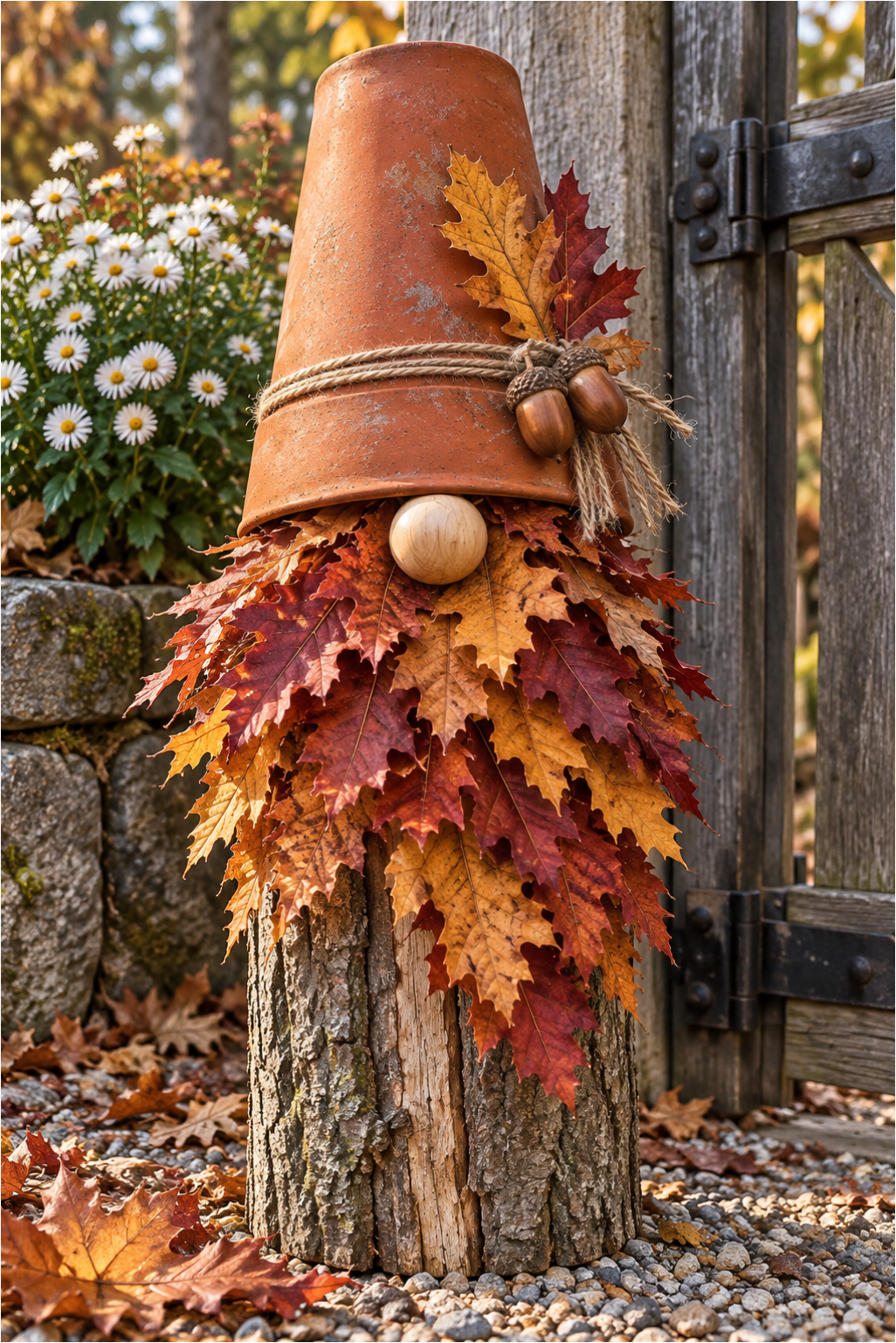
2. Check the proportions: Place the upside-down flowerpot on top of the log and make sure its rim overhangs enough. There should be space under the rim for the leafy beard and round nose.
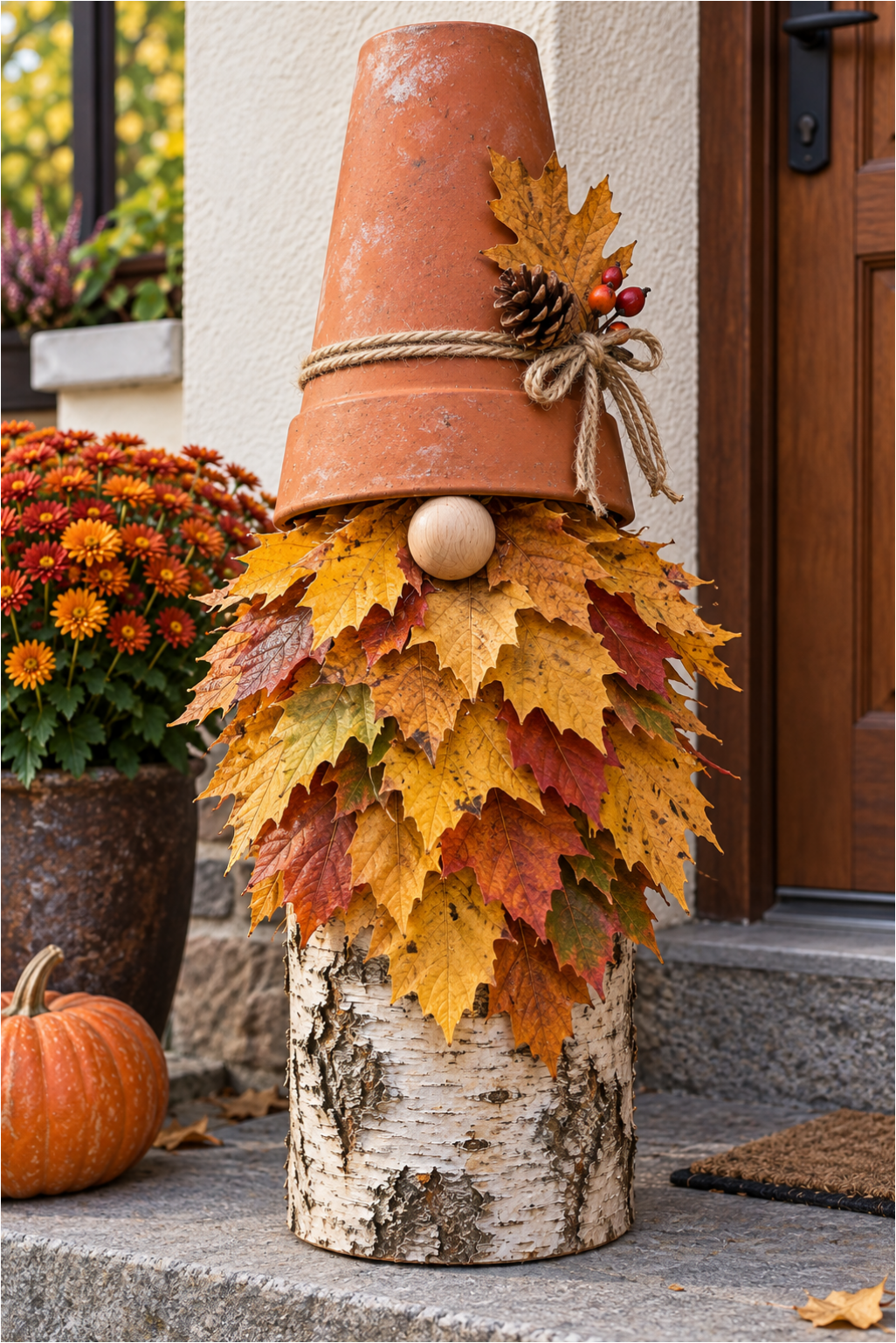
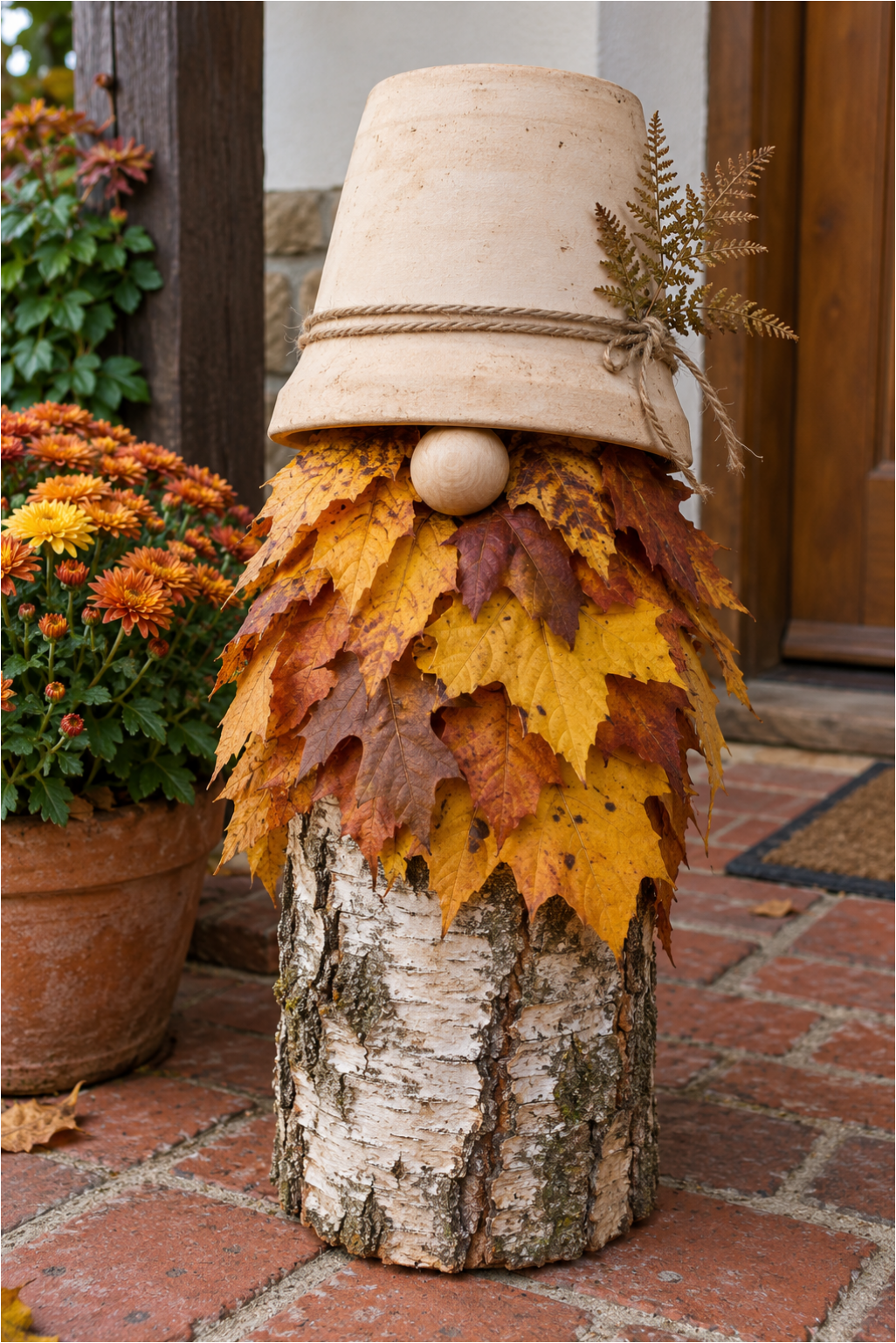
3. Choose the hat style: You can also use a lighter, naturally weathered flowerpot. Patina, small stains, and uneven surfaces are not a problem—they actually complement the bark and dry leaves nicely.
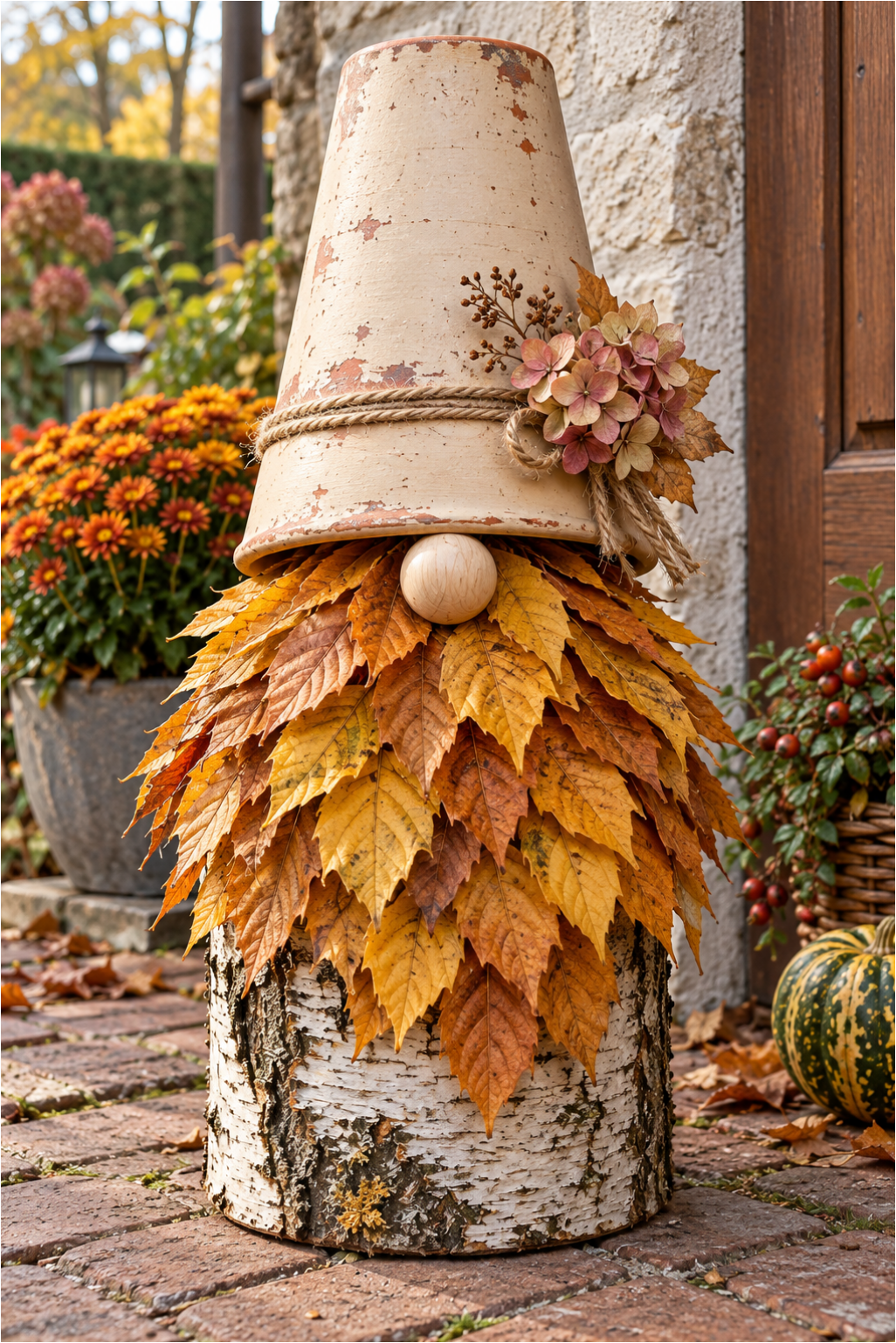
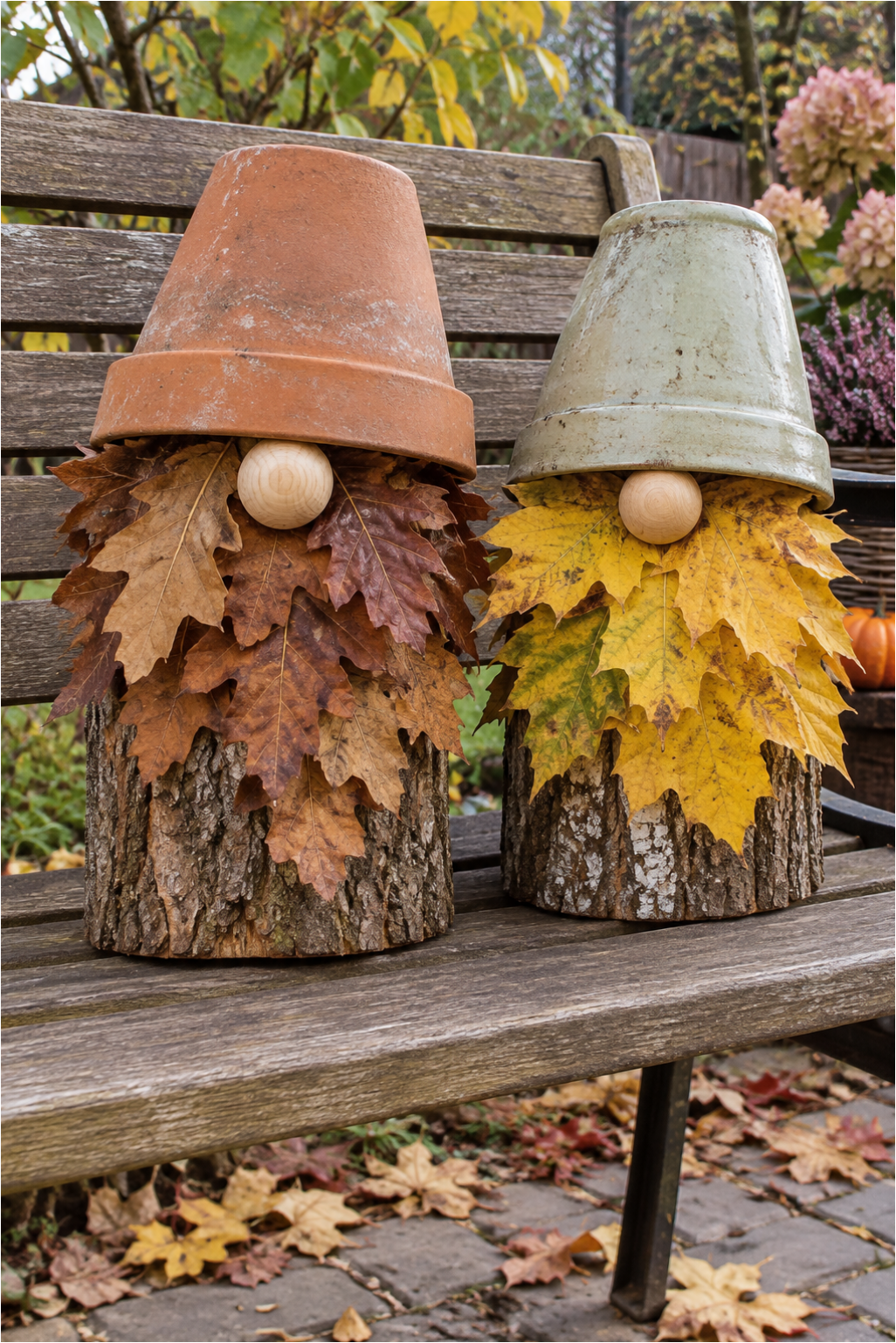
4. Match the colors: A green flowerpot creates a strong contrast with orange, yellow, and burgundy leaves. Before assembling, lay out all the parts together to check if the color combination looks balanced.
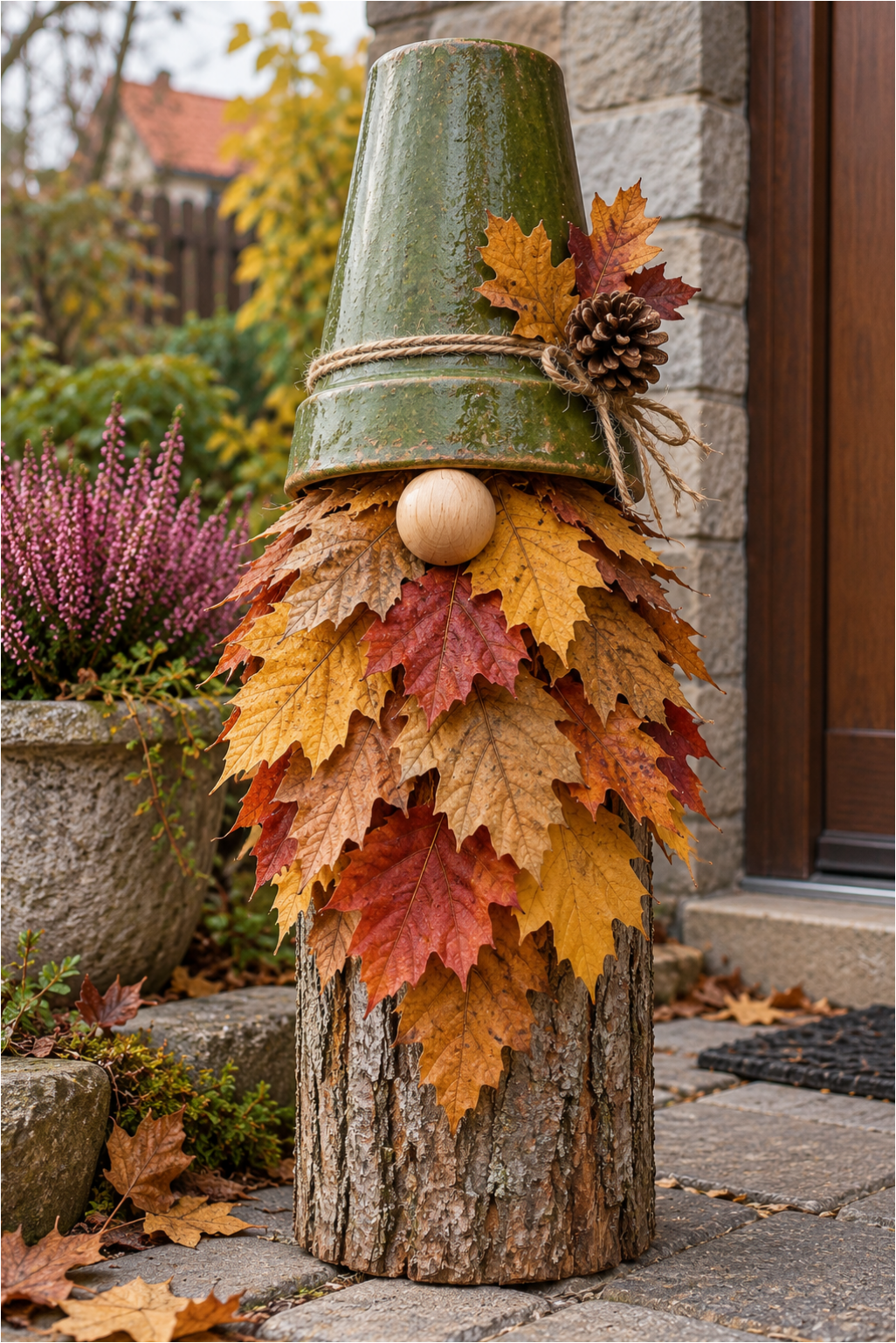
5. Adjust the size: You can make gnomes in different sizes. Pair a smaller log with a smaller flowerpot and a shorter leafy beard so the nose and hat don’t look too big for the body.
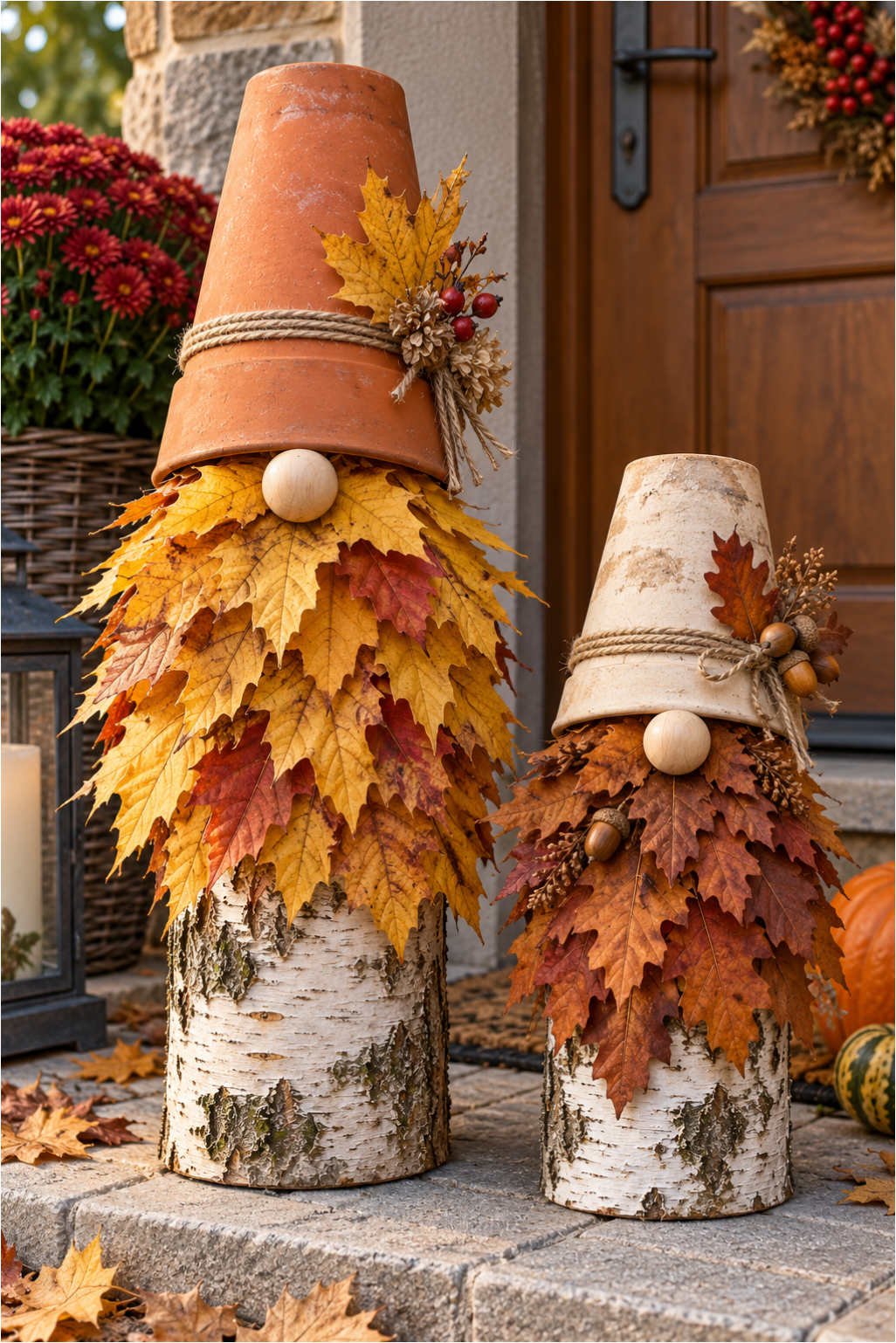
6. Start building the beard: Arrange the leaves under the top edge of the log so their tips point downward. The outer layer can be wider, while longer leaves in the center create an elongated beard shape.
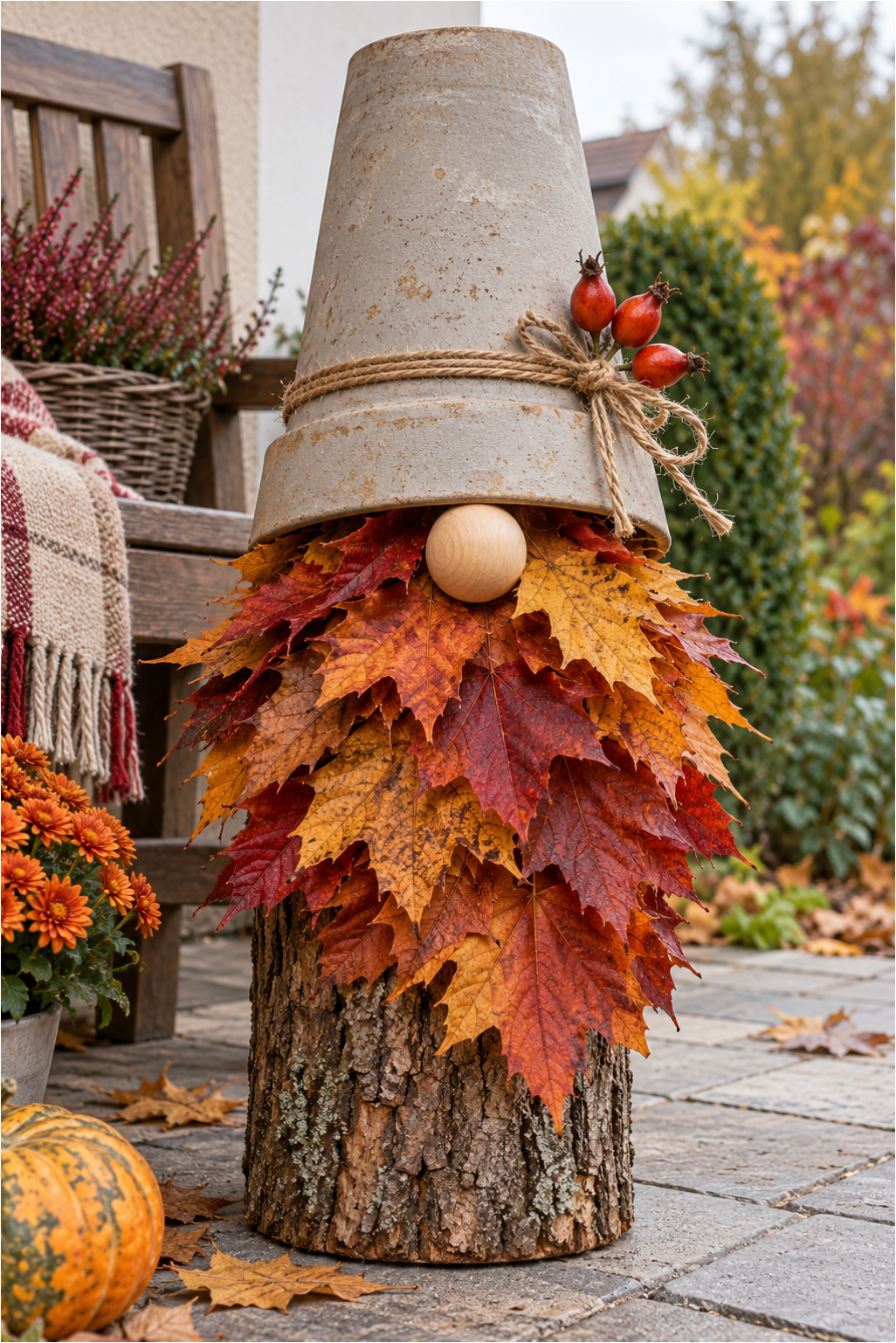
7. Work in layers: Overlap the leaves like roof shingles. The top row will cover where the lower leaves are attached, giving the beard a fuller, more continuous look.
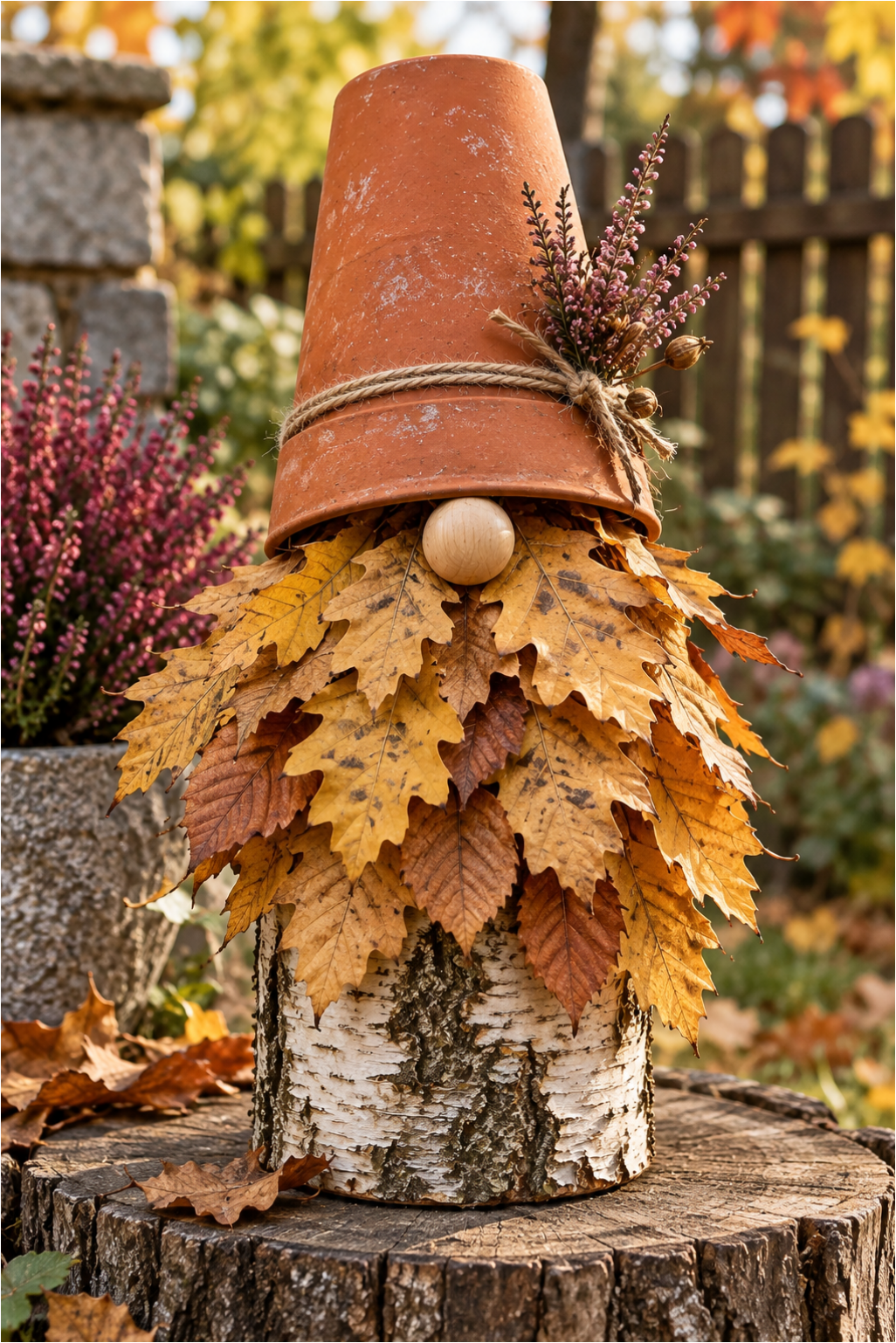
8. Alternate leaf colors: Mix yellow, ochre, brown, and reddish leaves. Distribute the colors irregularly so the beard looks natural and isn’t divided into obvious single-color stripes.
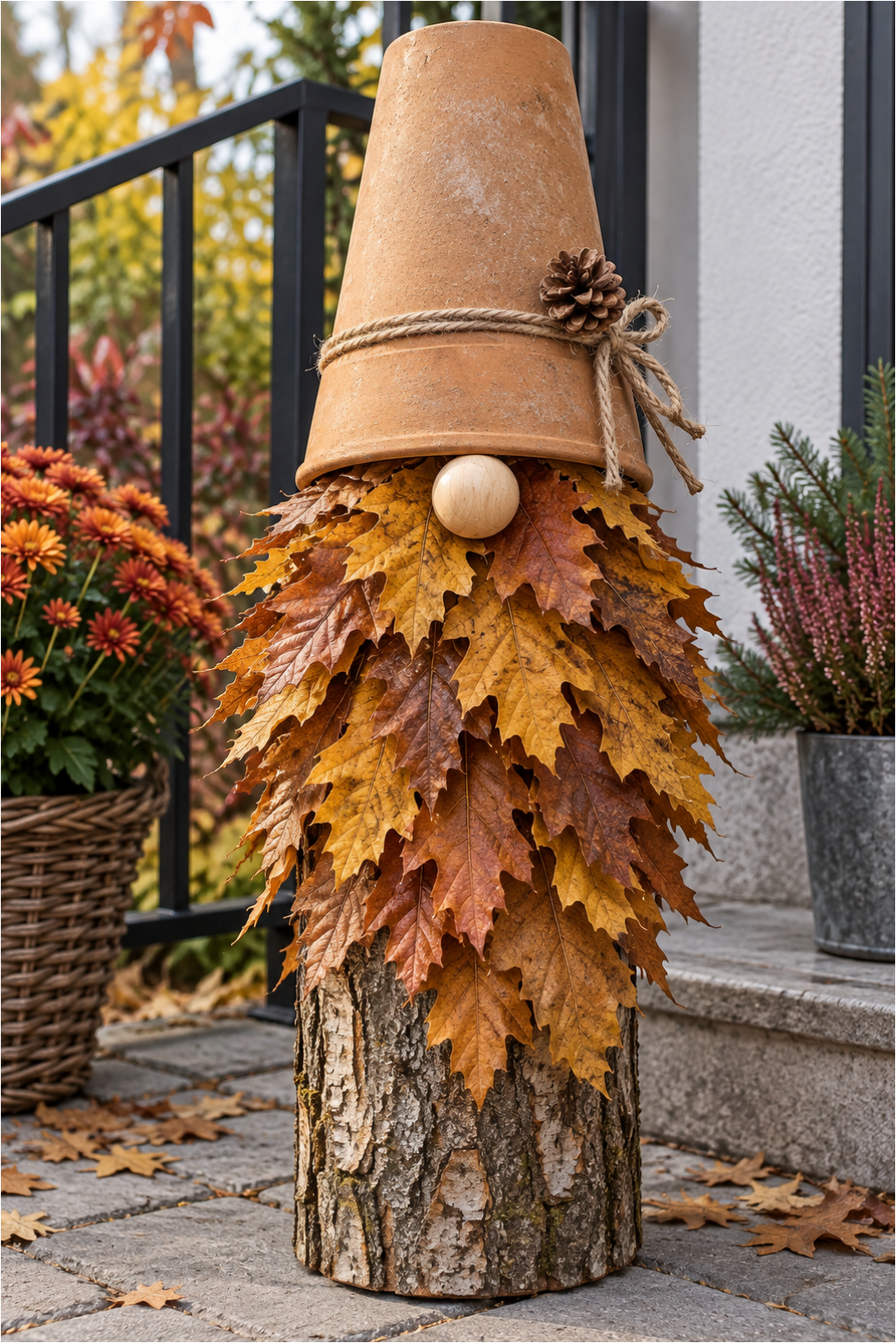
9. Make a shorter version: For a low log, a few rows of wider leaves are enough. Their edges can partly cover the bark, but leave the bottom of the wood visible to highlight the natural materials.
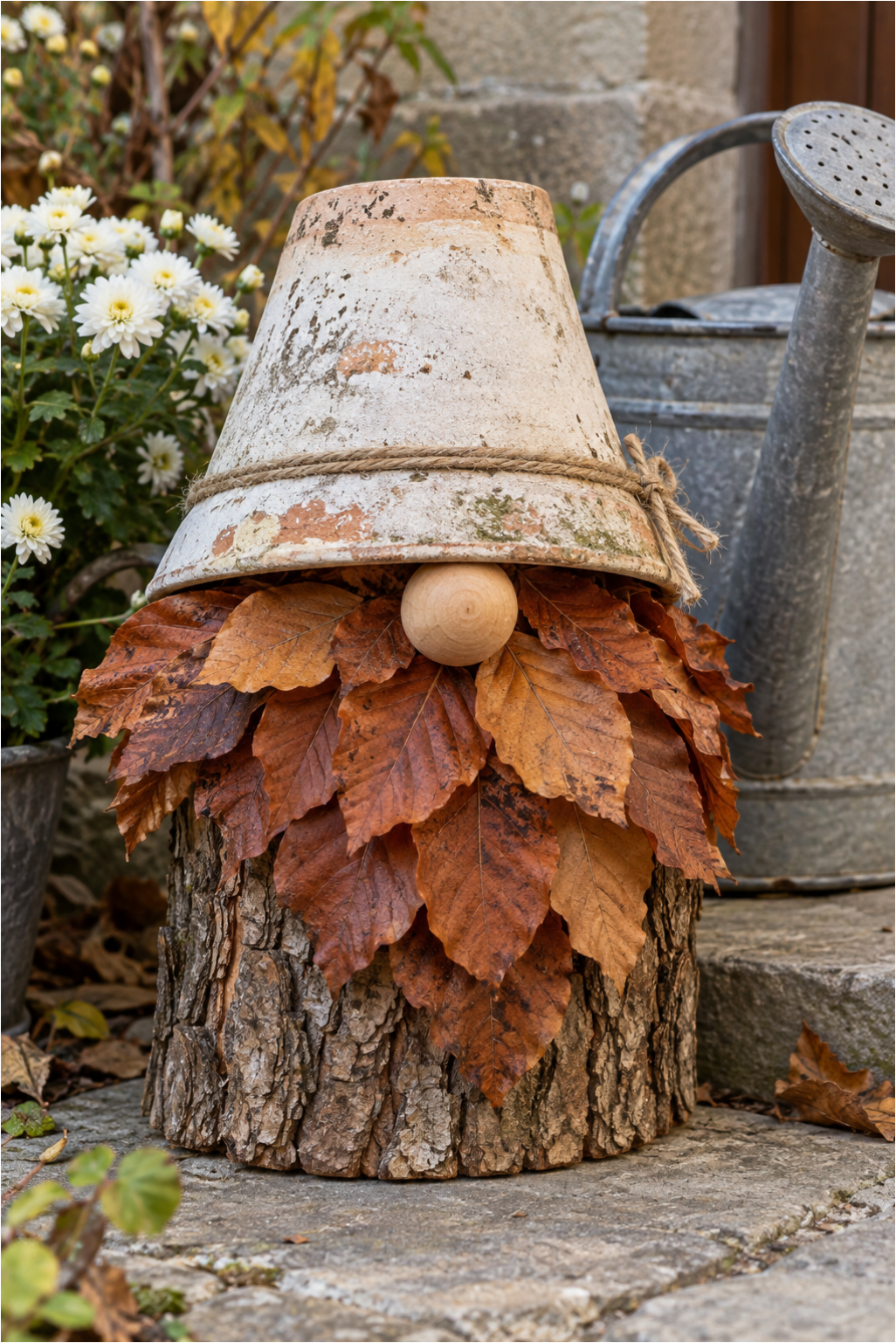
10. Attach the round nose: Place the wooden ball in the center just below the rim of the flowerpot. The nose should slightly overlap the top layer of leaves and be partly tucked under the hat, as shown in the photo.
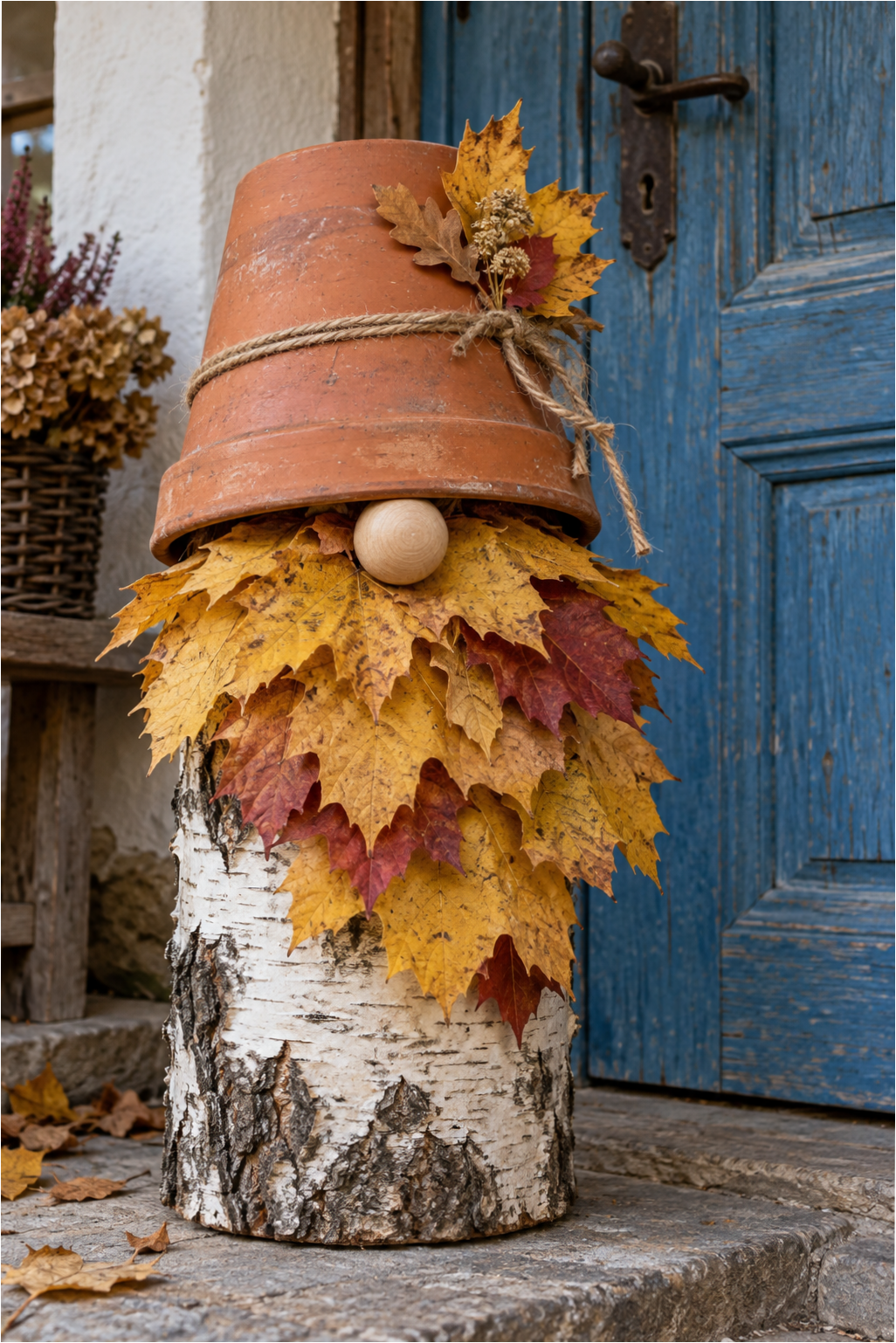
11. Finish with a contrasting hat: A dark flowerpot gives the gnome a more subdued look. Yellow and rusty brown leaves and light birch bark stand out nicely against this kind of hat.
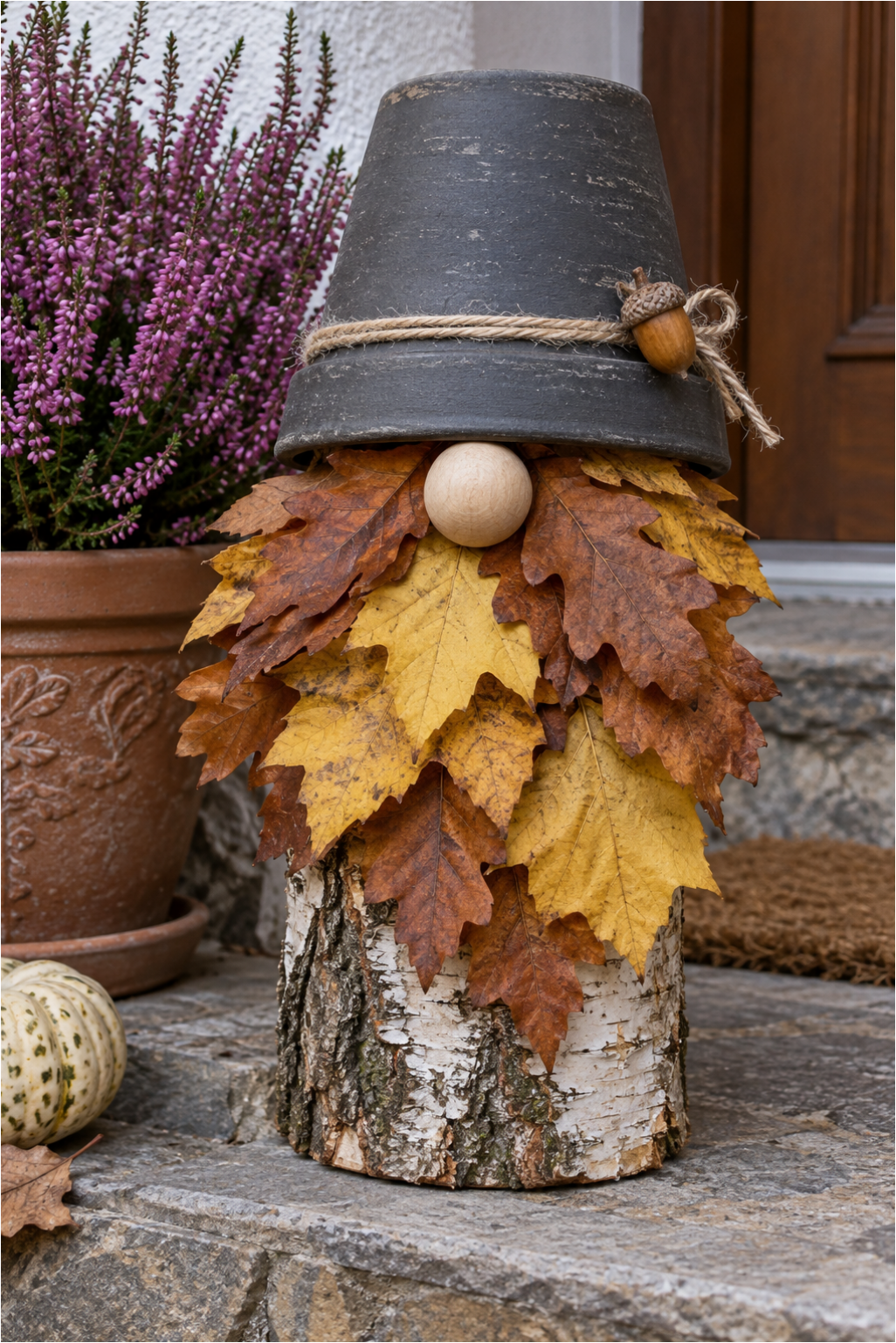
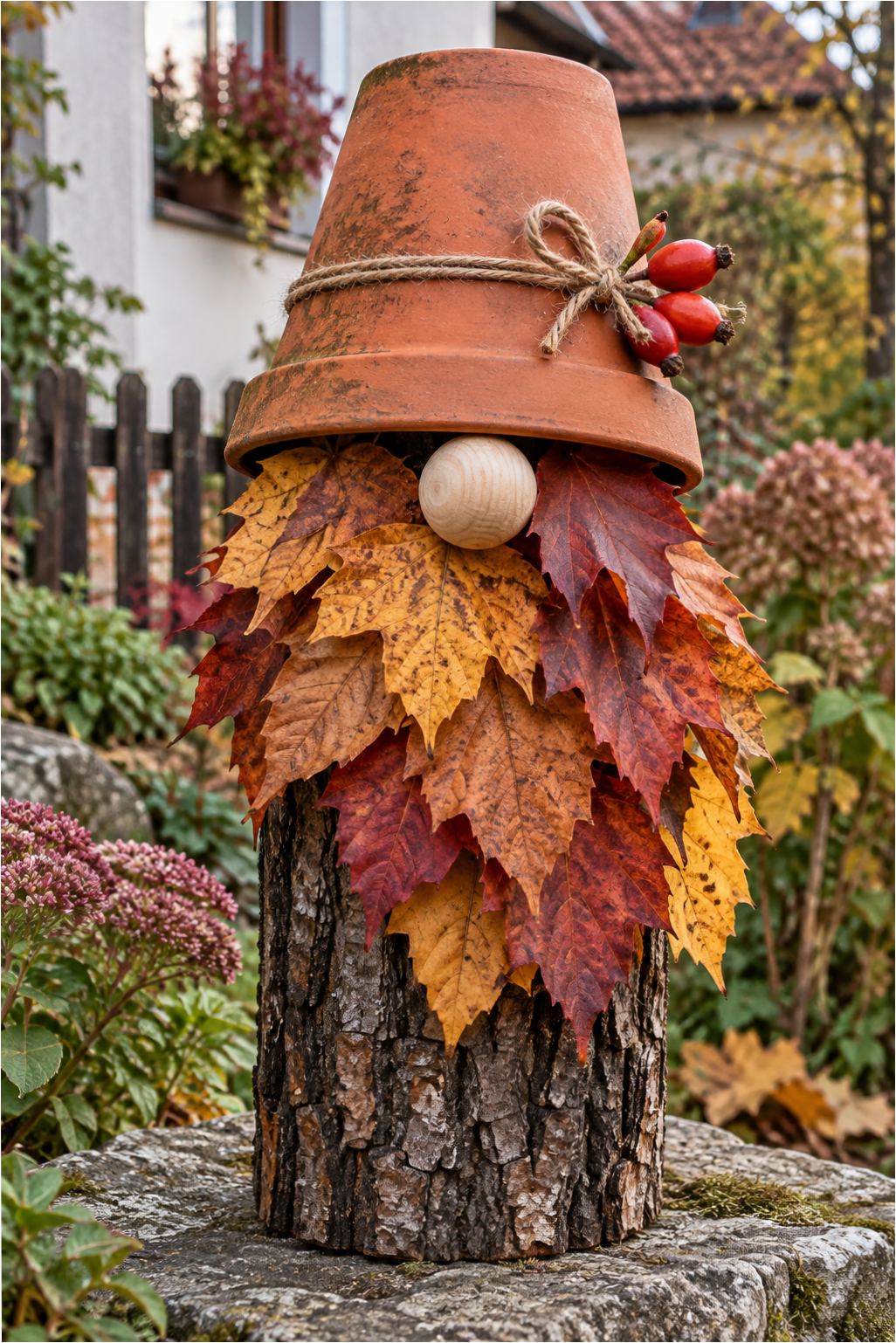
12. Wrap the hat with twine: Wind natural twine several times around the flowerpot and tie a simple bow at the front or side. The wrapping creates a decorative band and helps unify the whole piece.
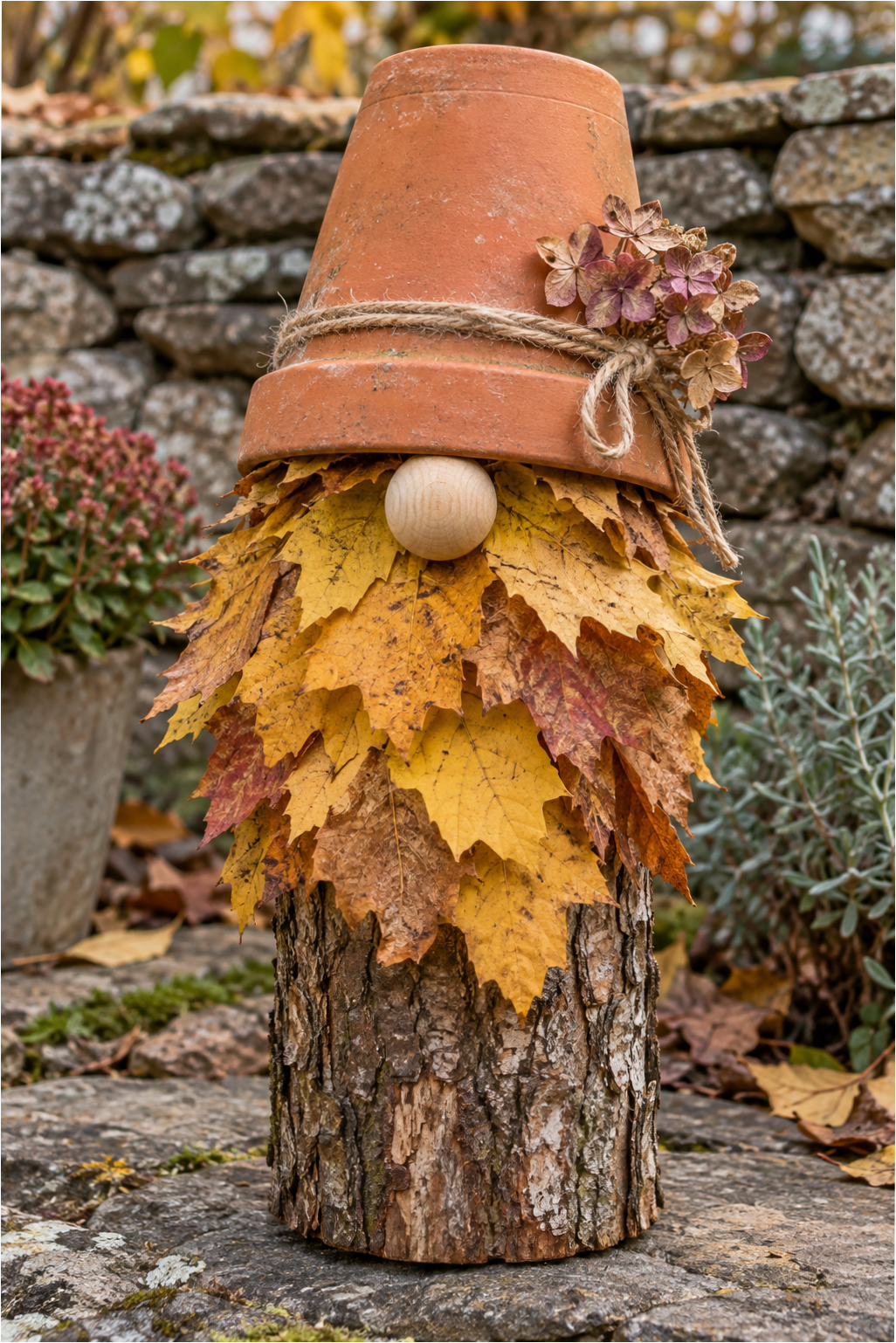
13. Add a delicate natural accent: Tuck a dried plant, small twig, or other lightweight natural item behind the twine. Place the decoration to the side so it doesn’t cover the nose or the gnome’s main silhouette.
14. Make a gnome pair: If you have two logs, create decorations in different sizes and colors. Use the same wooden noses as a common element, while different flowerpots and leaves give each gnome its own character.
15. Extend the beard on a tall log: On a narrow, tall base, let the leaves hang further down. A longer center section visually connects the flowerpot to the body and prevents the top half from looking too heavy.
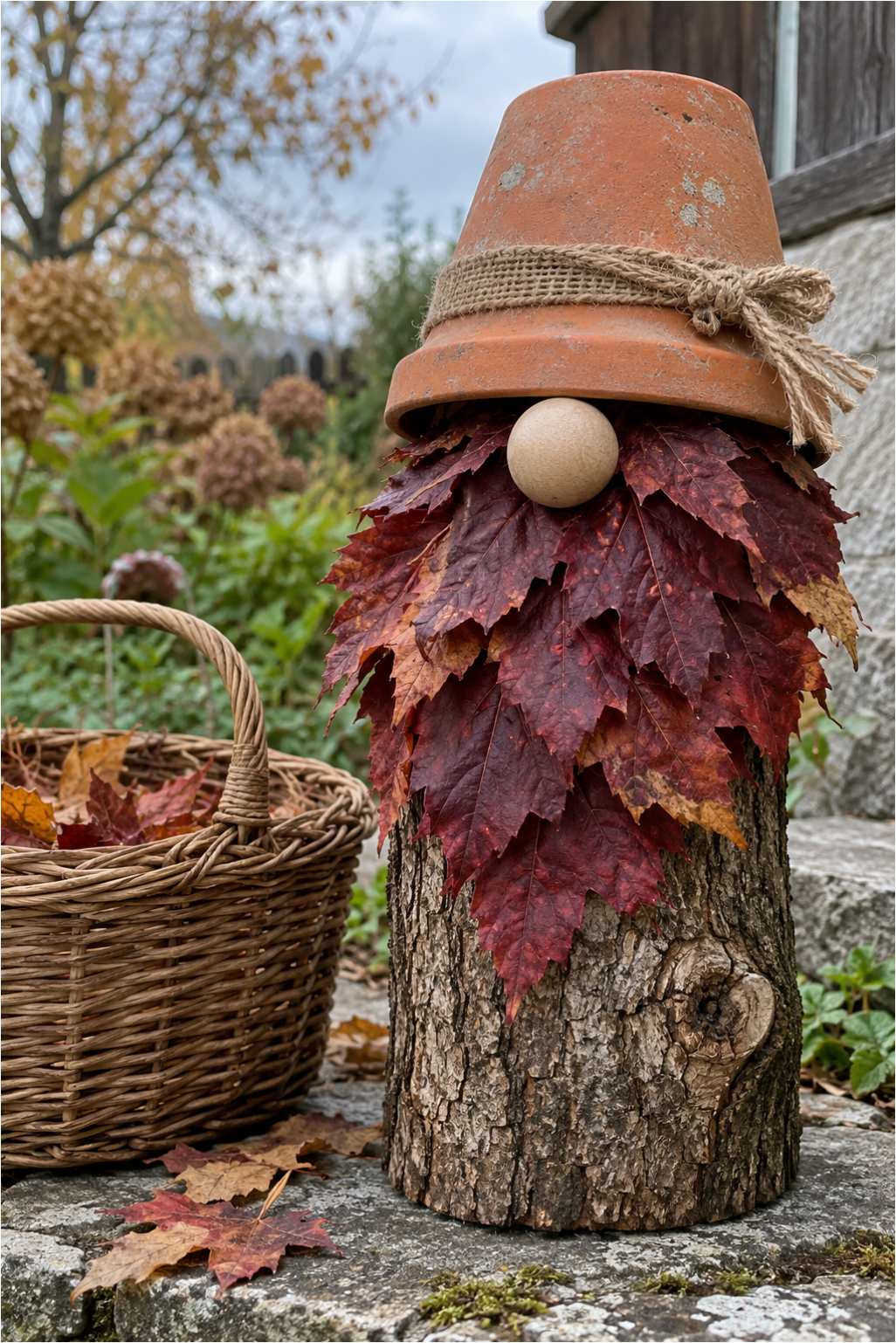
16. Use leaves of a single color: The beard doesn’t always have to be multicolored. Burgundy leaves create a bold, solid look, which you can accent with a simple jute ribbon or a wider natural band around the flowerpot.
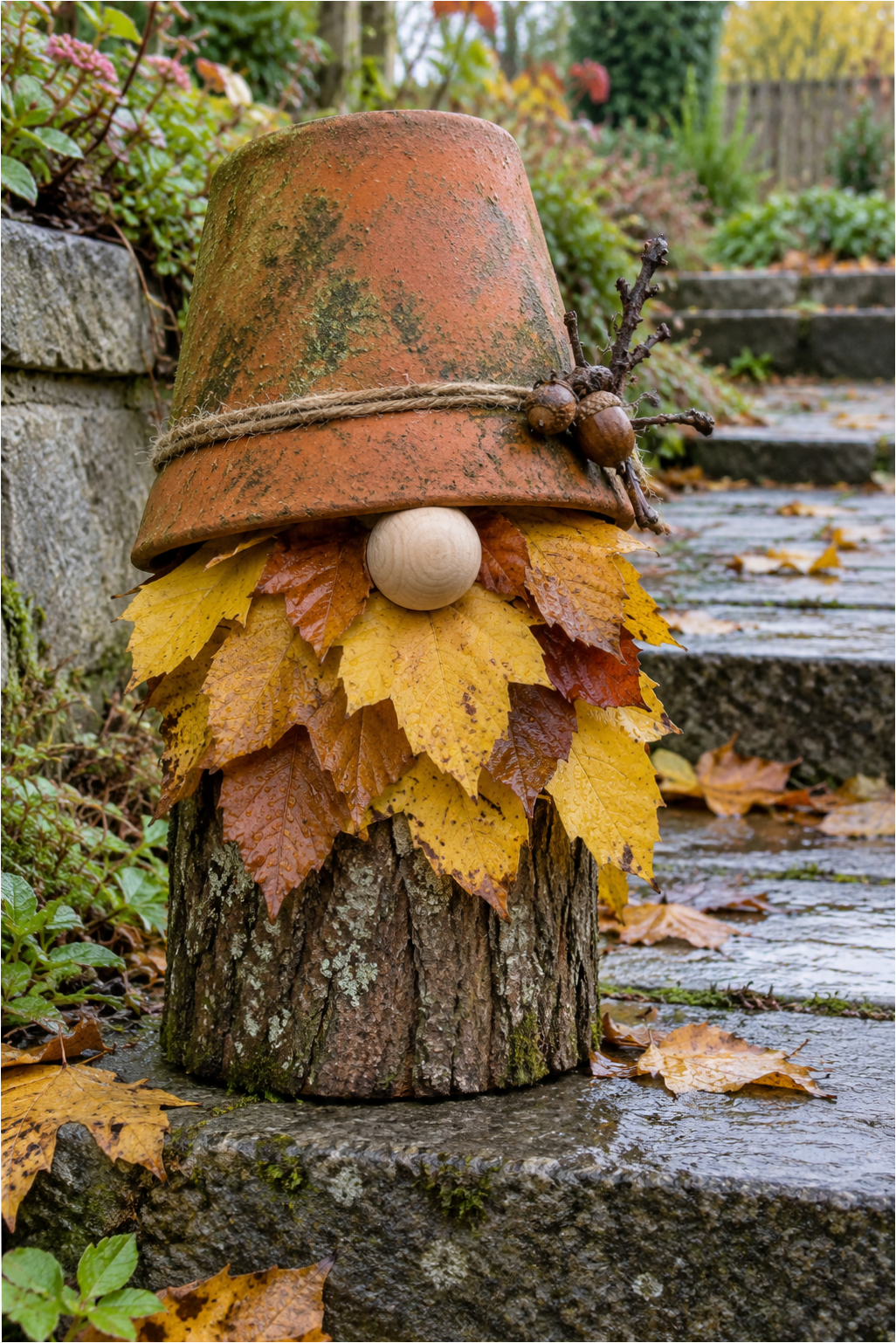
17. Add acorns and twigs: Attach a few acorns and a thin twig to the side of the hat. Keep the decoration small so heavier items don’t pull down the twine or affect the flowerpot’s stability.
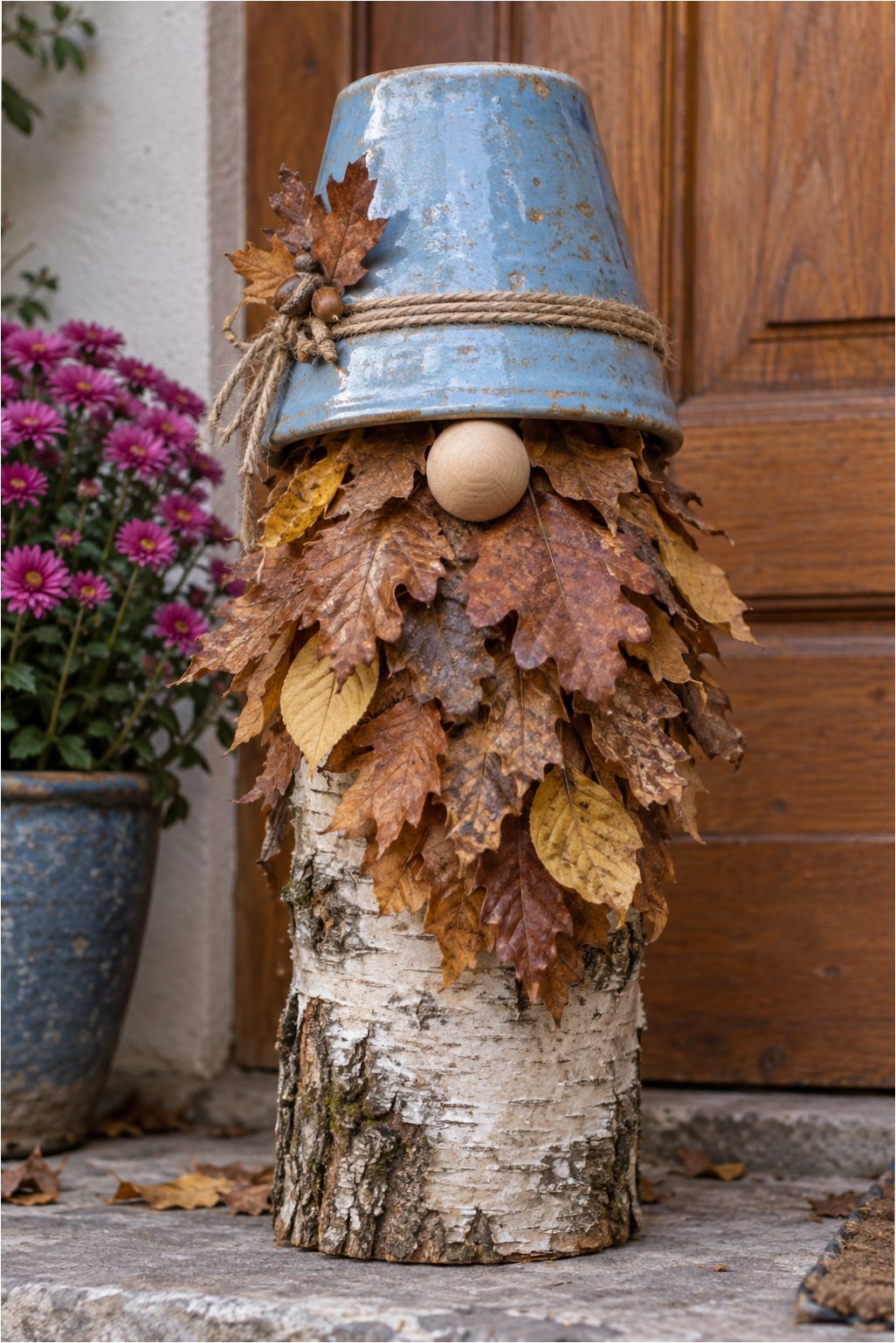
18. Try a colorful flowerpot: A blue pot creates an unusual contrast with brown leaves and light wood. The surface doesn’t have to be perfect—the worn patina actually enhances the rustic charm.
19. Decorate the hat with a pinecone: One small pinecone tied at the bow is plenty. Place it to the side and let the twine ends hang loose so the whole piece looks relaxed and not overcrowded.
20. Finish with a bold autumn version: The last gnome combines a tall log, terracotta flowerpot, a lush multicolored beard, and red berries. After assembling, check that the leaves are secure, the nose is centered, and the hat sits firmly.
Final Tip
Place your finished gnome on a solid, preferably sheltered spot near your entrance. Dry leaves are fragile and lose color in damp conditions, so protect your decoration from heavy rain and strong wind. Fallen or damaged leaves can easily be replaced with fresh ones during the season.