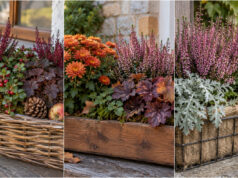
Geraniums and other summer annuals are slowly coming to an end, but an empty windowsill is definitely not the only option. Autumn window boxes can be colorful, elegant, and surprisingly vibrant. Combine heather with chrysanthemums, ornamental grasses, ivy, silver-leaved plants, or ornamental cabbage, and you’ll create a display that remains beautiful even after summer flowers have long faded.
An autumn window box doesn’t need to be overloaded with decorations. Often, the best look comes from combining just a few plants of different heights, colors, and textures. Small pumpkins, pinecones, or berry branches are enough as subtle accents.
1. Yellow Chrysanthemums as a Striking Centerpiece
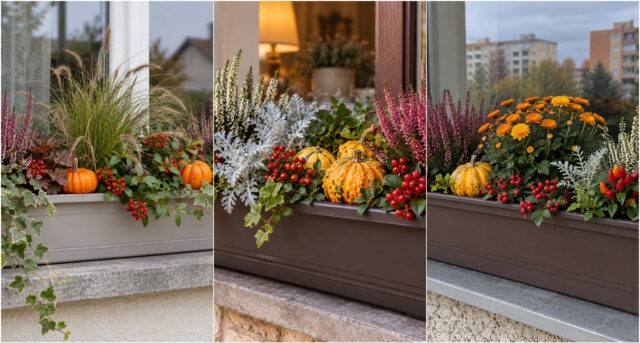
The first combination beautifully demonstrates a simple rule: place the tallest and most eye-catching plant in the center and surround it with lower-growing species on the sides.
A yellow chrysanthemum instantly brightens up the box, while white heathers and silver-leaved plants soften its bold color. Red berries and small decorative pumpkins give the whole arrangement a distinctly autumnal character.

2. Grasses Add Height and Movement
If you don’t want the classic all-heather combination, add a more prominent ornamental grass.
Its delicate leaves and plumes sway in the wind and create a completely different look than low, compact plants. Around it, pink heathers, trailing ivy, and a few tiny pumpkins work beautifully.

3. Terracotta Planters Pair Well with Classic Autumn Colors
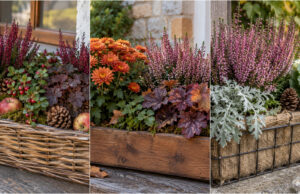
An older terracotta container already feels warm and natural on its own. Simply plant it with heathers in several shades, add an orange chrysanthemum, and let ivy cascade over the edge.
Pinecones and rose hips or other red berries can fill small empty spaces without making the arrangement look cluttered.

4. White Heather and Silver Leaves for a Calmer Look
An autumn window box doesn’t have to be orange. The combination of white, green, and silver is very elegant.
White heather stands out next to plants with light gray leaves and darker greens. A single small striped pumpkin and a few red berries are enough to make it clear that autumn has arrived.

5. Chrysanthemums Work Even on Apartment Windowsills
You don’t need a country house or a big garden for autumn decorations. The same principle can be used on a regular apartment windowsill.
A compact chrysanthemum creates a colorful center, heathers fill the sides of the container, and trailing ivy softens the look of a long plastic box.

6. Burgundy Leaves Create a More Elegant Autumn Palette
If you’re tired of classic orange, try plants with burgundy or deep red leaves.
Combined with white heather, dark green foliage, and small pumpkins, you’ll get a window box that feels autumnal but much less traditional.

7. Two Window Boxes Side by Side Make a Bigger Impact
Do you have a wide window? Instead of one long box, you can use two similarly planted ones.
They don’t have to be exactly the same. Just repeat the same plants and colors – for example, chrysanthemums, white heather, ivy, and small pumpkins.
The result will look unified, but not overly perfect.

8. An Evening Autumn Window Box Can Feel Cozier Than Summer Flowers
Pink and white heather combined with silver-leaved plants and trailing greenery stand out especially in soft evening light.
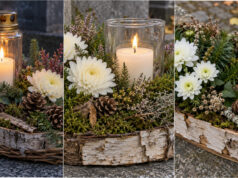
If the box is near an entrance or terrace, you can complement the composition with a lantern placed next to it. Always keep candles at a safe distance from dry plants.

9. Autumn Rain Is Fine, Waterlogging Is Not
Autumn brings more rain and lower temperatures, so plants usually need less water than in summer.
It’s important that the window box has drainage holes and that water doesn’t sit in it for long periods. Plants in soggy soil can start to rot, even if they look hardy at first glance.

10. Ornamental Cabbage Can Replace Classic Flowers
One of the most interesting autumn combinations uses ornamental cabbage. Its striking leafy rosettes look almost like large flowers.
With white heather, trailing ivy, and a few orange pumpkins, you’ll create a display that feels fresh even without classic chrysanthemums.

What Works Best in an Autumn Window Box?
You don’t have to use all the plants at once. For a well-composed arrangement, three to five different elements are usually enough:
- heather and heath – for autumn color,
- chrysanthemums – as a bold blooming centerpiece,
- ornamental grasses – for height and lightness,
- ivy – to cascade over the edge of the container,
- silver-leaved plants – for contrast,
- ornamental cabbage – for striking leafy rosettes,
- plants with colorful berries – for small red accents.
Pumpkins and Pinecones Are Best as Accents
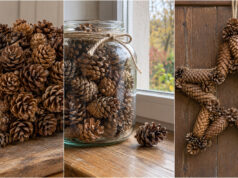
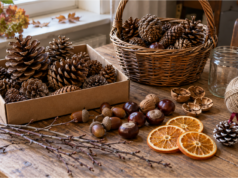
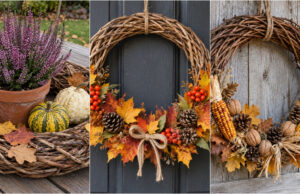
Small decorative pumpkins, pinecones, or chestnuts can be beautiful, but you don’t need to fill the whole box with them.
Often, just one or two bold pieces among the plants are enough. The arrangement then looks more natural, and the main role still belongs to the living plants.
Remember That Autumn Plants Need Less Water
In cooler weather, the soil dries out more slowly. Always check its moisture before watering.
Heathers don’t like to dry out completely, but long-term soggy soil doesn’t suit them either.
So water your window box according to the weather, not automatically every day like in summer.
Your Summer Window Box Doesn’t Have to End Up Empty in Autumn
Just swap out faded annuals for a few hardier plants, and your windowsill can stay colorful long after summer is over.
The most beautiful autumn displays often don’t come from ten different decorations. Much better is a combination of a few colors, varying plant heights, and one bold element – a chrysanthemum, ornamental grass, or perhaps ornamental cabbage.
And if you already have heather at home, you don’t have to give it up. Just try pairing it with something other than the usual heather + pumpkin duo this time.