
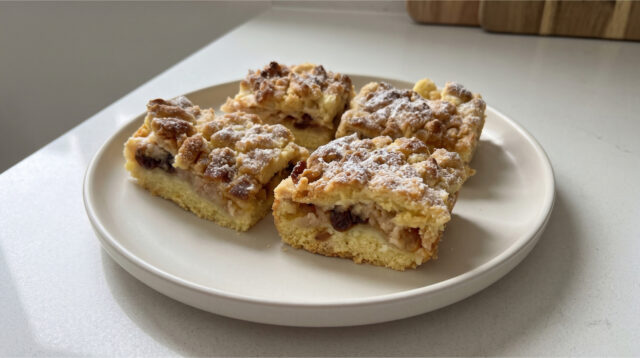
Delicate pastry, juicy cinnamon apples, and light meringue make a tried-and-true combination that’s perfect with coffee or for guests. Baroness’s slices, also known as Countess’s cake, stand out thanks to the contrast between the moist fruit filling and the golden grated pastry.
Preparation takes about 25 minutes, plus time for chilling part of the dough. This dessert is easy to make, and the main trick is to set aside one third of the dough in the fridge or freezer. Once firm, it can be easily grated over the meringue, creating a crispy layer during baking.
What You’ll Need
For the delicate pastry:
- 450 g semi-coarse flour, sifted for a finer texture,
- 150 g powdered sugar,
- 250 g baking margarine, such as Hera, or butter,
- 4 egg yolks,
- ½ packet baking powder.
For the apple filling and meringue layer:
- 1 kg apples, coarsely grated, fresh or preserved from compote,
- 150 g powdered sugar, amount can be adjusted based on the tartness of the apples,
- ground cinnamon to taste,
- 4 egg whites.
Step-by-Step Preparation:
1. Preparing the egg yolk foam: Place four egg yolks and powdered sugar in a large bowl. Using a whisk or mixer, beat them into a pale foam, which helps create a finer and more even dough.
2. Making the dough: Add softened margarine, grated or cut into cubes, to the foam. Sift in the semi-coarse flour mixed with half a packet of baking powder, and quickly knead by hand into a smooth, firm, and slightly greasy dough.
3. Chilling part of the dough: Separate about one third of the finished dough, wrap it in plastic wrap, and place it in the fridge or freezer. Let it chill until it is firm enough to grate easily.
4. Preparing the base: Spread the remaining two thirds of the dough onto a standard large baking tray. For easier removal, you can line the tray with baking paper. Use your fingers and palms to press the dough evenly over the entire surface up to the edges. Since the dough is quite greasy, you don’t need to grease the tray.
5. Preparing the apples: Peel and coarsely grate the fresh apples. If they are especially juicy, gently squeeze out excess juice with your hands so the filling doesn’t soak the bottom crust and the steam doesn’t disturb the meringue.
6. Layering the filling: Evenly spread the grated apples over the prepared base. Sprinkle with ground cinnamon and powdered sugar, adjusting the amount of sugar to the tartness of the fruit.
7. Preparing the meringue: In a perfectly clean bowl, beat four egg whites until stiff and glossy peaks form. Gently spread the meringue over the apple layer with a spatula, keeping its fluffy texture.
8. Grating the top layer: Take the chilled third of dough from the fridge or freezer. Using the coarse side of a grater, grate it evenly over the meringue, creating an irregular lattice that will become crispy after baking.
9. Baking: Place the tray in an oven preheated to 180°C and bake for about 35 to 45 minutes. The dessert is ready when the grated dough pieces are golden and the meringue is baked through.
10. Cooling and serving: Let the baked slices cool completely on the tray. The delicate pastry will firm up as it cools, and the meringue will be easier to cut cleanly. Before serving, you can lightly dust the squares with powdered sugar and serve with afternoon coffee.
How to Prevent the Meringue from Getting Soggy
Apples that are too juicy can release a lot of juice during baking. This juice starts to evaporate, and the hot steam can soak the meringue from below, causing it to collapse and become soggy after baking. That’s why it’s best to gently squeeze very juicy apples in your hands before layering them.
Adding a teaspoon of cornstarch while beating the egg whites can also help. Always prepare the meringue in a clean bowl and gently spread it over the apples.
What Can Be Used Instead of Margarine and Apples
Baking margarine, such as Hera, can be replaced with regular butter in a 1:1 ratio. Let the butter soften at room temperature before using; the finished cake will have a finer texture and a more pronounced buttery aroma.
Instead of apples, you can use firm plum jam, preserved or fresh apricots sliced, or fresh rhubarb with cinnamon. The method for preparing the delicate base, meringue layer, and grated top remains the same.
Frequently Asked Questions
Yes. We can replace vegetable fat, such as Hera, with regular butter in a 1:1 ratio. Let the butter soften slightly at room temperature before processing.
The cause may be overly moist apples. Excess juice evaporates during baking, and the steam moistens the meringue from below. Therefore, we should lightly squeeze the apples; we can also add one teaspoon of cornstarch to the meringue while beating.
Yes. We can use firm jams, canned or fresh apricots sliced, or fresh rhubarb with cinnamon. The process of grating the top dough remains the same.
Final Tip
Cut the Baroness’s slices only after they have cooled completely, as the warm delicate pastry is soft and breaks easily. Once cooled, the dessert holds its layers better, and the apples, meringue, and golden grated layer stand out beautifully in each slice.