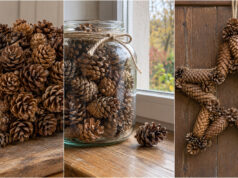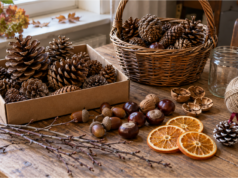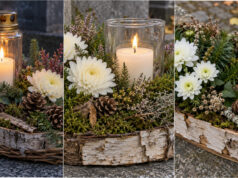


You don’t have to buy a ready-made All Souls’ Day wreath, because you can easily create an impressive natural decoration at home. The following photos show twenty ways to arrange cones, dried flowers, red berries, autumn decorations, and simple bows on a base of dense pine branches.
What You’ll Need
- a circular wreath base
- various types of fresh pine branches
- cones of different sizes
- dried flowers and small natural twigs
- red berries or their decorative imitations
- dry autumn leaves and orange lanterns (Physalis)
- natural ribbon or raffia
- binding material and tools suitable for attaching decorations
When working with unknown fruits and plants, use gloves and keep the finished wreath out of reach of children and pets.
Step-by-Step Instructions and Inspiration
1. Prepare the green base: Arrange the pine branches on the circular base gradually in one direction, so that the individual twigs overlap and cover the base. In the first example, the wreath is mainly decorated on the left and bottom with cones, flowers, red berries, and a light bow.

2. Add warm autumn tones: You can insert a few orange lanterns and dry oak leaves into the basic arrangement. Distribute them among the cones, not just on the surface, so the decorations look naturally embedded in the greenery.

3. Create a softer floral version: A combination of pinkish-purple twigs, light round flowers, and cones gives a calm and respectful impression. Focus the decoration on the lower half and place one larger cone on the left side as well.
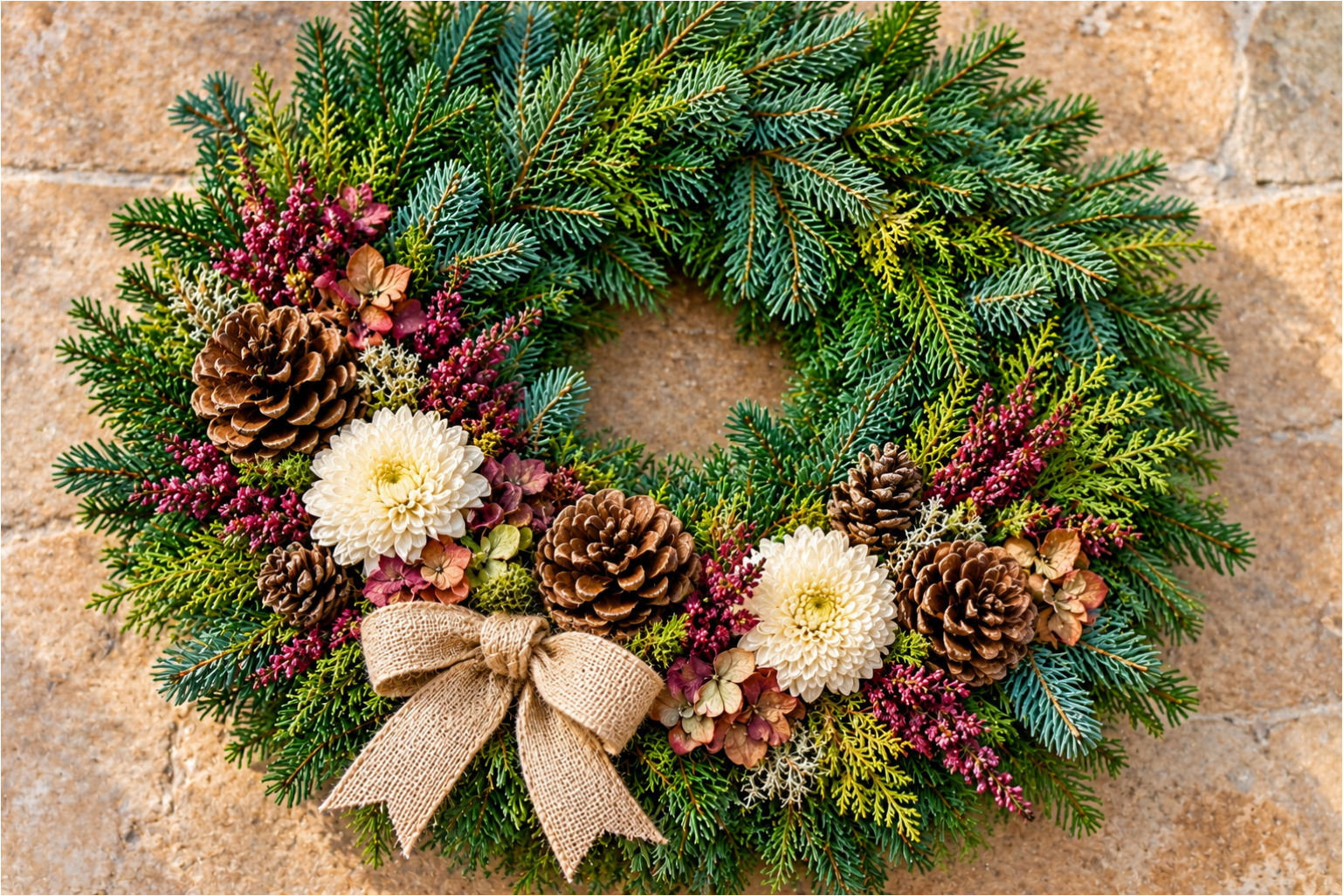
4. Work with asymmetry: On this wreath, the decorated band leads from the left side across the bottom to the right. The burgundy bow matches the dried flowers in color, while the red berries add small, striking points to the composition.

5. Alternate cone sizes: Use larger cones as the main focal points and fill the gaps with smaller ones. Distribute orange lanterns, red berries, and muted flowers into several clusters to keep the wreath balanced.
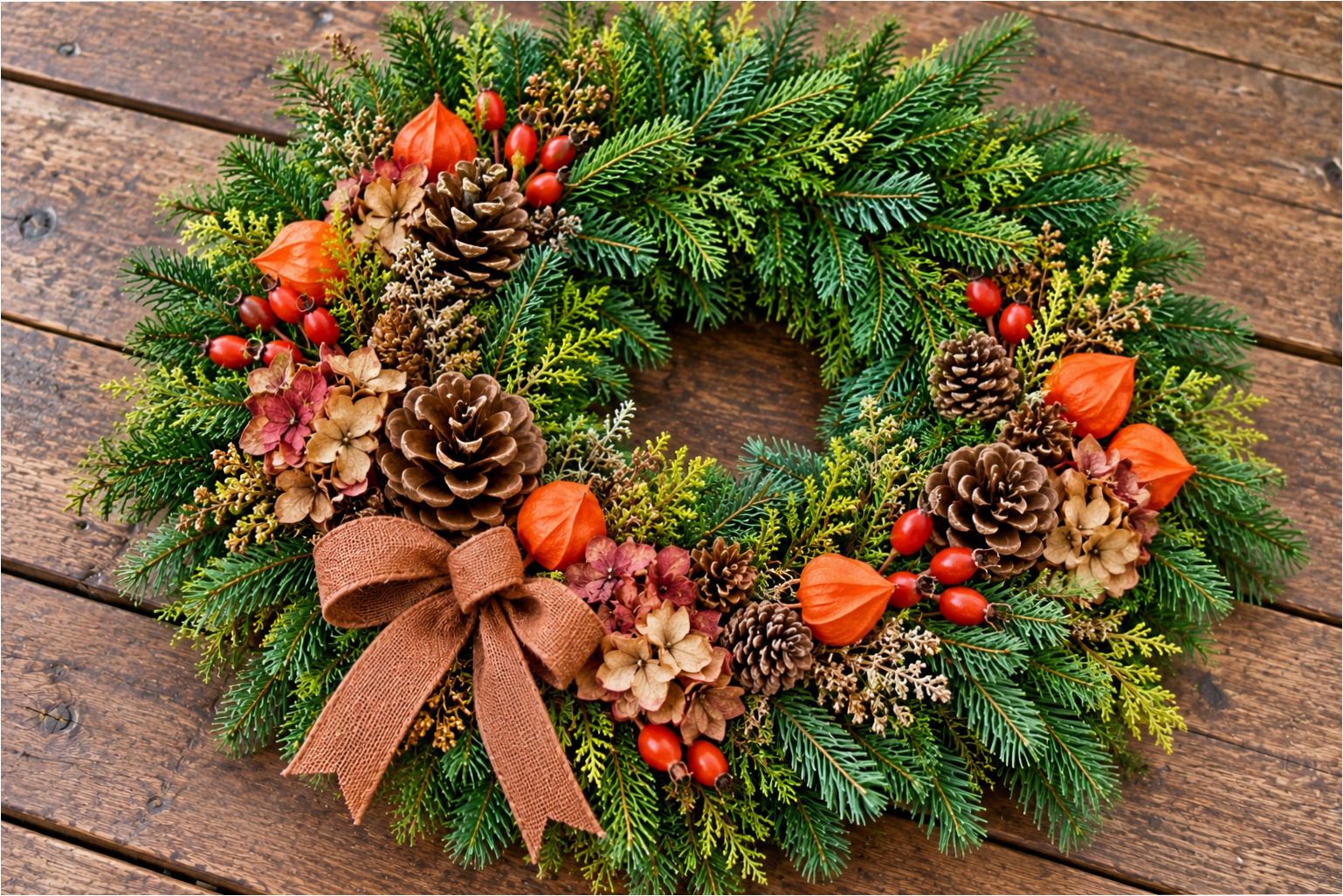
6. Add airy twigs: Let delicate purple shoots extend beyond the edge of the wreath in places. Light dried flowers and a natural raffia bow will lighten up the darker greenery and brown cones.
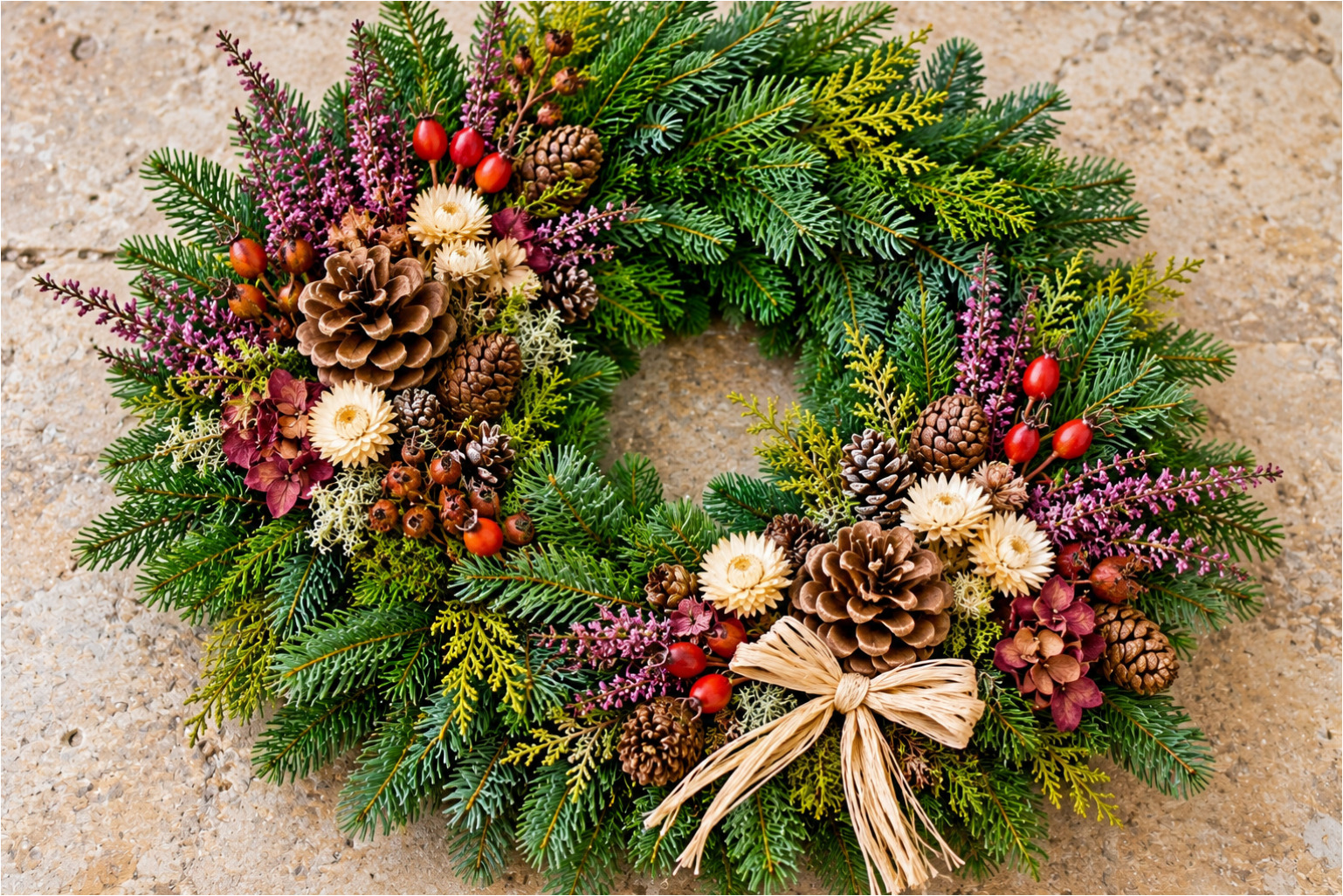
7. Repeat decorations on both sides: Two groups of cones, flowers, and red berries create a harmonious whole. The light bow at the lower left connects the more richly decorated part with the simpler green arc.

8. Keep enough clean greenery: You don’t have to fill the entire circumference. In this version, the upper and right parts are mostly made up of pine branches, while cones, flowers, and orange elements line the left and bottom sides.

9. Add dry leaves: Brown leaves inserted among the pine branches highlight the autumn character of the decoration. Cream flowers, cones, and red berries then create a contrasting band in the lower half of the wreath.

10. Choose classic simplicity: For a simpler wreath, just a few larger cones, smaller cones, muted flowers, and red berries are enough. A wide light bow can be the main feature and also cover the spot where the decorations meet.

11. Place the bow in the center: If you want a more symmetrical look, attach the bow at the bottom. Continue with cones and small flowers on both sides, but the groups don’t have to be exactly identical.
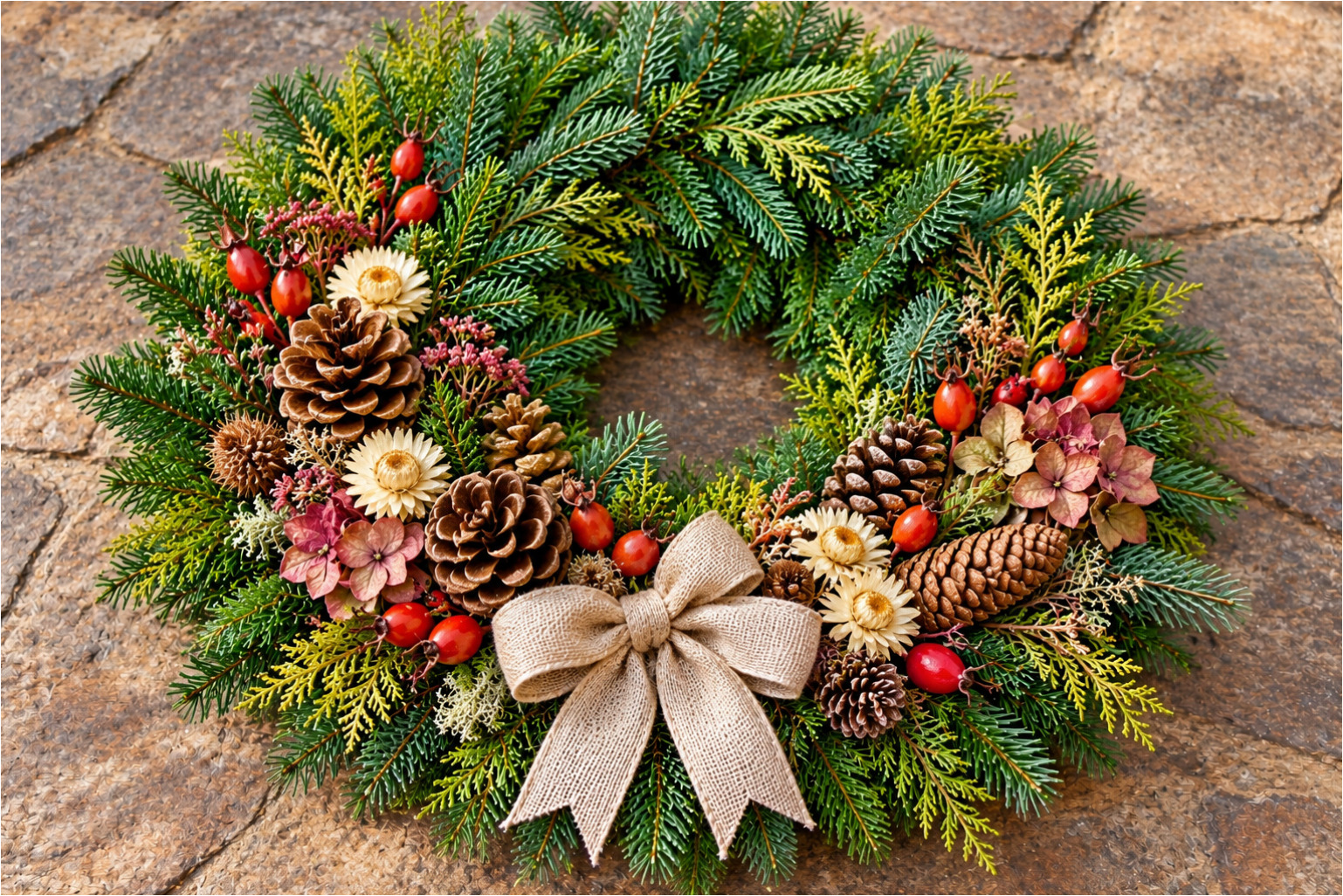
12. Match the bow with the flowers: A dusty pink ribbon goes well with the pink and purple shades of dried plants. Cream flowers and brown cones among them prevent the composition from looking too uniform.

13. Spread the autumn motif around the edge: You can repeat orange lanterns and dry leaves on both the left and right. Connect the individual clusters with smaller cones, flowers, and berries so there are no sharp transitions between them.

14. Try natural rose-shaped decorations: Light rolled decorations resembling little roses create an interesting focal point. Add cones, red berries, muted flowers, and a simple bow made from natural fibers.
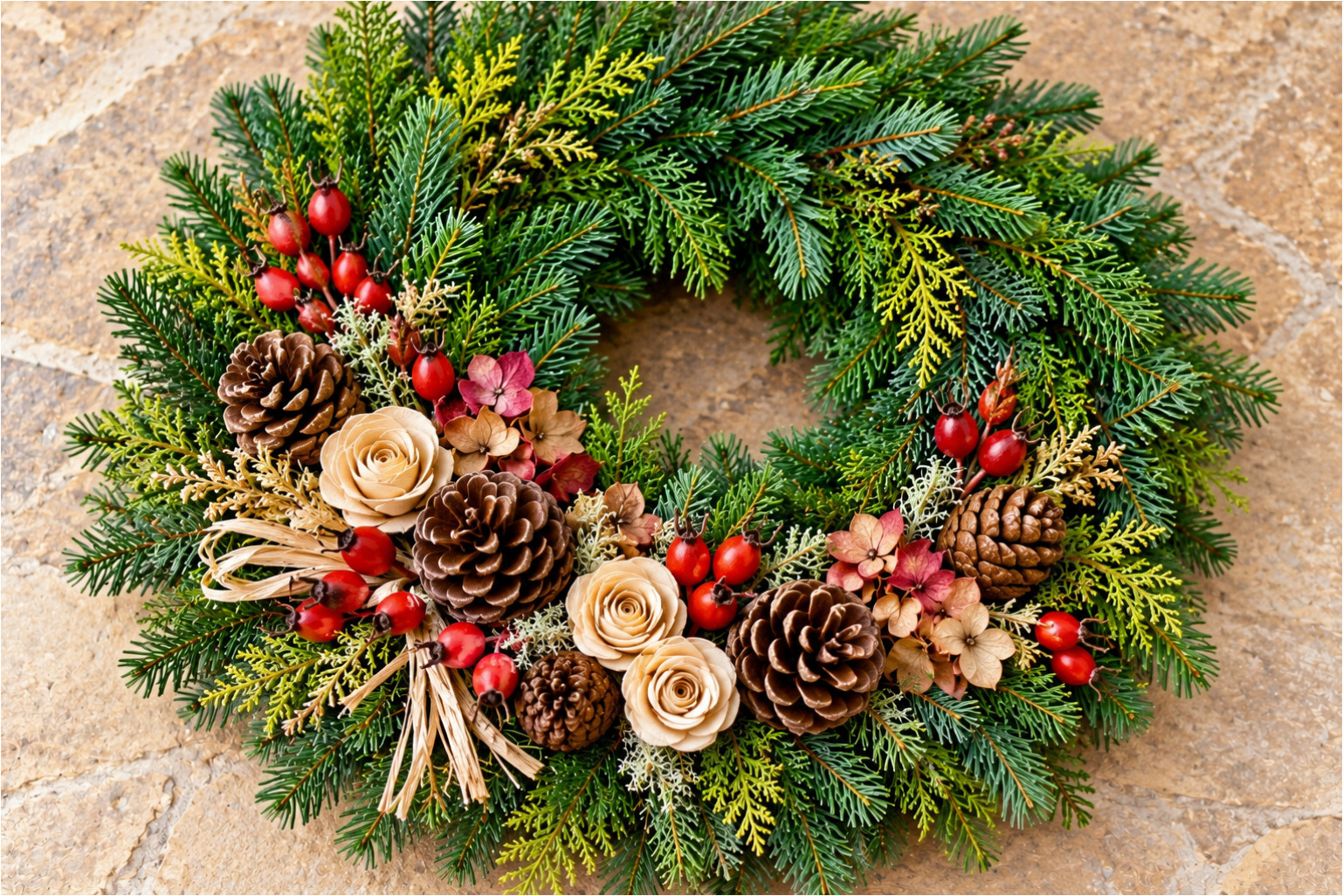
15. Divide the decorations into several clusters: You don’t have to create just one continuous band. In this example, cones, flowers, berries, and purple twigs are divided into smaller groups that match in color.

16. Combine ribbon with raffia: The combination of a small light bow and longer fibers looks rustic and airy. Arrange orange elements, dry leaves, and light flowers among the cones so as not to cover the structure of the pine branches.

17. Opt for muted colors: If you prefer a more subtle, respectful decoration, use mainly green, brown, pink, and purple. Several large cones arranged in the lower part give the wreath the necessary depth.

18. Decorate three parts of the wreath: Create one larger composition at the lower left and two smaller ones on the right. Repeating the same cones, light flowers, and red berries ensures that the separate groups look unified.

19. Densify the lower arc: Concentrate a rich band of cones, orange lanterns, flowers, and red and orange berries in the lower half. Leave the upper part calmer to highlight the texture of the different types of pine branches.

20. Finish with a bold composition: The last version combines large cones, cream flowers, orange lanterns, red berries, and a light bow. Before hanging, place the wreath on a flat surface, check the circular shape, and adjust any protruding twigs.

Final Tip
First, lay all the decorations on the wreath without attaching them, and only secure them after finding the right arrangement. Start with the largest cones and flowers, continue with medium-sized elements, and add small berries or twigs at the end. If the wreath is intended for an outdoor memorial site, secure its parts more carefully so the wind doesn’t loosen them, and adjust the drying pine branches as needed.
Dobrou chuť!