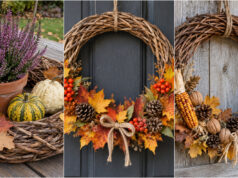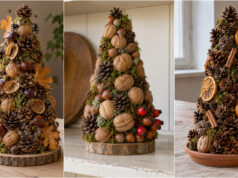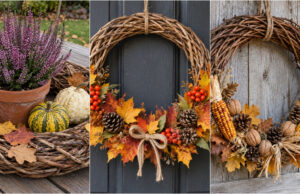

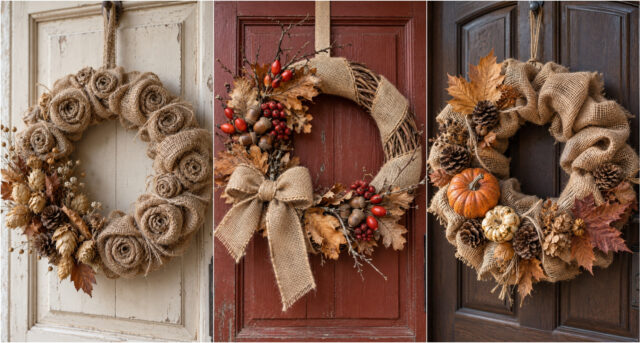
An autumn jute wreath brings natural colors, bold texture, and a cozy atmosphere to your door. The attached photos show various ways to gather and arrange the jute base, complemented by pinecones, leaves, grains, dried flowers, or small pumpkins.
What You Will Need
- a circular wreath base
- jute ribbon or a strip of burlap
- string or another suitable material for fastening
- scissors
- dried leaves, pinecones, twigs, grains, and other available natural materials
- optional autumn decorations, such as small pumpkins, berries, or dried flowers
- a sturdy loop for hanging
When making the wreath, choose only light and well-dried decorations. Always adjust the fastening method to the type of wreath base and the weight of each ornament.
1. Plan a rich composition: The first wreath features a boldly gathered jute base, accented with pinecones, dried leaves, grasses, and two decorative pumpkins. Gradually fold the jute into soft waves and concentrate the decorations mainly on the lower and left parts, creating a lush yet balanced look.

2. Leave part of the wreath airy: If you prefer a simpler look, leave the top and left side in plain jute. Cluster grains, acorns, red berries, and colorful leaves in the lower right section and finish with a loose bow made from string.

3. Soften the decoration with light elements: On light-colored doors, a combination of jute, white and green-striped pumpkins, pinecones, and round green leaves stands out beautifully. Distribute the bundles around the circle at several points so the wreath looks light and natural.

4. Add colorful autumn accents: Decorative orange berries and dried flower heads will add color to the neutral jute. Create several small clusters and connect them with thin twigs that can freely extend beyond the wreath’s edge.

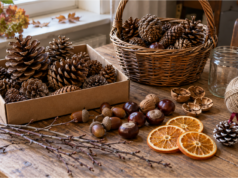
5. Use dried fruit slices: You can also decorate a jute wreath with dried fruit slices, cinnamon, nuts, pinecones, and colorful leaves. Place most of the decorations on the lower arc, leaving the upper part with a pronounced gathered look.

6. Choose minimalist decor: A simple wreath is made by evenly wrapping the base with jute. On one lower side, attach a compact bundle of dried leaves, grains, twigs, berries, and a single light pumpkin.

7. Create a rustic look: The combination of sunflowers, pinecones, grains, pumpkins, and leaves gives a distinctly rustic feel. Arrange the decorations in several groups around the circle, leaving large visible loops of jute in between.

8. Work with an exposed base: You don’t have to cover the entire wreath with jute. Part of the wicker base can remain visible, while leaves, acorns, and red berries form two irregular clusters. Add a large jute bow to the bottom.

9. Add moss and forest fruits: A nature-inspired wreath can combine twisted fibers, jute strips, moss, ferns, pinecones, and shiny chestnuts. Layer the materials so that moss fills the gaps and larger fruits remain clearly visible.

10. Add grains and dried pods: In this version, rich jute waves alternate with bundles of grains, corn husks, decorative pumpkins, and dried pods. Place longer elements along the circle to emphasize its shape.

11. Let the wicker base stand out: Drape the jute loosely over the wicker base and create deeper pockets. Fill these with pinecones, acorns, leaves, and delicate twigs. One longer end of the jute can hang freely at the bottom.

12. Make jute roses: You can twist a strip of jute into spirals resembling roses. Arrange the individual rosettes around the edge and accent the lower left section with pinecones, dried flowers, grasses, and a few leaves.

13. Decorate only the lower center: For a clean and calm look, gather the jute all around the circle and concentrate the decorations only at the bottom. A few acorns, red berries, leaves, and fine dried twigs will create a small but striking central bundle.

14. Use bold orange berries: Bundles of small orange berries look great on coarse jute. Distribute them in several places and add long grasses, pinecones, dried poppy heads, and burgundy-colored leaves.

15. Combine dark leaves with light pumpkins: A contrasting composition is created by combining burgundy leaves, dark berries, large pinecones, and small white pumpkins. Make the strongest cluster on the left side and spread smaller elements downward.

16. Maintain symmetry with two bundles: Two opposing decorative points help balance a more square, richly gathered base. Use a similar mix of grains, pinecones, leaves, and light pumpkins in the lower left and upper right corners.

17. Create an asymmetric natural arch: Group dried hydrangeas, grains, pinecones, red berries, and leaves along the left and bottom edges. Leave the right side mostly jute so the decorated half doesn’t look too heavy.

18. Choose your final style and hang the wreath: The finished versions show that the same base can look romantic, rustic, or very lush. Finally, check all fastenings, remove any loose fibers, and tie a sturdy loop that will support the entire wreath.

Final Tip
Before attaching the decorations permanently, lay them out on the wreath without fastening and step back several times. Start with the largest elements, then add leaves and pinecones, and fill the gaps with delicate grasses or small berries. If the wreath is intended for an outdoor door, protect it from prolonged rain and strong wind, as jute and dried natural materials can absorb moisture and lose their shape.