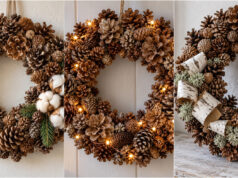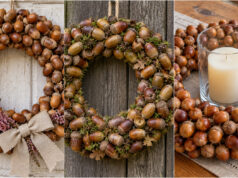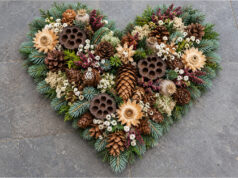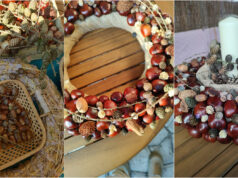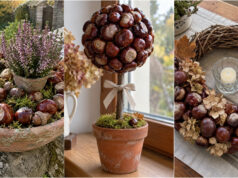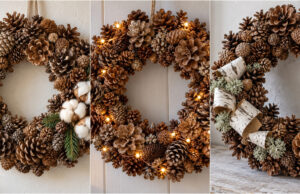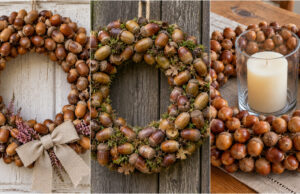

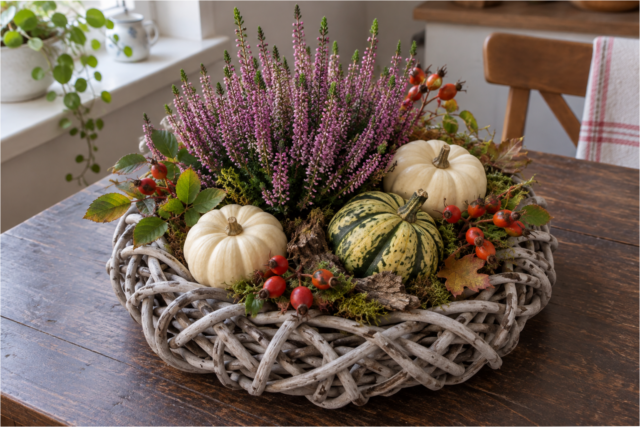
An ordinary wicker ring can quickly be transformed into an impressive autumn decoration for your table, sideboard, outdoor bench, or front door. The following photos offer various ways to complement it with heather, pumpkins, fruit, dried flowers, and other natural treasures.
What You’ll Need
- wicker ring or a low wicker wreath,
- small ornamental pumpkins, apples, pears, or other autumn fruits,
- heather, chrysanthemums, ornamental cabbage, or other seasonal plants,
- rosehips, rowan berries, acorns, chestnuts, and pinecones,
- moss, colorful leaves, ferns, and dried grasses,
- dried flowers, poppy heads, wheat stalks, or twigs,
- lantern, candle, vase, or container depending on your chosen variant.
Select individual elements based on whether your decoration will be placed indoors, under a roof, or outside. Always secure potted plants and heavier items firmly, and tuck small natural materials between the wicker so they don’t fall out.
1. Creating a Lush Centerpiece: Place a striking heather plant in the center of the ring and arrange light and striped pumpkins around it. Fill empty spaces with moss, rosehips, leaves, and small twigs so the base isn’t visible and the arrangement looks full.

2. Combination of Flowers, Apples, and Pumpkins: Complement the warm colors of chrysanthemums with a few apples and smaller ornamental pumpkins. Acorns, dried leaves, and delicate dried flower heads create a natural transition between the main elements and the wicker edge.

3. Romantic Composition with Dried Flowers: Place a larger light pumpkin slightly to the back and lay two smaller striped pumpkins in front. Spread dried flowers, rosehips, and muted flower heads on the sides to give the whole decoration a nostalgic look.

4. Woodland Version with Moss: Cover the base with fresh green moss and add ferns, birch bark, pinecones, and acorns. A single greenish-grey pumpkin creates a calm center, while heather adds a gentle purple accent.

5. Airy Wreath with Open Center: If you want to keep the typical wreath shape, leave the center empty and decorate only parts of the rim. Arrange pumpkins, orange physalis, dried flowers, and colorful leaves in small groups for a balanced composition.

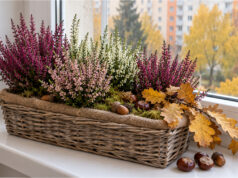
6. Decoration with Live Plants: Group heathers, ornamental cabbage, and silvery leaves in a low wicker ring. Place smaller dark pumpkins among the plants to fill the front, making sure not to cover the striking center.

7. Autumn Candle Holder: Place a glass cylinder with a thick candle in the center and decorate one side with white pumpkins, moss, rosehips, and dried grasses. The flame must always be at a safe distance from all dry parts, and never leave the candle unattended.

8. Edible Autumn Composition: The wicker ring can also be filled with apples, pears, and a striking striped pumpkin. Clusters of rowan berries, ferns, and a few colorful leaves add height and connect the different types of fruit.

9. Decoration in Natural Tones: For a softer look, choose white pumpkins, wheat stalks, poppy heads, and light dried grasses. Complement the natural brown shades with a few pinecones, nuts, and a bit of moss around the bottom.

10. Rustic Arrangement for the Entrance: Place a greenish-grey pumpkin in the center of the ring and spread moss, acorns, chestnuts, and oak leaves around it. Pieces of light bark create an interesting contrast with the darker wicker and forest fruits.

11. Hanging the Ring on the Door: You can also use the wicker ring as a classic wreath. Focus the decorations on the lower left part, combining heather, dried flowers, rosehips, and small pumpkins, while most of the wicker base remains visible.

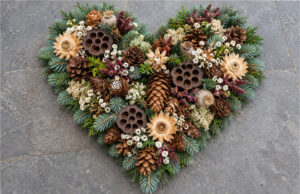
12. Asymmetrical Wreath with Hydrangea: Place dried hydrangea blooms at the bottom and extend the decoration upward along the right side. Add rosehips, dried leaves, hop cones, and decorative seed pods to highlight the autumn character.

13. Ring as a Base for a Vase: Place a ceramic container with a dried bouquet of grasses, grains, and small flowers in the center. Surround the edge of the container with moss, acorns, dried leaves, and a small striped pumpkin so the vase and ring form a unified whole.

14. Leaned Wreath on a Sideboard: You don’t always have to hang the ring. Lean it against a wall, line the bottom with moss, and add a light pumpkin, two smaller striped pumpkins, rosehips, and leaves. A trailing dried plant can soften the top.

15. Arrangement with Chrysanthemum: Place a pot with a richly blooming chrysanthemum in the back of the ring. Lay a pumpkin and apples in the front, letting ivy and a few autumn-colored leaves weave freely around them.

16. Garden Decoration with a Metal Container: Stand a metal container filled with branches with small fruits and dried flower heads in the center of the wreath. Fill the front with moss, apples, and a pair of small pumpkins to liven up the composition with color.

17. Decoration with Lantern: Place a lantern in the center or slightly to the back and arrange heathers on both sides. Add a striped pumpkin, purple berries, and dried leaves to the front. Again, ensure the flame is at a safe distance from the plants.

18. Planting in Deeper Shades: A dark wicker ring beautifully highlights purple ornamental cabbage, heather, and wine-red leaves. Two light pumpkins on the sides visually lighten the composition and create a striking color contrast.

19. Choosing the Final Style: The finished decoration can be festive with a lantern, subtle with wheat and white pumpkins, or colorful with heather and rosehips. When deciding, consider where the ring will be displayed and the shades already present in its surroundings.

Final Tip
The best result comes when you combine one dominant element, several medium-sized pieces, and small fillers. Start with a pumpkin, flowerpot, lantern, or vase, continue with fruit and flowers, and finally add moss, leaves, acorns, or rosehips. Keep turning the decoration and check it from different angles. For outdoor arrangements, regularly remove damaged fruits and wilted parts to keep it looking neat as long as possible.