
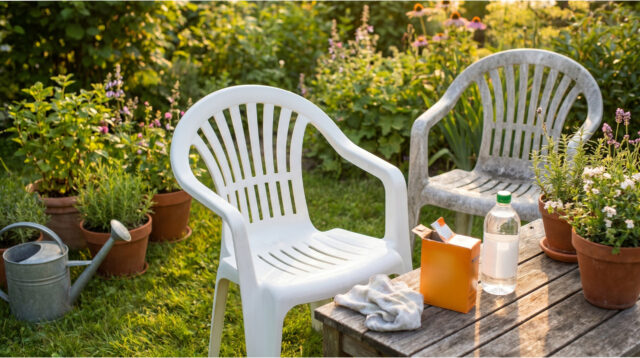
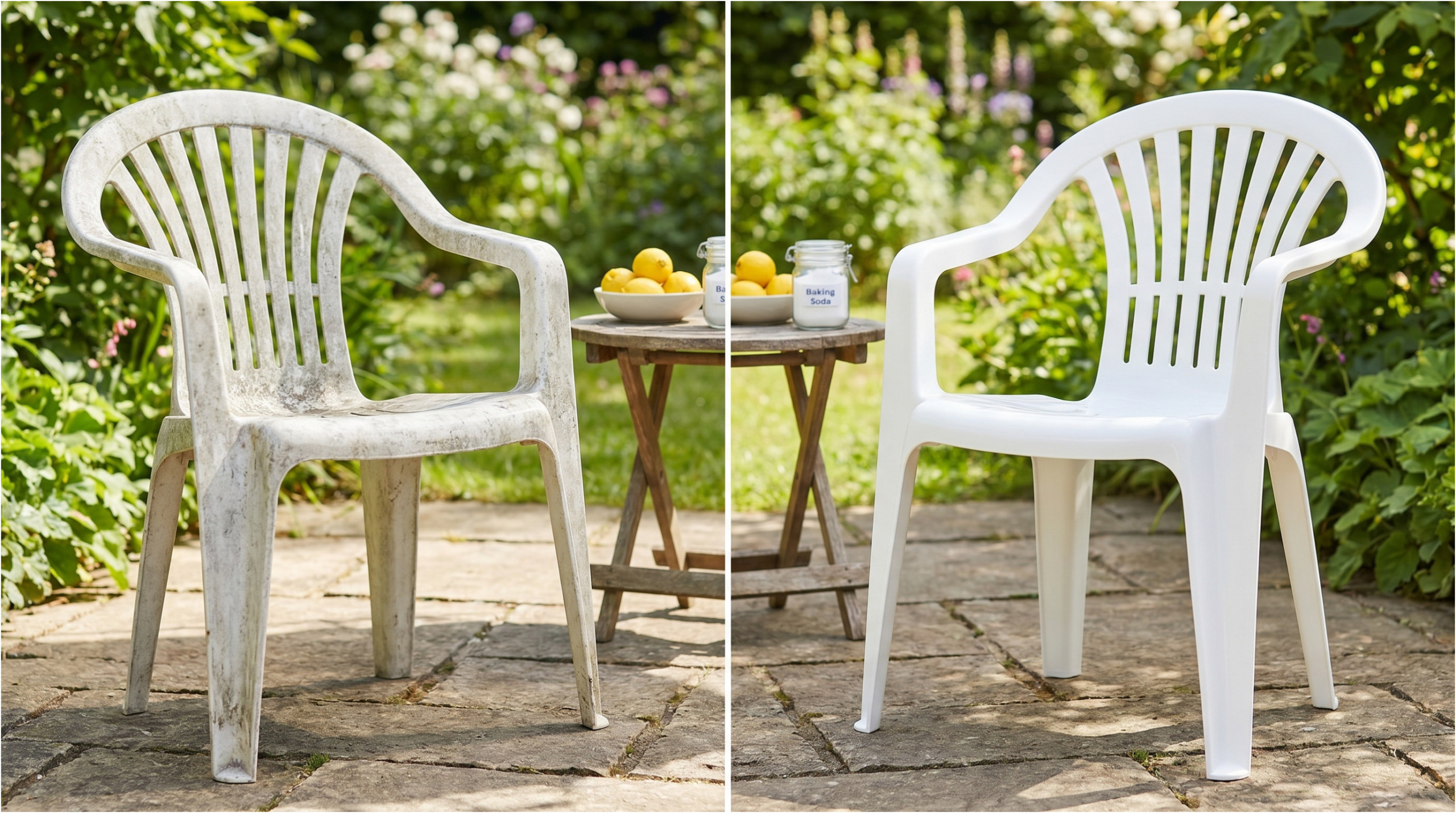
You don’t need to rush out and buy new garden chairs or expensive cleaners from the hardware store. For typical graying, dust, green film, and surface dirt, a simple homemade cleaning method is usually enough. It won’t turn damaged plastic into a brand new piece of furniture, but you’ll often see a visible difference after just one wash.
The most important thing is to use the right technique. Plastic is durable, but it can scratch, dull, or get damaged by overly aggressive scrubbing. That’s why it’s better to use a gentler method and repeat the cleaning if needed, rather than ruin the chair with a hard brush or harsh chemicals.
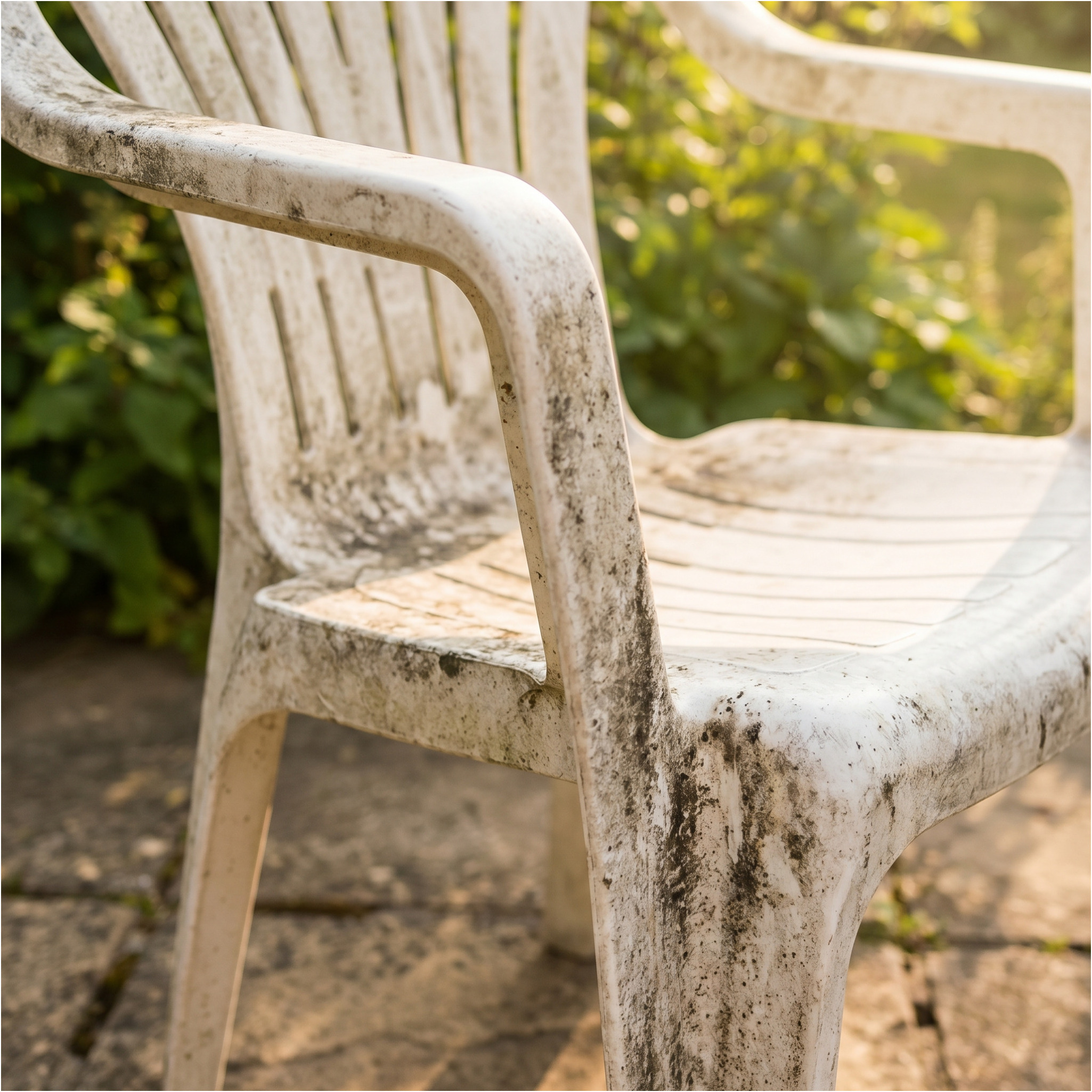
Why Plastic Chairs Turn Gray Over Winter
Plastic garden furniture is exposed to sun, rain, dust, pollen, grease from hands, food residue, and airborne dirt. If it sits outside for a long time, grime gradually settles into tiny surface irregularities. White and light-colored chairs then look gray, blotchy, and tired.
Another problem is sunlight. UV rays can dull and weaken plastic over time. Regular cleaning can’t fully reverse this, but removing surface dirt can greatly improve their appearance.
What You’ll Need
- baking soda,
- vinegar,
- warm water,
- a soft sponge or cloth,
- an old toothbrush for crevices,
- a bucket or basin,
- a hose or clean water for rinsing.
Baking soda gently loosens dirt and old grime. Vinegar helps with grease, limescale, and common deposits. But with plastic, it’s important not to use them aggressively or let mixtures dry on the surface.
Rinse the Chairs First
Before you start cleaning, rinse the chairs with water. This removes dust, sand, and coarse dirt that could scratch the plastic during scrubbing. If the chair is very dirty, wipe it first with a damp cloth.
Pay attention to the underside of the seat, the legs, and joints. These areas often collect dried-on dirt, cobwebs, pollen, and bits of leaves.
Cleaning with Baking Soda
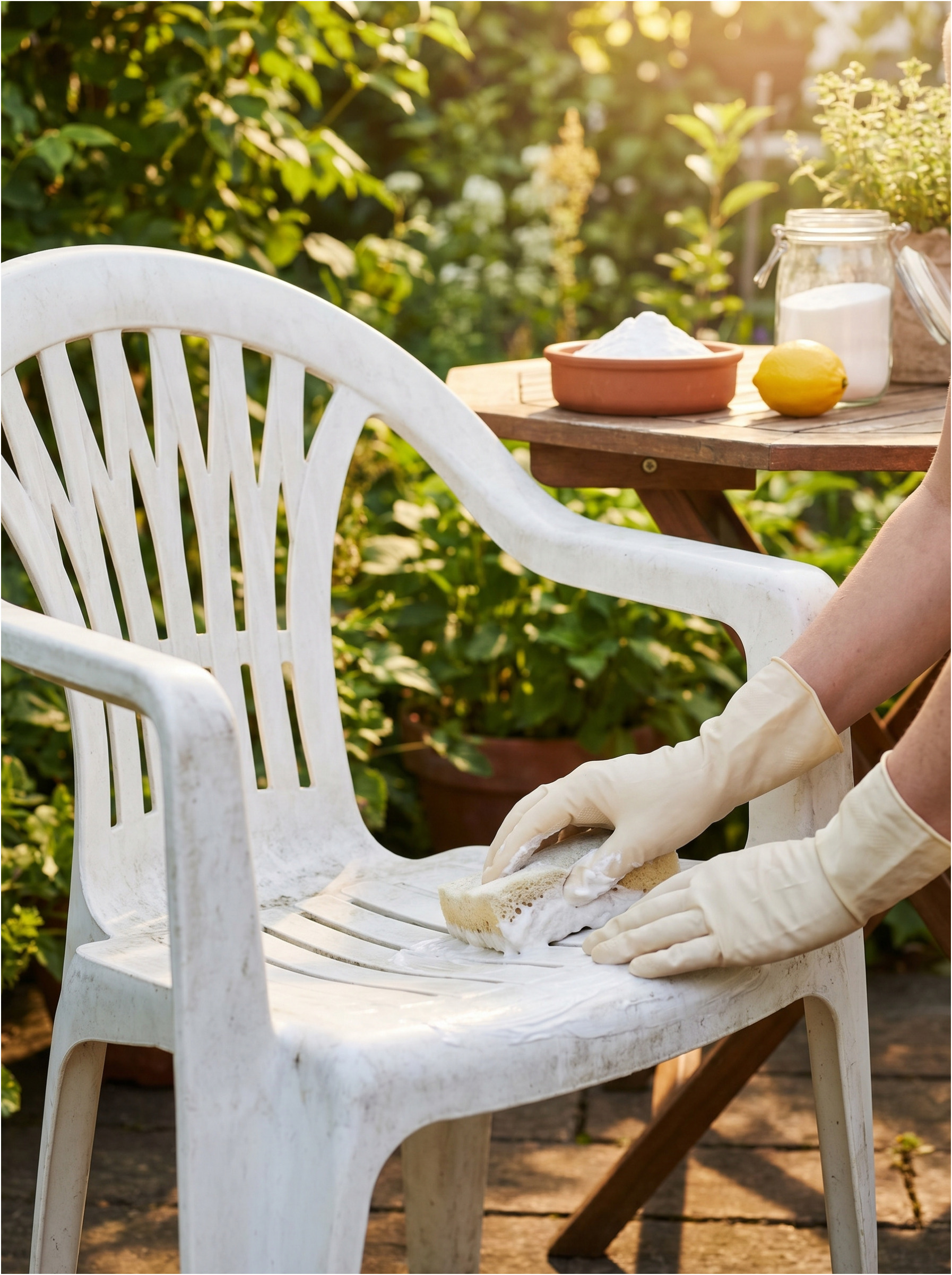
Pour baking soda into a bowl and add a little water to make a soft paste. It doesn’t have to be as thick as putty—just enough to stick to the sponge and not run off immediately.
Apply the paste to dirty spots and gently spread it with a sponge. Don’t press too hard. Baking soda is mildly abrasive, so it helps loosen dirt, but rough scrubbing can unnecessarily dull the surface.
Note: Don’t use steel wool, a hard brush, or the rough side of a dish sponge. Plastic scratches easily and will get dirty even faster afterward.
Use Vinegar as the Second Step
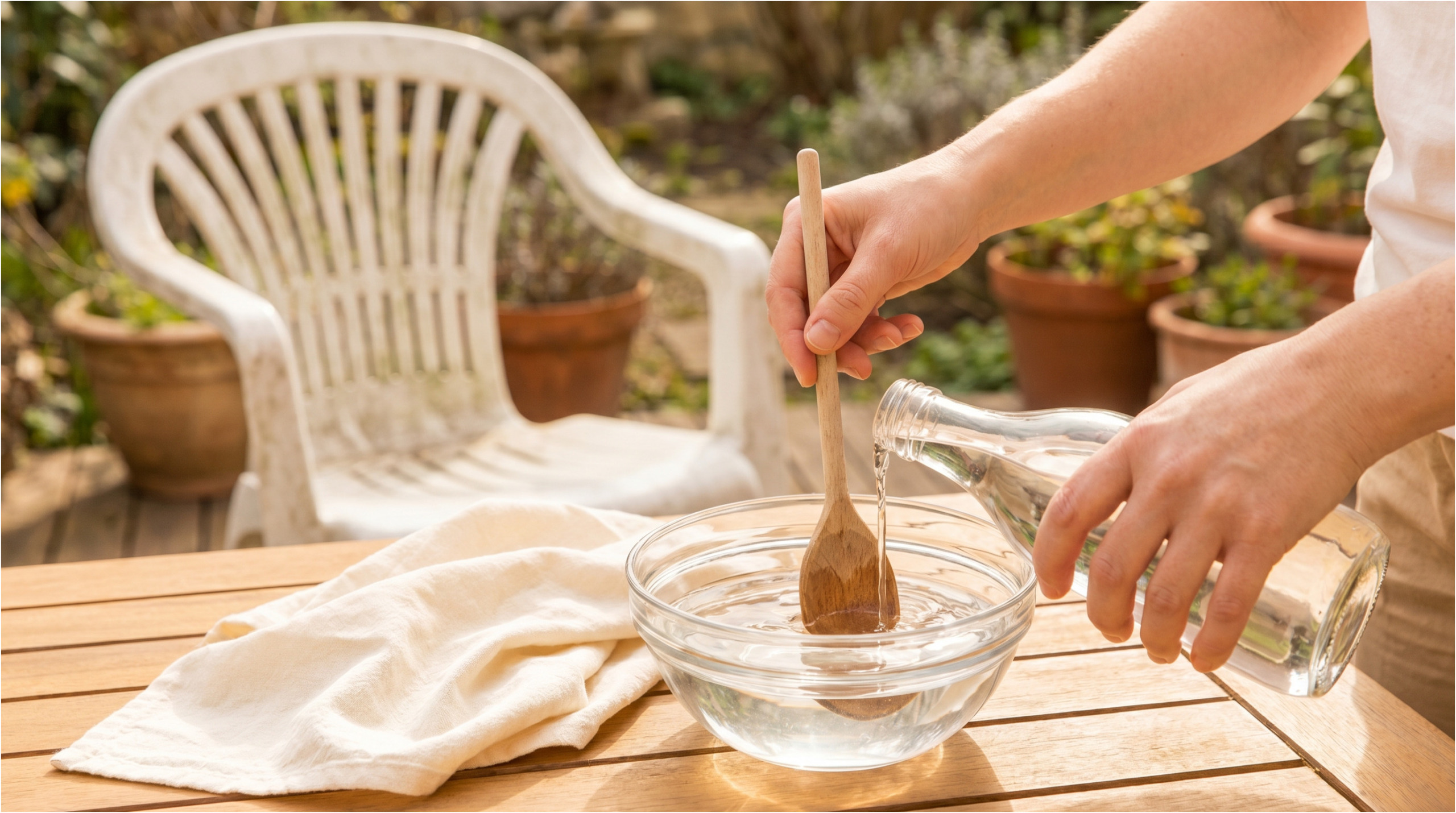
After cleaning with baking soda, rinse the chair with water. Then prepare a mixture of vinegar and water, for example, one part vinegar to two or three parts water. Wipe the entire chair with a cloth or soft sponge.
Vinegar helps remove leftover grease, light streaks, and deposits. Don’t let it dry on the plastic. After a few minutes, rinse the chair again with clean water.
Why Not Use Baking Soda and Vinegar Together as a “Blast”
You may know the trick of pouring vinegar over baking soda to make it fizz. It looks impressive, but for cleaning plastic chairs, it’s better to use them one after the other. If you mix them at once, most of the cleaning power is used up in the fizzing, and they don’t work as effectively on the surface.
Clean Dirty Crevices with a Toothbrush
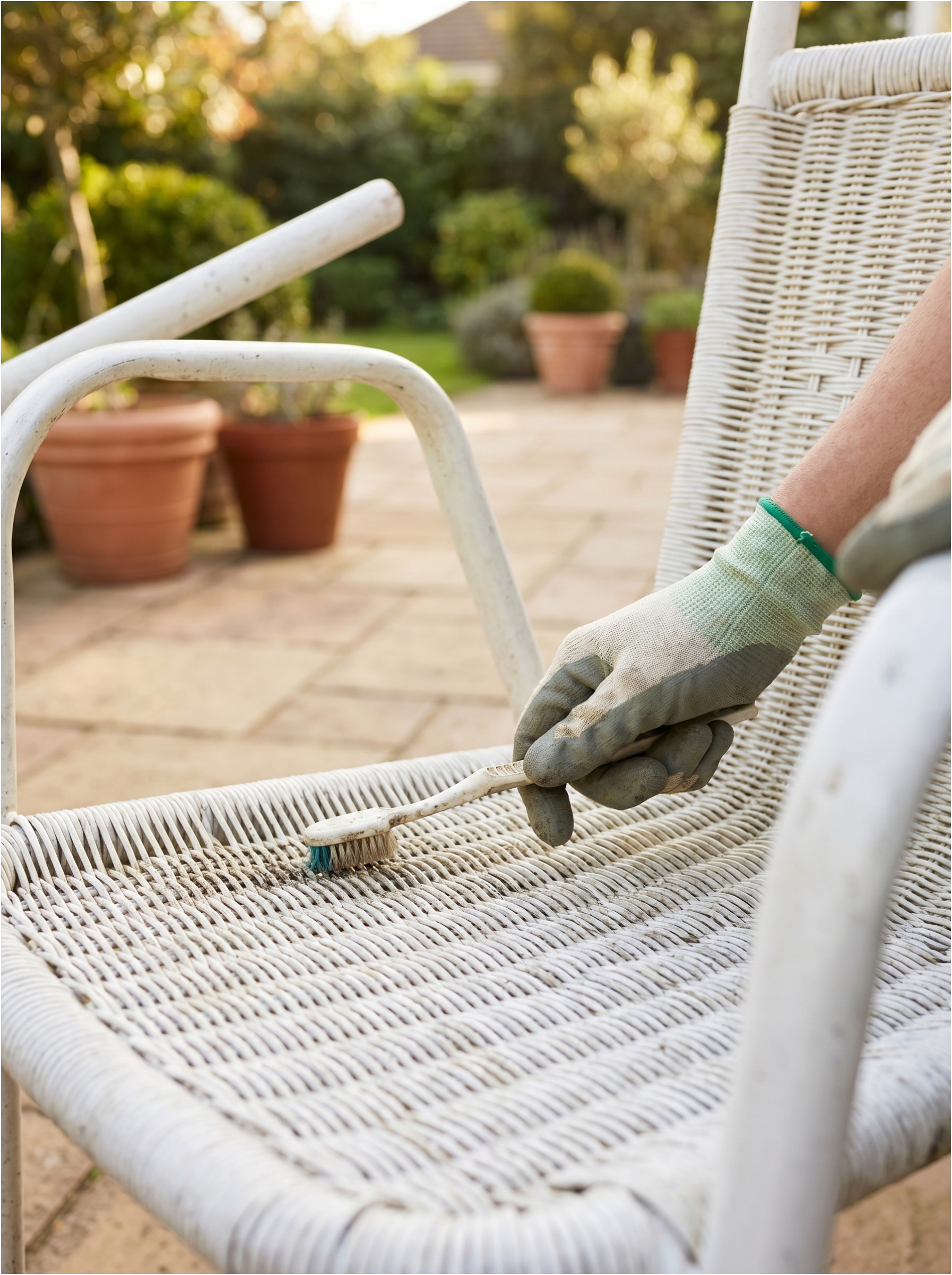
Plastic chairs often have grooves, joints, edges, and textured areas where dirt collects most. An old toothbrush works well here. Apply a little baking soda paste and gently clean the spot.
Don’t scrub hard. Several gentle strokes are better than one rough scrub. After cleaning, rinse thoroughly so no white baking soda residue remains in the crevices.
How to Deal with Green Film
If the chairs have been in a damp or shady spot, a green film may appear. This often forms on the legs, undersides, and places where the sun doesn’t reach.
Start with warm water, baking soda paste, and a soft brush. Then wipe the surface with diluted vinegar and rinse. For heavier buildup, you may need to repeat the process.
Be Careful with Hydrogen Peroxide on White Chairs
Some people use hydrogen peroxide on old white plastic. However, it’s not a common kitchen ingredient and should be used with caution on plastic. On some surfaces, it can help, but on others, it may cause uneven lightening or blotches.
If you ever use it, always test a small, inconspicuous area first. And never mix it with vinegar or chlorine-based products.
What Never to Mix
When cleaning at home, it’s important not to mix various products without thinking. Never mix vinegar with bleach or other chlorine cleaners. It’s also not a good idea to combine vinegar with hydrogen peroxide. Such mixtures can be dangerous.
For garden furniture, a gentle approach is more than enough: water, baking soda, diluted vinegar, and thorough rinsing. Strong chemicals are rarely necessary.
How to Rinse and Dry the Chairs After Cleaning
After cleaning, rinse the chair thoroughly with clean water. No baking soda or vinegar residue should remain on the plastic. Then wipe it with a dry cloth or let it dry in the shade.
Don’t let the chairs dry in direct sunlight right after cleaning. Water spots may form on the wet surface, and hot plastic can dull more quickly.
How to Restore Some Shine to Plastic
If the chair is clean but still looks dull, the plastic may already be sun-damaged. Cleaning removes dirt but can’t fully restore the original material structure. Still, you can improve the look with regular maintenance.
At the end of the season, wash the chairs, dry them, and store them under a roof or covered. The less time they spend in direct sun and rain, the better they’ll look for longer.
How to Slow Down Future Dirt Buildup
Plastic chairs get dirtiest when they sit all season under trees, near the grill, in dusty areas, or in damp corners. Wipe them occasionally, don’t let pollen sit for long, and store them away for winter.
If you can’t put them away, use a protective cover or at least position them so water doesn’t pool on them. Regular small maintenance is much easier than heavy scrubbing once a year.
Most Common Mistakes When Cleaning Plastic Chairs
- Using steel wool or a hard brush.
- Scrubbing dry, dirty plastic without rinsing first.
- Mixing vinegar with bleach or other chemicals.
- Letting baking soda or vinegar dry on the surface.
- Cleaning chairs in direct sunlight.
- Overly aggressive cleaning that dulls the plastic.
- Forgetting crevices, legs, and undersides.
Quick Step-by-Step Guide
- Rinse the chair with water.
- Mix baking soda with a little water to make a soft paste.
- Use a soft sponge to clean dirty spots.
- Clean crevices with an old toothbrush.
- Rinse the chair.
- Wipe it with diluted vinegar.
- Rinse thoroughly again with clean water.
- Let it dry in the shade or wipe with a dry cloth.
Old Chairs Often Just Need a Good Clean
Old plastic garden chairs don’t always mean you need to buy new ones. If they’re not cracked or brittle, simple home cleaning often does the trick. Baking soda and vinegar can remove gray film, everyday dirt, and some deposits.
Don’t expect miracles with plastic that’s been sun-damaged for years, but for typically dirty chairs, the difference can be really striking. Just use a gentle approach, avoid hard brushes, and rinse everything thoroughly after cleaning. Your patio will look tidier without spending money on new furniture.
For commonly discolored plastic chairs, baking soda mixed with water works well as a gentle paste, followed by diluted vinegar for finishing touches. Always use a soft sponge and rinse the chairs thoroughly at the end.
You can, but when cleaning chairs, it’s more practical to use them sequentially. First the baking soda paste, then rinse, and finally diluted vinegar. The combined fizzing looks impressive, but it may not clean better.
Be cautious with chlorine cleaners on plastic and always follow the manufacturer’s instructions. Never mix bleach or other chlorine-based products with vinegar.
Dust, pollen, grease, green mold, and dirt from rain settle on the surface. For older furniture, sun damage adds to the dullness.
Store them under a roof for the winter, regularly wipe them during the season, and avoid leaving them in damp conditions, under trees, or in direct sunlight without protection for long periods.