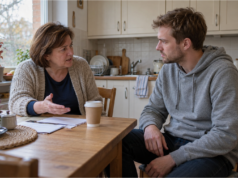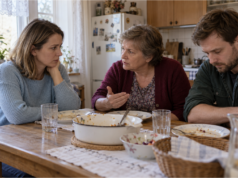



When we were arranging the mortgage, we were short on some of the money needed to finalize the purchase. The bank lent us most of it, but we still needed several hundred thousand more. My parents offered to help. They said they’d give us the money as a gift because they wanted my husband, my daughter, and me to have a good start.
I Was Truly Grateful
I don’t want this to sound ungrateful. Without their help, we probably wouldn’t have bought the house. I know they gave us a big part of their savings, and for a long time I felt like I could never repay them enough.
The first weeks after moving in, my parents were thrilled. Dad helped us with the garden, Mom brought food and watched our daughter while we painted. I thought we were lucky. That my child would grow up close to her grandparents and that we wouldn’t have to do everything alone.

But gradually, their help started to turn into something else. They began to feel that since they contributed to the house, they had the right to decide how we lived in it.
At First, It Was Just Little Remarks
My mom started commenting on how we set up the kitchen. She thought we were wasting money on a new kitchen unit when the old one could still work. Dad, on the other hand, criticized the garden. He didn’t like that we wanted to leave part of the lawn for the kids to play on instead of planting flower beds.
At first, I took it as normal parental advice. But gradually, the comments became more frequent. When we bought a new sofa, Mom asked if we could really afford it. When we wanted to go away for a weekend, Dad remarked that people with a mortgage shouldn’t be spending money on trips.

The worst part was that with every bigger decision, they managed to remind us of their help. Not directly, but clearly enough. With sentences like: “We didn’t help you so you could just throw money away.”
They Started Coming Over Unannounced
My parents live about ten minutes away by car. At first, it was convenient. Then it became a problem. They started coming over without letting us know. They’d just ring the bell—or sometimes not even that—and walk straight through the back gate into the garden.
When I told them I’d appreciate a heads-up, they got offended. Mom told me she shouldn’t have to ask to visit her own daughter. Dad added that since they contributed to the house, they weren’t exactly strangers.

That was the first time I really felt uneasy. Suddenly, I realized that in their eyes, it wasn’t just our home. It was a house they’d put money into, and in their minds, that bought them a place in it.
My Husband Found It Harder and Harder
My husband Martin was patient at first. He said my parents meant well and that we should be grateful. But when Dad started telling him how to fix the fence, and Mom commented in front of him that we should save more, it started to bother him too.
Once, we argued with my parents about our daughter’s room. We wanted to paint it yellow because that’s what she wanted. Mom said it was impractical and that pink would be prettier. When I said we’d decide ourselves, she replied, “Well, at least our money was good enough.”

Martin got up from the table and walked outside. That evening, he told me he felt like a guest in our own house. And I couldn’t tell him he was exaggerating, because I was starting to feel the same way.
The Help Turned Into a Debt
What hurt me most was that my parents never said we had to pay the money back. On paper, it was a gift. But in reality, it became a debt we were expected to repay with obedience. I felt like every decision had to go through them, or else we’d be ungrateful.
When I bought a new coat, Mom asked if it was really necessary. When we paid for our daughter’s swimming lessons, Dad said that in their day, kids didn’t need paid activities. When we turned down Sunday lunch because we wanted time alone, Mom cried that we’d changed since buying the house.

I started to be afraid to tell them anything. I didn’t want to hear more comments. At the same time, I felt guilty because without them, we really wouldn’t have the house. I was grateful and angry at the same time.
The Turning Point Came at a Birthday
For our daughter’s fifth birthday, we invited family and a few friends. We wanted a small gathering in the garden. I made a cake, sandwiches, and some games for the kids. I was happy that we managed to prepare everything nicely.
Mom arrived early and immediately started rearranging things on the table. According to her, I hadn’t set the plates right and there weren’t enough savory snacks. Dad started mowing part of the lawn because he said the garden didn’t look presentable. I stood in the middle of my own party and just wanted to run away.
When the guests arrived, Mom joked in front of them: “We helped them buy this house, so we’re at least trying to make it look decent.” Some people laughed, but I wanted to cry. I felt like a child whose parents remind everyone before visitors that she couldn’t do anything on her own.
I Finally Spoke Up
After the party, I told my parents that things couldn’t go on like this. That I was grateful, but our house was our home. That they couldn’t come over unannounced, decide on the furnishings, or remind people about the money they gave us.
Mom cried. She said I was ungrateful and that if she’d known how I’d treat them one day, she never would have helped us. Dad was harsher. He said we only remembered them when we needed money, and now we were pushing them away.
I felt terrible. Part of me wanted to apologize just to keep the peace. But Martin took my hand, and for the first time, I felt I had to stand by my own family. Not against my parents, but beside my husband and daughter.
We Offered to Pay the Money Back
A few days later, Martin and I proposed a repayment plan to my parents. We said that if their help was a reason to control our lives, we’d rather pay them back gradually. It wouldn’t be immediate, and it would mean a lot of sacrifices for us, but we needed to get rid of that hidden debt in our relationship.
My parents were even more offended. Mom said we were humiliating them, because they gave us the money out of love. I replied that love shouldn’t be used as leverage. That was a sentence that hung between us for a long time.
In the end, they didn’t want the money back. But since then, we set clearer boundaries. Visits only by arrangement. Decisions about the house are ours. We’re happy to listen to advice, but they’re not orders.
Relations Are Still Tense
I don’t want to claim everything is resolved. It’s not. Mom sometimes still says I used to be different. Dad sometimes looks offended when we do things our way. But they no longer come over unannounced or talk in front of others about how much they gave us.
I’m sad that the help that was supposed to strengthen our family almost tore it apart. Maybe we should have clarified everything from the start. We should have said whether it was a gift, a loan, or something in between. We should have talked about boundaries before gratitude turned into pressure.
Now I know that even help from parents can be dangerous if there aren’t clear rules. Money is never just money. In a family, it often comes with expectations, demands, and unspoken words.
I’m Grateful to Them, But I Don’t Want to Belong to Them
I love my parents. I know they wanted to help us and didn’t do it out of malice. But good intentions don’t mean you have the right to control someone else’s life. An adult child doesn’t stop being an adult just because their parents help them financially.
I’m grateful for the money they gave us. Thanks to them, we have a home. But that home has to be ours. I need to be able to make decisions, make mistakes, buy a coat, invite guests, or turn down Sunday lunch without feeling like I’m breaking some unspoken contract.
Maybe I should have been firmer sooner. Maybe my parents should have understood that help isn’t ownership. In any case, now I know that gratitude and freedom shouldn’t be mutually exclusive.
Because when someone helps you get on your feet, they shouldn’t keep you by the throat afterwards.
💬 Join the Discussion!
This story shows how complicated it can be to accept financial help from parents if it comes with unspoken expectations and interference in your life. Do you think parents have the right to influence the decisions of their adult children after helping them financially? Have you ever experienced a situation where help turned into an obligation or pressure? Share your experiences in the comments below!