
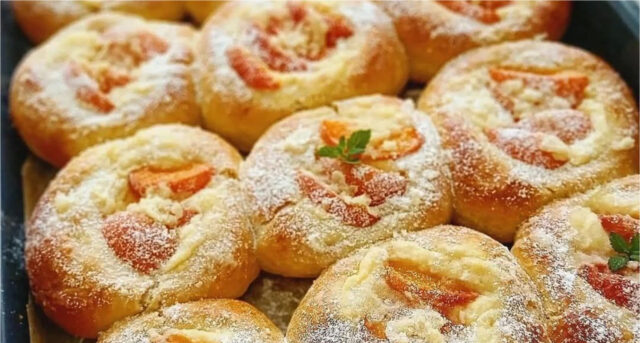
The aroma of homemade yeast dough scented with lemon zest and vanilla instantly creates a cozy family atmosphere. These yeast buns with pudding and apricots take it up a notch. They combine fluffy, tender dough made from a mix of plain and semi-coarse flour, a rich thick cream, and juicy fruit under a crunchy streusel topping.
This recipe hides a clever trick – the pudding is cooked with less milk, so it stays perfectly thick and holds its shape in the oven. The final touch of brushing the hot buns with melted butter and a splash of rum gives them an irresistible aroma and ensures the edges stay as soft as a cloud. Let’s get baking!
| Parameter | Value |
|---|---|
| Preparation time | 30 minutes (+ 1 hour rising) |
| Baking time | about 15–20 minutes (at 180°C then 160°C) |
| Difficulty | Medium (yeast dough) |
| Yield | 12 generous buns |
Ingredients You’ll Need
For the fluffy yeast dough:
- 250 g semi-coarse flour and 300 g plain flour: The ideal combination for a firm yet tender texture.
- 250 ml milk: Lukewarm, for the dough and starter.
- 30 g fresh yeast: (About ¾ of a standard cube).
- 2 whole eggs: For richness in the dough.
- 80 g caster sugar and 1 packet vanilla sugar: For a sweet base.
- 100 g butter: Melted and lukewarm.
- A pinch of salt and grated lemon zest: To balance the flavors and add a wonderful aroma.
For the thick vanilla pudding:
- 1 packet vanilla pudding powder: (Pudding mix).
- 400 ml milk: The smaller amount ensures a perfectly thick consistency.
- Caster sugar: To taste (about 2 tablespoons).
For finishing and decorating:
- Apricots: Fresh or frozen halves (last year’s garden harvest).
- Traditional streusel: Made from coarse flour, butter, and sugar.
- 1 egg: Beaten, for brushing the edges.
- For brushing after baking: A little melted butter mixed with a splash of good-quality rum.
Step-by-Step Preparation
1. Preparing the starter and making the dough
Pour about 100 ml of the prepared lukewarm milk into a mug, add a teaspoon of sugar, crumble in 30 g of yeast, and let it rise in a warm place for about 10 minutes. Meanwhile, sift both flours into a large bowl, add the remaining sugar, vanilla sugar, a pinch of salt, two eggs, grated lemon zest, and melted lukewarm butter. Pour in the risen starter with the remaining milk and knead into a smooth, glossy, non-sticky dough. Cover the bowl with a tea towel and let it rise for 1 hour.
2. Cooking the thick pudding cream
While the dough is rising, prepare the filling. In a saucepan, mix the vanilla pudding powder with 400 ml of milk, add sugar to taste, and cook into a thick pudding. Remove from the heat and let it cool completely at room temperature, stirring occasionally.
3. Shaping the buns with a glass
Divide the risen dough on a floured surface into 12 equal pieces. Shape each piece into a neat ball with your hands and arrange them on a baking sheet lined with parchment paper, leaving enough space between them. Take a small glass, dip its bottom in flour (so it doesn’t stick to the dough), and press firmly into the center of each ball to create a deep well with raised edges.
4. Filling and decorating before baking
Put a spoonful of cooled vanilla pudding into each well. Place pieces or halves of juicy apricots on top of the pudding (do not defrost frozen ones beforehand). Thoroughly brush the raised edges of the buns with beaten egg and generously sprinkle the fruit and pudding with crunchy streusel.
5. Two-stage baking and the rum finish
Place the tray in an oven preheated to 180°C and bake for exactly 10 minutes so the dough rises quickly and sets. Then lower the oven temperature to 160°C and bake until golden (about another 7–10 minutes). Immediately after taking them out of the oven, brush the hot edges of the buns generously with melted butter mixed with a little rum. Let the buns cool and serve.
Frequently Asked Questions (FAQ)
This ratio is the ideal secret of grandmothers. Pure all-purpose flour makes the dough very elastic, resulting in rubbery pastries, while pure semi-coarse flour causes the dough to dry out and crumble faster. The combination of both types ensures that the pastries will be perfectly fluffy, firmly hold the filling, and remain moist for a long time.
Absolutely! Almost any fruit pairs incredibly well with vanilla pudding. Blueberries, raspberries, blackberries, pitted plums, or slices of sweet garden strawberries are fantastic. You can use both fresh and frozen supplies from the freezer.
The initial higher heat (180 °C) ensures that the yeast dough rises quickly in the oven, the edges firm up, and the filling is locked inside. The subsequent reduction to 160 °C guarantees that the pastries are perfectly baked inside without burning the edges or charring the crumb on top.
Yeast buns with pudding and apricots are the perfect combination of Czech tradition and creamy delicacy, sure to brighten up any family afternoon. Enjoy!