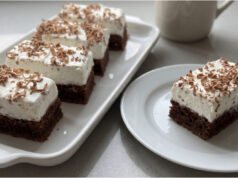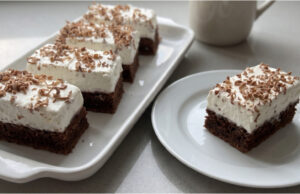
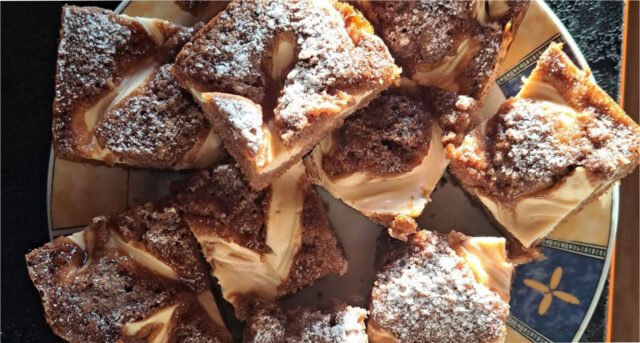
Soft cocoa batter, sweet quark filling, and a hint of vanilla create a moist layered sheet cake, easily recognized by its signature light lattice. Thanks to whipped egg whites, the cake stays light and fluffy, while the quark partially soaks into the batter during baking.
Preparation is simple; just make sure to whip the egg whites properly and thin out any overly thick batter with a bit of milk. The quark filling is easily piped across the cake in a crisscross pattern. Once cooled, dust the finished cake with powdered sugar and cut into slices.
What You’ll Need
For the cocoa batter:
- 2 cups semi-coarse flour,
- 1 cup granulated sugar,
- 1 packet vanilla sugar,
- 4 eggs,
- 1/2 cup oil,
- 1/2 cup lukewarm water,
- 2 tablespoons cocoa powder, preferably Dutch-processed,
- 1 packet baking powder,
- about 3 tablespoons milk to thin the batter,
- Hera (or other fat) for greasing the baking tray,
- coarse flour for dusting the tray.
For the quark filling:
- 2 semi-fat quarks (tubs are fine),
- 3 tablespoons powdered sugar,
- 1 packet vanilla sugar,
- 1/2 packet vanilla pudding powder,
- 1 egg,
- milk as needed, if using firmer block quark.
For finishing:
- powdered sugar for dusting.
The original recipe does not specify tray size or the amount of sugar for dusting, so adjust according to your tray and taste.
Step-by-Step Preparation:
1. Prepare the tray and eggs: Carefully grease the baking tray with Hera and dust with coarse flour. Separate the four eggs for the cocoa batter into yolks and whites so you can later whip the whites into stiff peaks.
2. Whip the yolk base: Place the yolks in a stand mixer bowl, add the granulated sugar, and beat thoroughly. Slowly mix in the oil, then the lukewarm water into the light yolk mixture.
3. Combine dry ingredients: In another bowl, mix the semi-coarse flour, baking powder, cocoa, and vanilla sugar. Gradually add the dry mixture to the yolk base, using a stand or hand mixer.
4. Prepare the egg whites: Whip the egg whites into stiff peaks. Properly whipped whites should hold in the bowl and not run or fall out when gently tilted. Gently fold the whites into the cocoa batter by hand to keep it as airy as possible.
5. Adjust the batter consistency: If the cocoa batter is too thick, add about 3 tablespoons of milk. The batter should spread easily so the baked cake is fluffy and the quark filling can soak in nicely. Pour the batter onto the prepared tray and spread evenly.
6. Prepare the quark filling: In a bowl, combine the quark, egg, 3 tablespoons powdered sugar, and vanilla sugar. Add half a packet of vanilla pudding powder to help prevent the filling from spreading too much, and mix everything thoroughly with a hand mixer.
7. Thin the quark if needed: If using block quark, the filling may be firmer. In that case, thin it with a bit of milk so it can be easily piped from a decorating bag. Transfer the finished quark-pudding mixture to a piping bag.
8. Create the lattice: Pipe the quark filling across the cocoa batter in crisscross stripes to form a regular lattice. Space the stripes about 5 cm apart so the filling covers the whole tray and creates the classic layered look.
9. Baking: Preheat the oven to 180°C and bake the cake for about 30 minutes. Check for doneness by inserting a skewer into the center; if it comes out clean and no raw batter sticks, the cake is done.
10. Cooling and serving: Let the baked cake cool so it can be sliced cleanly and the quark lattice stays intact when portioning. Finally, dust with powdered sugar to taste and cut into individual slices.
How to Recognize the Right Batter Consistency
Cocoa batter shouldn’t be so thick that it’s hard to spread on the tray. If it’s too firm, gradually work in the recommended milk. A looser, fluffier batter allows the quark lattice to gently sink into the cake during baking, creating the signature layered look.
How to Create a Regular Quark Lattice
The filling should be smooth enough to pipe, but not runny. Pipe stripes in one direction first, then cross them with a second row. About five-centimeter spacing helps distribute the filling evenly over the whole tray.
Why Fold in Egg Whites by Hand
Gently fold the whipped egg whites in with a spatula. If you continue mixing vigorously, the whites will lose air and the finished batter won’t be as light. Just briefly combine, pour onto the tray, and continue with the quark layer.