
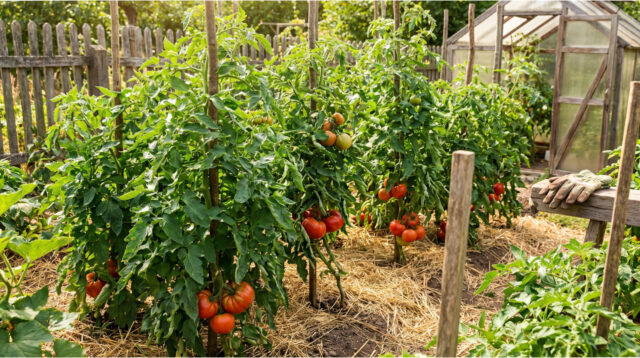
Every gardener wants strong tomatoes, sturdy stems, healthy leaves, and fruits free of blight. But with tomatoes, there’s one common mistake: wanting to help, so you keep adding more and more nutrients. The result isn’t always a bigger harvest. Sometimes the plant just produces lots of leaves, becomes dense, doesn’t air out well, and after rain or in a greenhouse, problems can escalate even faster.
Homemade fertilizer isn’t a magic shield against blight. But it can support healthy growth, roots, and the overall condition of the plant. If you add proper watering, pinching, ventilation, and removal of lower leaves, your tomatoes will have a much better chance to handle humidity, heat, and heavy fruit loads.
First, check if your tomatoes really need fertilizer
Before pouring any homemade infusion on your tomatoes, look at the whole plant. Are the leaves light green, the stem weak, and growth slow? Then a gentle feed might help. But if the leaves are dark green and lush, the shoots strong, and there are few flowers or fruits, the problem may actually be overfertilization, especially with nitrogen.
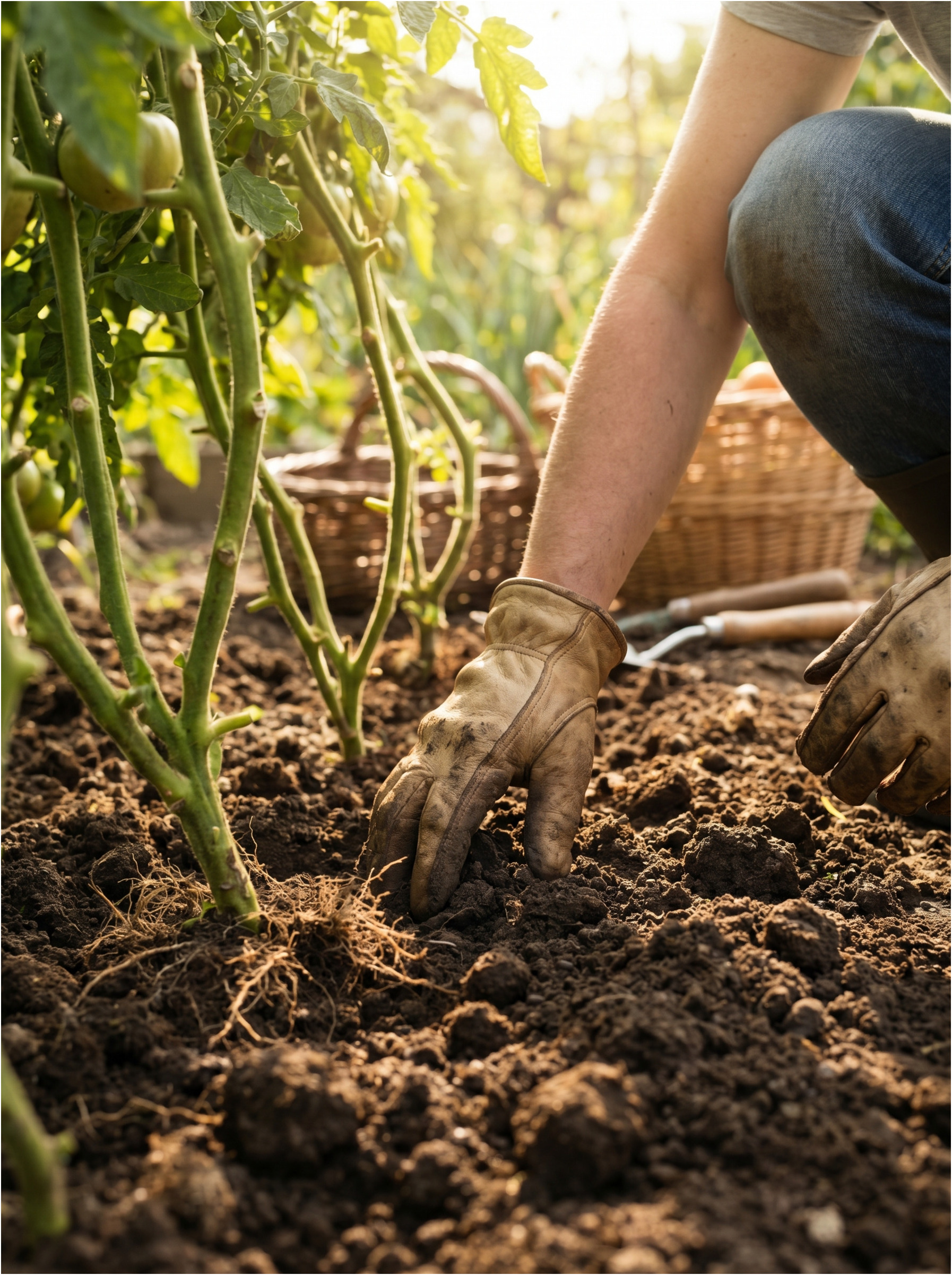
Soil is also important. If it’s wet, heavy, and doesn’t dry out for a long time, don’t fertilize. Roots in waterlogged soil can’t absorb nutrients well, and more liquid can make things worse. Tomatoes need regular moisture, but they can’t stand constant wetness.
1. Nettle Infusion for a Strong Start
Nettle infusion is one of the best-known homemade fertilizers. It’s especially useful during the growth phase, when tomatoes need to strengthen, develop leaf area, and get going after planting. Nettles mainly support green growth, so it’s important to use them wisely.
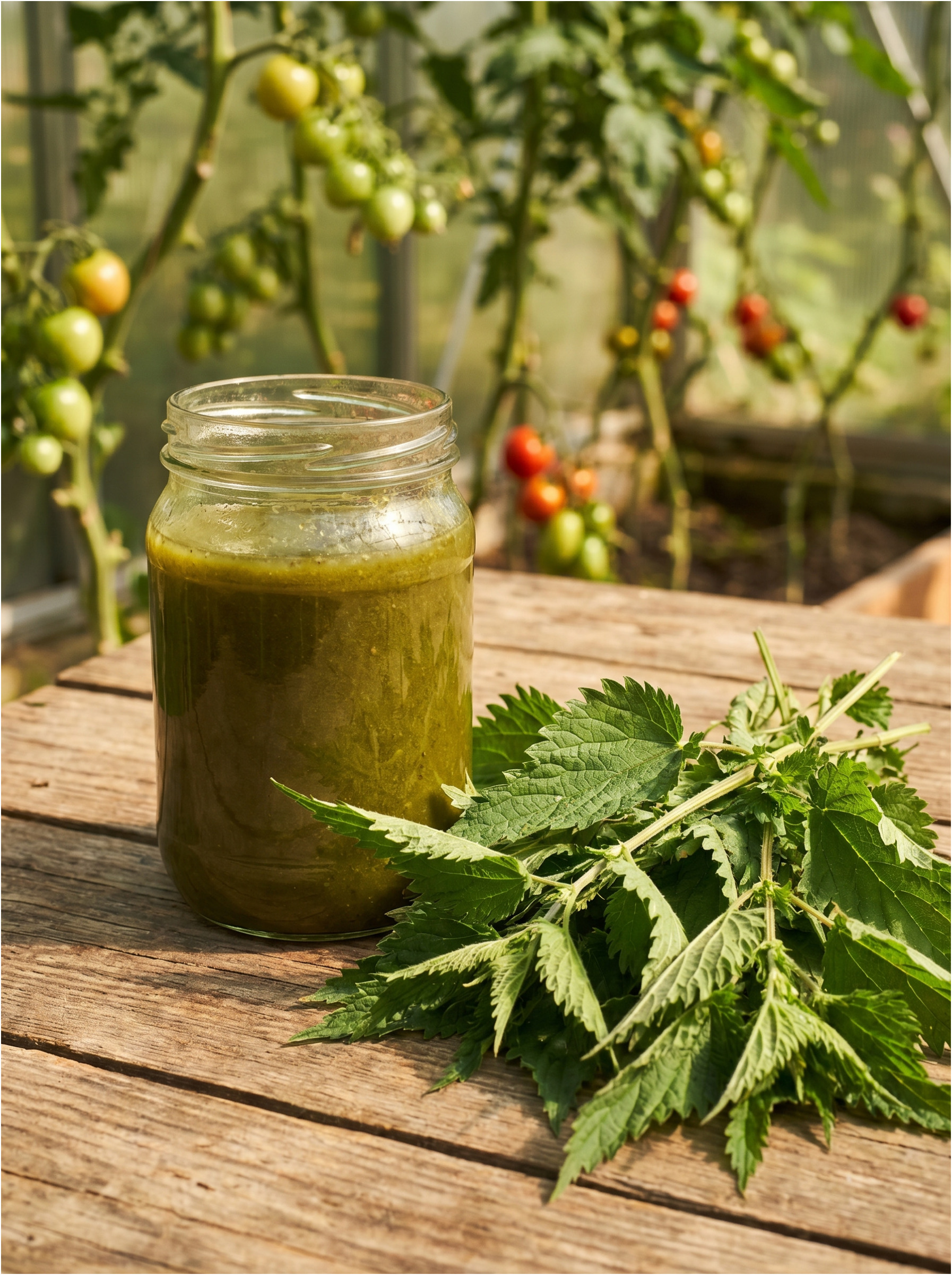
The biggest mistake is to keep pouring nettle infusion on tomatoes over and over. If the plant is already growing vigorously, has lots of leaves and few flowers, more nitrogen support isn’t ideal. Such a tomato will just make even more leaves, the growth will thicken, and moisture will linger inside the plant.
How to Use It
Always dilute nettle infusion well and water only at the roots. Don’t use it on the leaves. A strong infusion can stress the plants and, in hot weather or with weakened tomatoes, do more harm than good.
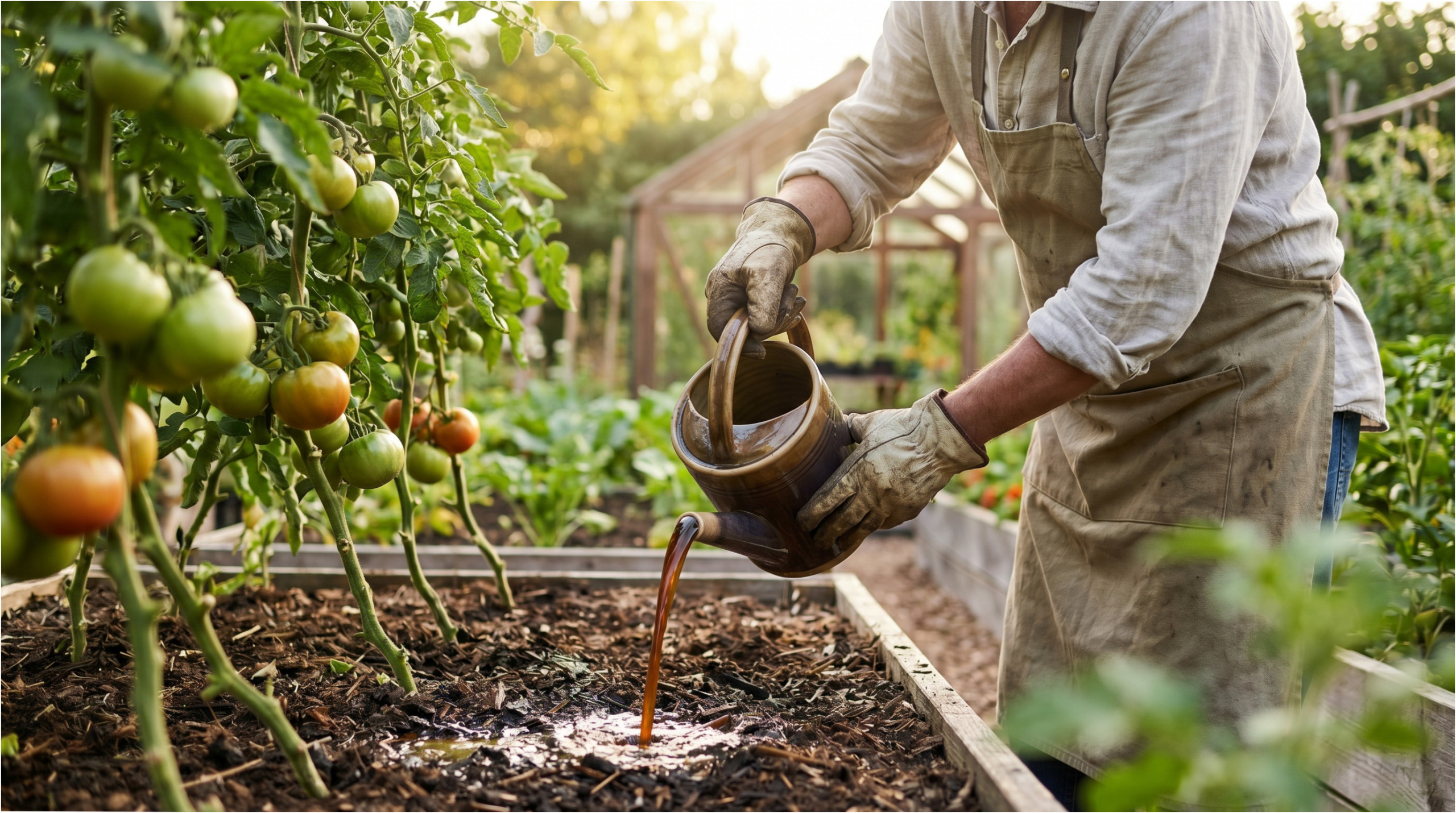
If the infusion smells very strong, use it carefully and never pour it into waterlogged soil. Tomatoes don’t need a shock, but gentle and regular care.
2. Compost Tea for Roots and Soil
Compost tea is gentler than strong infusions. It gives tomatoes gentle support and also helps the soil. It’s not a quick “booster,” but a sensible way to feed your plants gradually and without overdoing it.
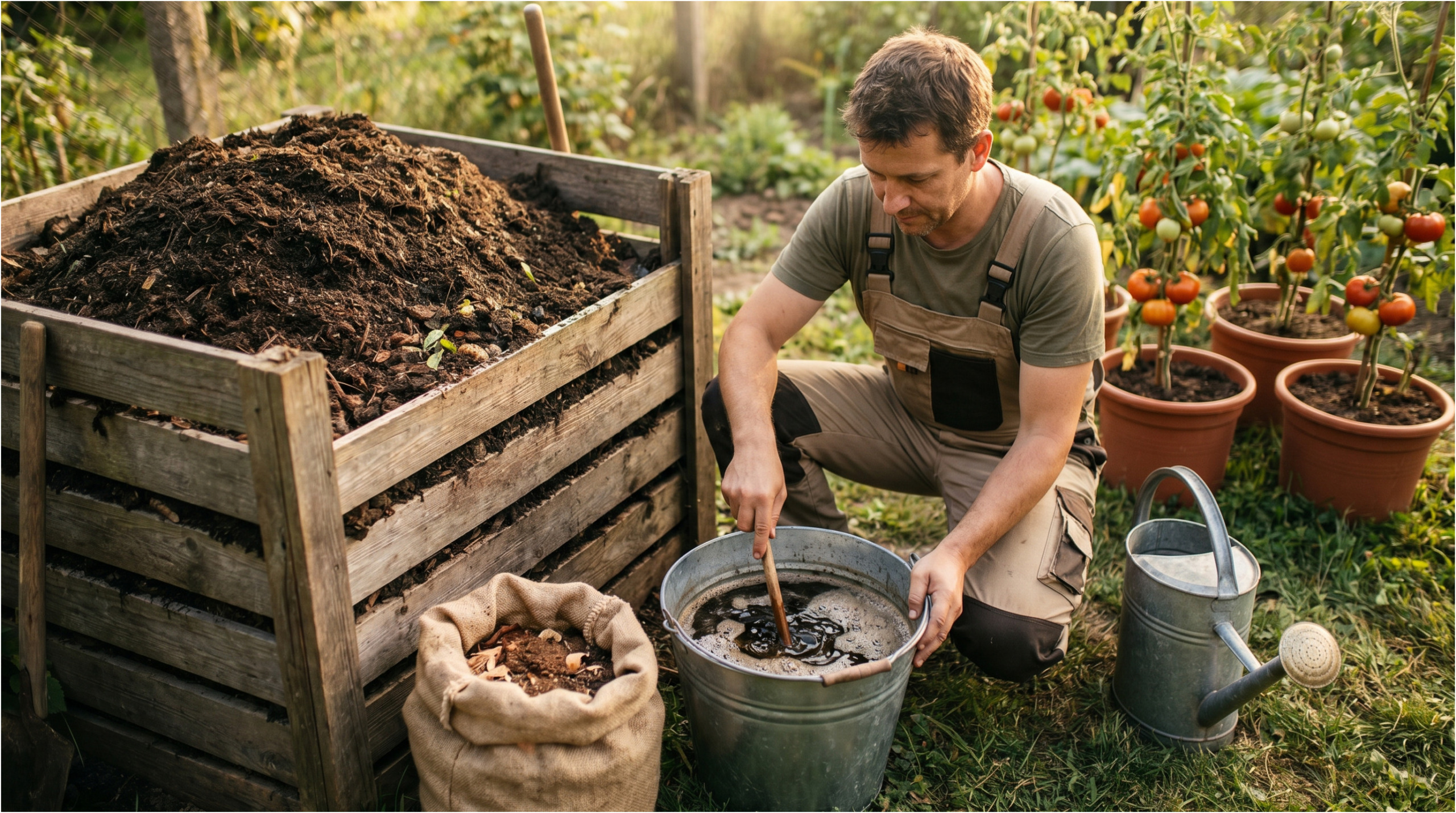
It’s especially suitable for tomatoes that are growing healthily, flowering, and starting to set fruit. Well-prepared compost supports soil life and helps plants use nutrients better. That’s important for the overall resilience of tomatoes.
How to Prepare It
Put a small amount of mature compost in a bucket, cover with water, stir, and let it sit briefly. Then use only the liquid part at the roots. The compost must be mature, odorless, and free of moldy remains.
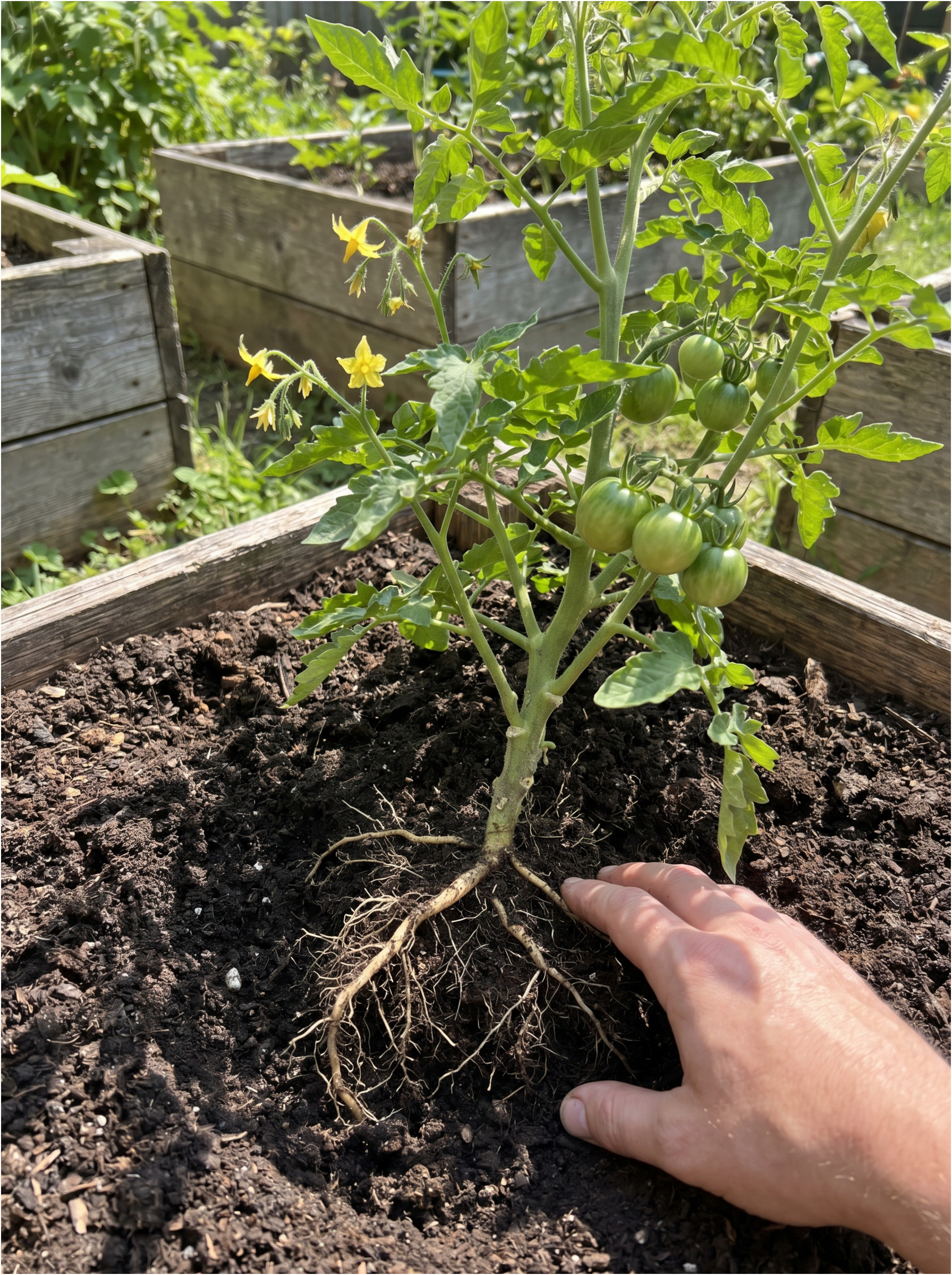
Don’t use compost tea on the leaves. With tomatoes, it’s important to keep the leaves as dry as possible, because wet leaves for a long time invite problems.
3. Banana Peel Infusion as a Gentle Supplement During Flowering
Banana peels are often used as a homemade supplement for flowering and fruiting plants. For tomatoes, they can make sense as an occasional gentle support when the plant is already flowering or setting small fruits. But don’t expect banana infusion alone to prevent blight or fix poor care.
Don’t put banana peels directly at the tomatoes in large amounts. They can attract insects, mold, or decompose too close to the roots. It’s safer to use a weak fresh infusion or add the peels to the compost.
When Does Banana Infusion Make Sense?
It’s most useful for healthy tomatoes that already have flowers or small fruits. If your tomato is stunted due to cold, waterlogging, or poor roots, banana peel won’t solve the problem.
What About Yeast? Use With Caution
Yeast is often recommended as a homemade feed for tomatoes, but it’s not a complete fertilizer. It can serve as an occasional supplement, but shouldn’t be used repeatedly. For tomatoes already growing vigorously, more growth support can mean more leaves than fruits.
If you use yeast, do so only weakly, rarely, and on healthy plants. Don’t use it in wet soil, on freshly transplanted tomatoes, or on plants with few flowers due to overfertilization.
Homemade Fertilizer Alone Won’t Stop Blight
Let’s be clear: no homemade fertilizer will guarantee your tomatoes never get blight. Fungal diseases are mainly related to humidity, temperature, air flow, plant density, and how long leaves stay wet.
Nutrition can help the plant get stronger, but prevention starts elsewhere. Tomatoes need to be airy, leaves shouldn’t touch the ground, and in the greenhouse, regular ventilation is a must. Water at the roots, not over the leaves.
Water at the Roots, Not Over the Leaves
Always water tomatoes at the roots. Wet leaves are one of the biggest risks, especially in the greenhouse or during humid weather. If you water over the leaves in the evening, the plant stays wet all night and problems have much better conditions.
Morning or forenoon watering is ideal. The soil gets water, the plant has time to work during the day, and any moisture around the bed evaporates more quickly.
Pinching Out Shoots Also Helps Against Humidity
Pinching out side shoots isn’t just about shaping the plant. When a tomato gets too dense, humidity lingers inside, leaves touch, and air doesn’t circulate well. This increases the risk of spots and blight.
Regularly remove side shoots from indeterminate tomatoes and make sure the plant doesn’t become an impenetrable jungle. But don’t remove too many leaves at once. Tomatoes need them to feed the fruits.
Lower Leaves Shouldn’t Touch the Ground
Lower leaves that touch the soil are risky. During rain or watering, dirt, moisture, and disease spores get on them. If they’re old, yellowing, or lying on the ground, it’s better to remove them gradually.
But don’t make a radical cut all at once. Mainly remove damaged, diseased, old leaves, and those touching the soil. Leave healthy leaves higher up, as they help feed the fruits.
Beware of Too Much Nitrogen
Nitrogen helps tomatoes grow, but too much can be a problem. The plant produces lots of leaves, strong shoots, and puts less energy into flowers and fruits. Dense growth is also harder to ventilate.
That’s why you need to be careful with nettle infusion, fresh manure, and some homemade tricks. In the growth phase, they can help, but during flowering and fruiting, a more balanced approach is needed.
When Not to Use Homemade Fertilizers at All
Skip homemade infusions if your tomatoes are freshly planted and haven’t rooted yet, if the soil is waterlogged, the plant has suspicious spots, or has been damaged by cold. At such times, it doesn’t need more experiments, but stable conditions.
Don’t fertilize during the hottest part of the day. The plant may look wilted, but that often doesn’t mean a lack of nutrients. The tomato is just protecting itself from the heat. Leave watering and feeding for the morning or evening, depending on soil moisture.
Quick Plan for Strong Tomatoes Without Chemicals
- After planting, let tomatoes root and don’t overfertilize.
- Support weaker plants in the growth phase with a weak nettle infusion.
- Feed healthy, flowering tomatoes with gentle compost tea.
- Use banana infusion only occasionally on plants setting fruit.
- Water at the roots, not over the leaves.
- Ventilate the greenhouse regularly.
- Pinch out side shoots and don’t let the growth get too dense.
- Remove lower leaves touching the ground.
- After rain, check for the first spots on the leaves.
Most Common Mistakes When Fertilizing Tomatoes at Home
- Using nettle infusion too often.
- Fertilizing into wet soil.
- Combining nettles, yeast, bananas, and other tricks all at once.
- Watering over the leaves.
- Trying to solve blight with fertilizer instead of ventilation and light.
- Growth too dense without pinching out shoots.
- Removing too many healthy leaves at once.
- Using smelly or moldy homemade infusions.
A Giant Harvest Starts with Balance
Homemade fertilizers can help tomatoes, but only if you use them at the right time. Nettles support growth, compost tea strengthens the soil, and banana infusion can be a gentle supplement during flowering and fruiting. But none of them replace proper care.
Tomatoes mainly need healthy roots, regular watering, airy growth, dry leaves, and plenty of light. When these basics are in place, homemade feeding can be a great helper. When they’re not, more infusions often just mask or worsen the problem.
It depends on the growth stage. Nettle tea is more suitable at the beginning for growth, compost tea is a gentle soil booster, and banana peel infusion can serve as an occasional supplement during flowering and fruiting.
Not by itself. Nutrition can strengthen the plant’s condition, but dry leaves, ventilation, airy growth, watering at the roots, and timely removal of affected leaves are crucial against mildew.
Do not fertilize in waterlogged soil, after fresh planting, when there are suspicious spots on the leaves, in the midday heat, or when the plants are already lush and have few flowers.
Yes, but mainly in the growth phase and well diluted. If the tomatoes have a lot of leaves and few fruits, it’s better to limit nettle tea.
It’s better to put them in compost or use a weak fresh infusion. Fresh peels directly near the plants can attract insects, mold, or burden the soil.