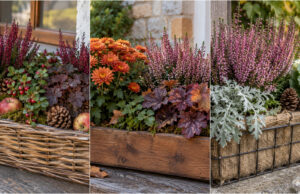

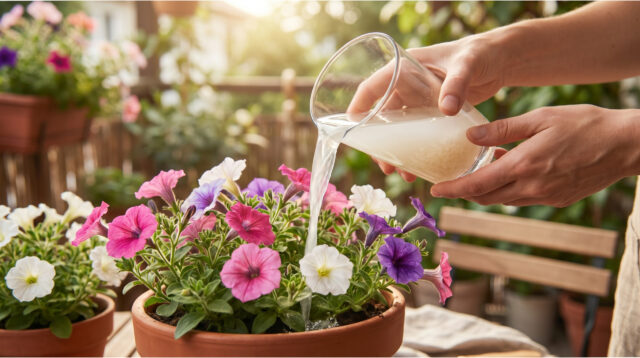
Everyone knows someone whose window boxes bloom so profusely that neighbors stop to admire them. Often, there’s no big secret behind it, just regular care: plenty of sun, removing faded flowers, a planter that isn’t waterlogged, and sensible fertilizing. Homemade watering solutions can be a nice supplement, but only when the plant isn’t stressed.
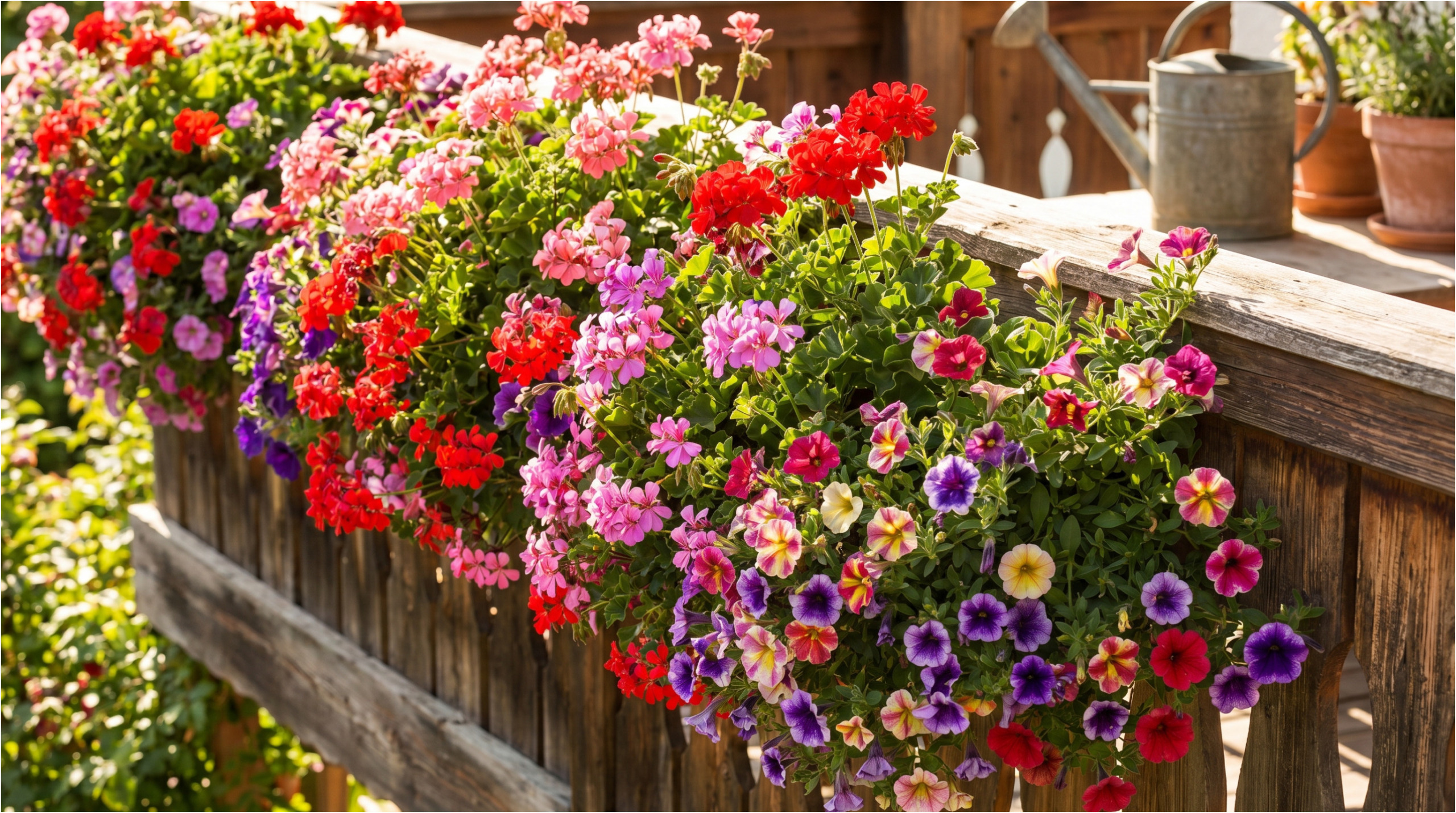
With geraniums and petunias, it’s especially important not to overdo it with nitrogen. Nitrogen supports leaf growth, but if there’s too much, the plant may grow lush greenery and produce fewer flowers. That’s why it’s worth using homemade tricks sparingly and always watching how the plants react.
First, check if your flowers really need fertilizer
Before you pour any homemade solution into the planter, reach into the soil. If it’s wet, heavy, and doesn’t dry out for a long time, don’t fertilize. Roots in waterlogged soil can’t absorb nutrients well, and more liquid can make the problem worse.
Also look at the location. Geraniums and petunias need plenty of light. If they’re in the shade, they won’t bloom abundantly even with the best watering. Old faded flowers also hold them back, as they drain the plant’s energy.
1. Banana peel solution as gentle support for blooming
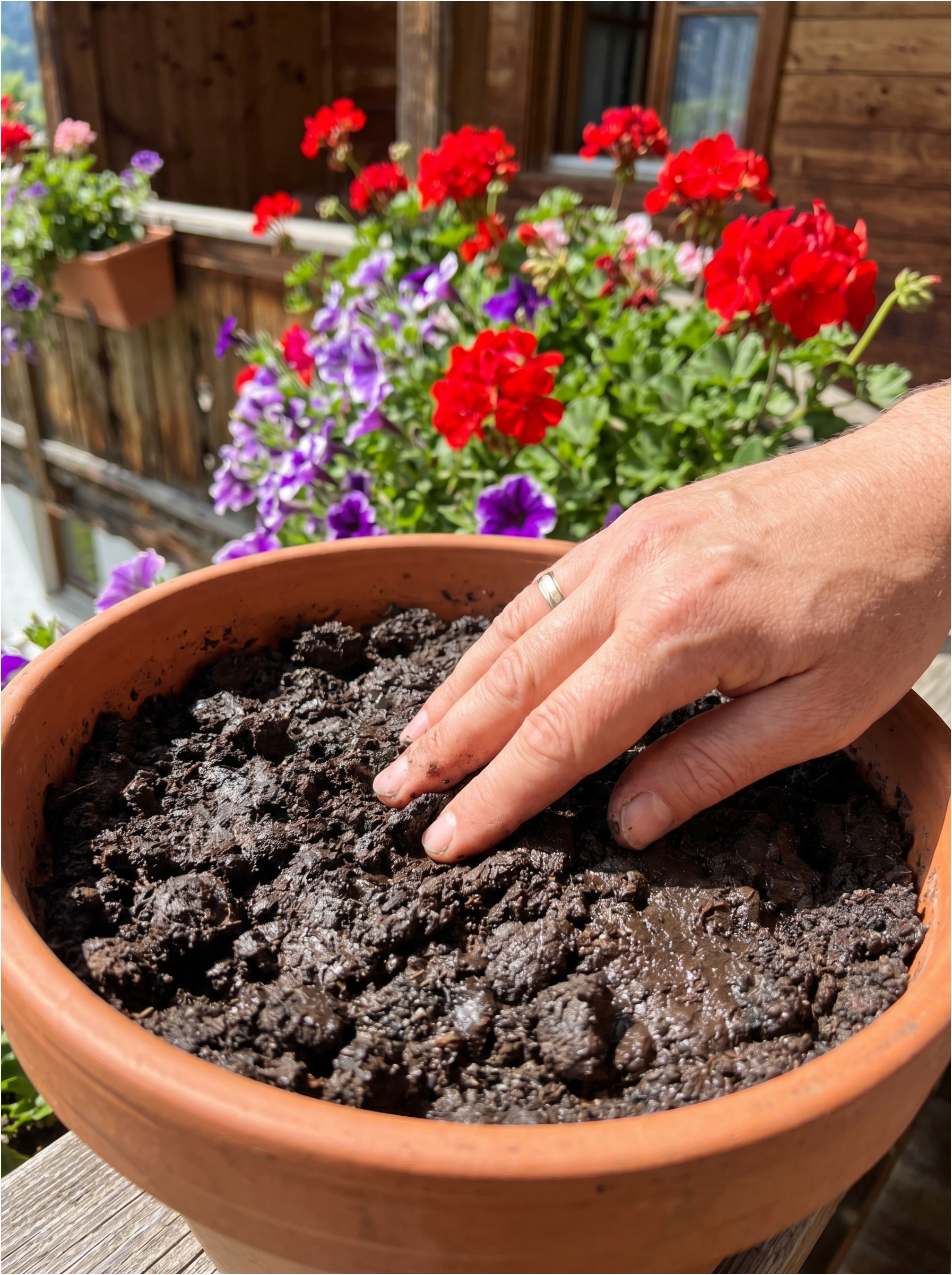
Banana peels are a popular homemade trick for flowering plants. For geraniums and petunias, they can serve as a gentle supplement, but don’t expect a miracle overnight. It’s best to use a weak, fresh infusion, not to throw peels directly into the planter.
Cut the peel into smaller pieces, let it steep briefly in water, and use the infusion at the roots. The mixture must not smell bad, ferment, or mold. If it smells unpleasant, don’t pour it into the planter.
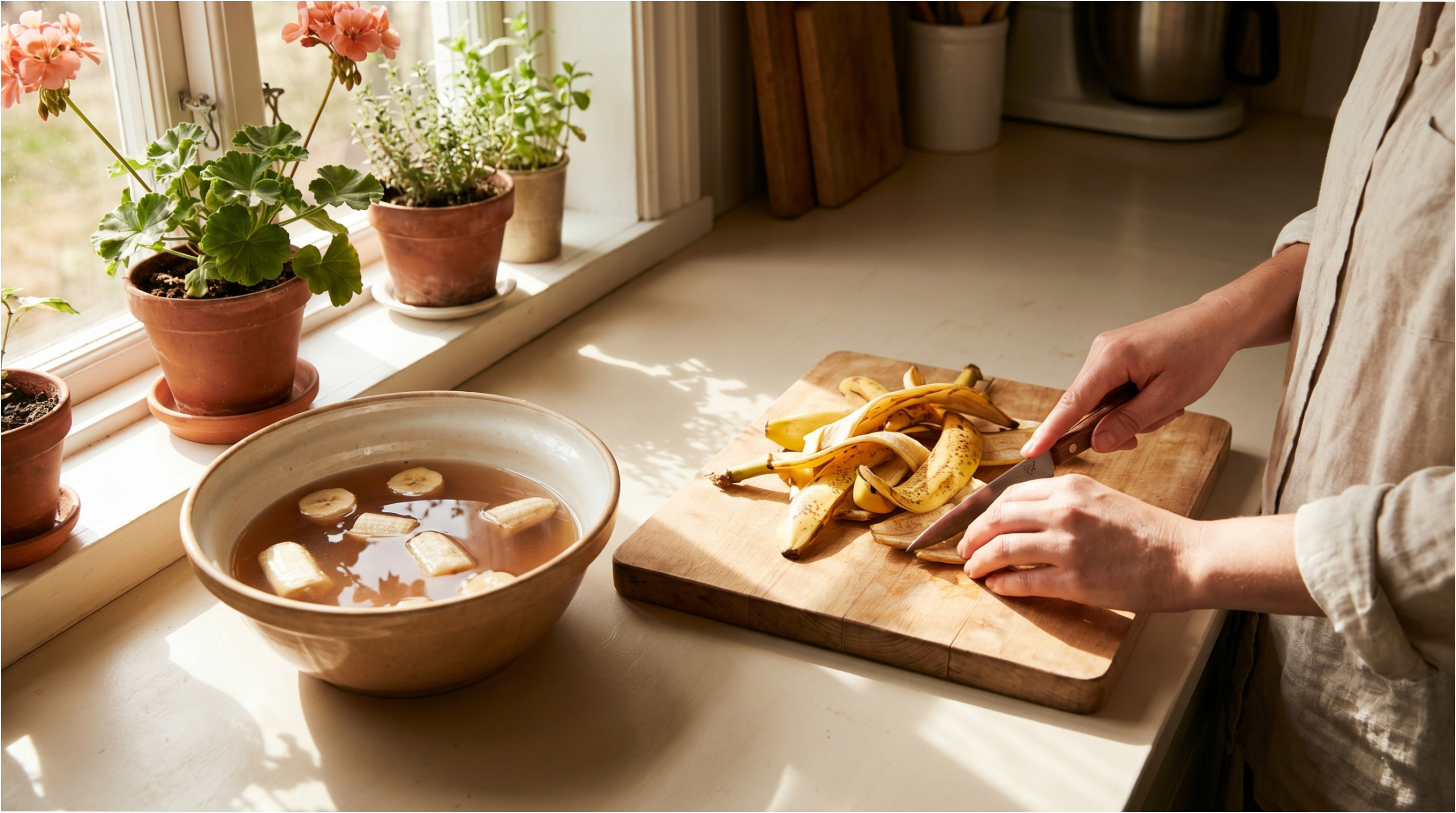
Note: Never put banana peels directly into the planter. They can mold, attract gnats, and burden the soil.
2. Rice water for a mild boost
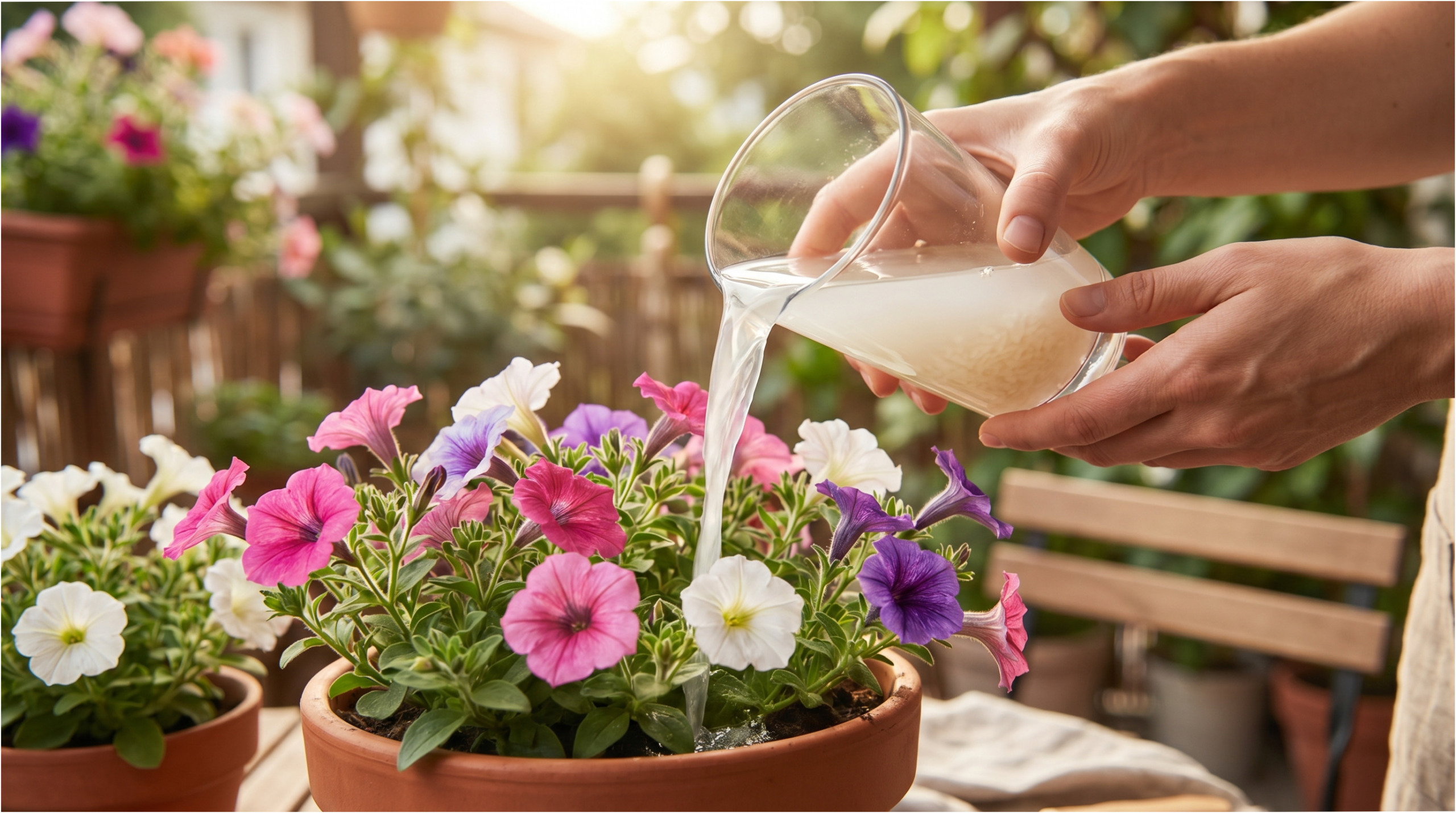
Rice water is another simple homemade solution that can be used for balcony flowers. Prepare it by rinsing or briefly soaking a small amount of rice in water, then pouring off the water. Use it fresh and only occasionally.
Rice water is not a complete fertilizer, but it can serve as a gentle care supplement. It’s mainly suitable for plants that are already growing and blooming well, but you just want to give the planter a slight boost.
3. Yeast only rarely and weakly
Yeast is a popular homemade fertilizer, but use it with caution for geraniums and petunias. It can stimulate growth, but it’s not a special fertilizer for blooming. If your plants have lots of leaves and few flowers, yeast may not be the best choice.
If you use it, make only a weak solution and not often. Strong or regular yeast watering can unnecessarily burden the planter. Never pour it into wet soil.
More on this topic can be found in the article Yeast as Plant Nutrition: When It Makes Sense and Why Not to Overdo It.
4. Coffee grounds? Be very careful
Coffee grounds are often recommended as a homemade fertilizer, but you need to be very careful with planters. In the small volume of soil, they can easily accumulate, mold, and create an impermeable layer on the surface.
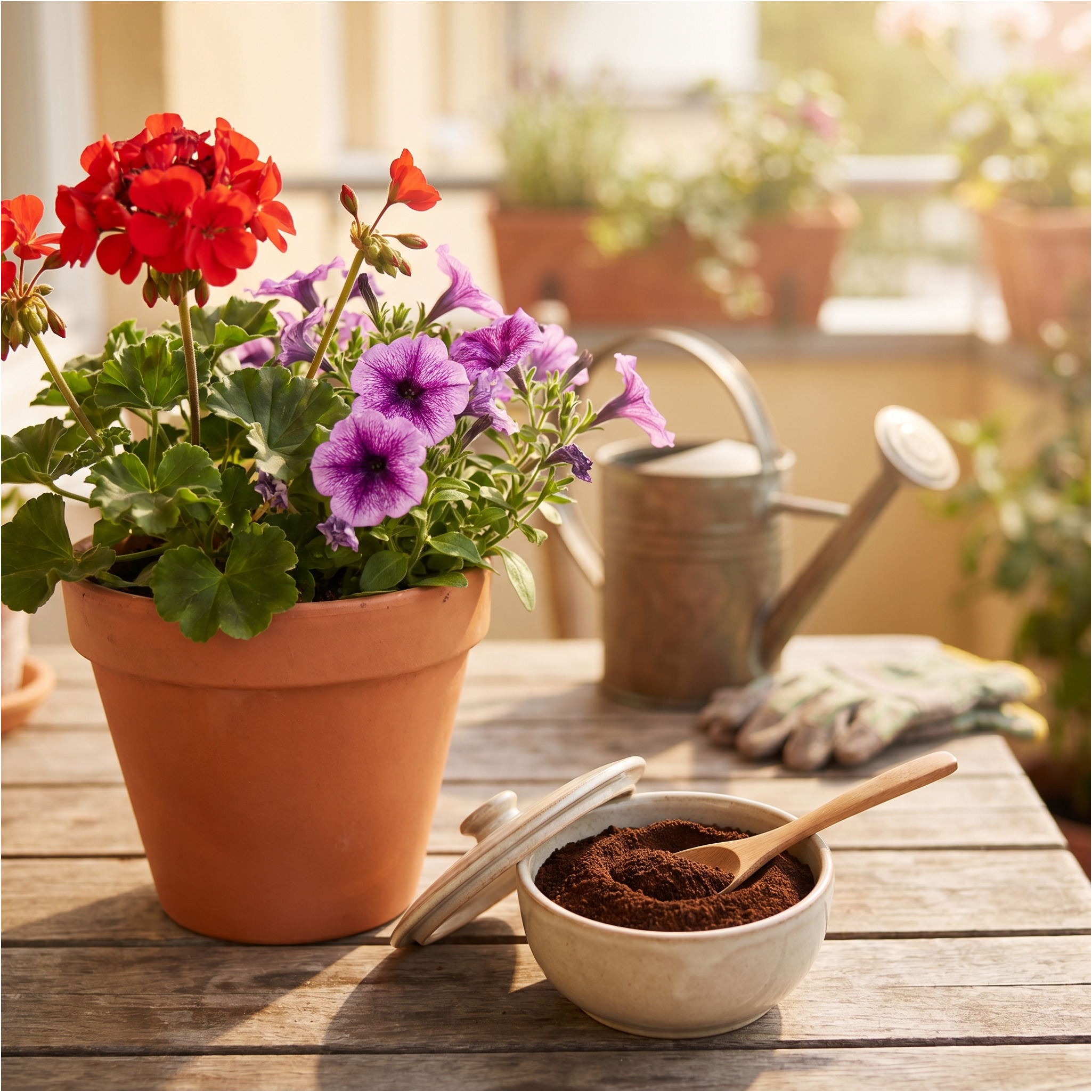
If you want to use them, only add a small amount, well dried, and not often. For geraniums and petunias, I’d rather put them in the compost than directly into the planter. There, they break down more safely and later serve as part of mature compost.
5. Compost tea as a gentler option
A mild compost tea can be gentler for balcony flowers than strong homemade infusions. But it must be really weak and well prepared. It’s not a thick mash, but a mild support for the soil and roots.
Use only mature, odorless compost. Mix a small amount in water, let it settle briefly, and use it at the roots. For planters, it’s important not to overwater the soil.
6. Eggshells don’t work immediately
Eggshells are popular, but they don’t work instantly. If you just sprinkle them in the planter, they won’t break down in a few days and won’t quickly help the flowers. They’re better suited for compost or as a long-term soil supplement.
So for balcony flowers, don’t expect eggshells to give a quick blooming boost. If your geraniums or petunias aren’t blooming, look for the cause in light, watering, removing faded flowers, and the right fertilizer for flowering plants.
What geraniums need to bloom for a long time
Geraniums like a bright spot, airy planters, and watering according to the weather. They don’t tolerate long-term waterlogging. If water stands in the saucer or self-watering reservoir after rain, they can start to weaken and bloom less.
It’s very important to remove faded flowers. If you leave old flower heads on the plant, they unnecessarily drain its energy. Regular cleaning encourages more budding.
You may also find useful the article Homemade Fertilizer for Blooming: What to Give Geraniums, Tomatoes, and Peppers So They Don’t Just Grow Leaves.
What petunias and surfinias need most
Petunias and surfinias are very hungry plants. When they bloom abundantly, they use up a lot of nutrients and water. But they also don’t like being overwatered. If the planter doesn’t drain well, the plants quickly weaken.
For petunias, regular fertilizer for flowering balcony plants is important. Homemade watering solutions can only be a supplement. If petunias stop blooming, also check for faded flowers, leggy stems, and the condition of the soil.
When to skip homemade watering solutions
Don’t use homemade watering solutions if the soil is wet, the planter is standing in water after rain, or the plants look wilted in the midday heat. Wilted leaves in the heat don’t always mean drought or hunger. The plant may just be protecting itself from overheating.
Also skip them for plants with spots, rot, moldy soil, or foul-smelling earth. In such cases, you need to address drainage, aeration, and plant health, not add more fertilizer.
How often to use homemade watering solutions
Don’t use homemade watering solutions every day or all at once. Pick one gentle option and watch the plants’ reaction. For healthy geraniums and petunias, occasional support is enough—no need for constant experimenting.
If you use regular fertilizer for flowering balcony plants, add homemade tricks even more cautiously. The goal is to support the plants, not overfertilize them.
Water at the roots, not over the flowers
Water geraniums and petunias at the roots. Wet flowers brown faster after watering, get sticky, and can rot after rain. With petunias, this is especially noticeable, as their delicate flowers are easily damaged by water.
The best time to water is in the morning or before noon. During the day, the plants have time to dry and the water is better used. Only water in the evening if necessary and if the planter isn’t already moist.
Faded flowers are a bigger problem than lack of fertilizer
Many people look for a miracle watering solution but forget about simple plant cleaning. With geraniums, regularly remove faded flower heads. With petunias, remove sticky and damaged flowers so the plant doesn’t look tired.
This way, the plant doesn’t have to send energy into seed production and can set new buds more easily. This simple care often makes a bigger difference than another homemade fertilizer.
The most common mistakes that keep planters from blooming
- Not enough light.
- Waterlogged soil after rain.
- No drainage for water.
- Too much nitrogen and not enough fertilizer for blooming.
- Not removing faded flowers.
- Using several homemade watering solutions at once.
- Watering over flowers and leaves.
- Leaving the planter exposed to strong wind without protection.
Quick recipe for gentle homemade support
If you want to try a simple homemade trick, use a weak banana infusion or fresh rice water. Water only at the roots, on slightly moist soil, and not too often. Skip watering after rain or when the soil is wet.
For plants with lots of leaves and few flowers, don’t add more growth-promoting solutions. Instead, check the light, drainage, and removal of old flowers.
The magic of abundant blooming isn’t in one ingredient
The secret to beautiful geraniums and petunias isn’t in a single miracle additive. The best results come from a combination of a good location, regular care, removing faded flowers, proper watering, and gentle nutrition.
Homemade ingredients like banana peels, rice water, or yeast can be an interesting supplement, but only if you use them wisely. If you pour them into a wet planter or switch them every week, you’ll likely harm your flowers. If you use them sparingly on healthy plants, they can help keep your planters fresh and blooming until autumn.
As a gentle supplement, you can use a weak banana infusion, fresh rice water, or very weak compost tea. Always water at the roots and do not use fertilizer in wet substrate.
Only cautiously and occasionally. Yeast promotes growth rather than flowering. If the plants have a lot of leaves and few flowers, yeast may not be suitable.
Preferably not. They can mold, attract flies, and burden the substrate. A safer option is a weak fresh infusion or adding peels to compost.
Most often due to insufficient light, overwatering, lack of drainage, not removing spent flowers, or inappropriate nutrition with too much nitrogen.
Occasionally as a supplement is sufficient. Do not use multiple homemade fertilizers at once and always monitor how the plants respond.