
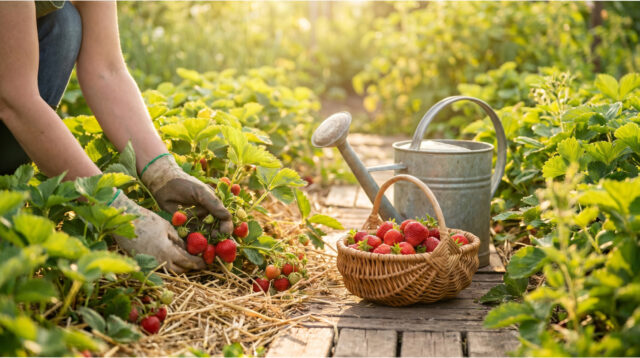
Strawberries may seem undemanding, but during flowering and fruit filling, they are very sensitive to fluctuations. Sometimes they lack water, other times after rain they sit in moisture. If you add heavy, compacted mulch, weeds, and fruits touching the ground, rot can appear quickly.
Proper mulching and watering have a double effect. They help keep the soil evenly moist and also keep the fruits away from wet ground. This way, strawberries stay cleaner, rot less, and have better conditions for ripening.
Why Strawberries Most Often Rot in May and June
Rot in strawberries most often appears where moisture lingers for a long time. Fruits rest on wet soil, touch old leaves, the bed is overcrowded, and after rain or watering, it dries slowly. Once one fruit starts to spoil, the problem can spread quickly.
The most at-risk are fruits hidden inside the plant, close to the ground, or under leaves. At first glance, the patch may look healthy, but under the leaves you may already find soft, brown, or moldy strawberries.
Rule 1: Fruits Must Not Lie on Wet Soil
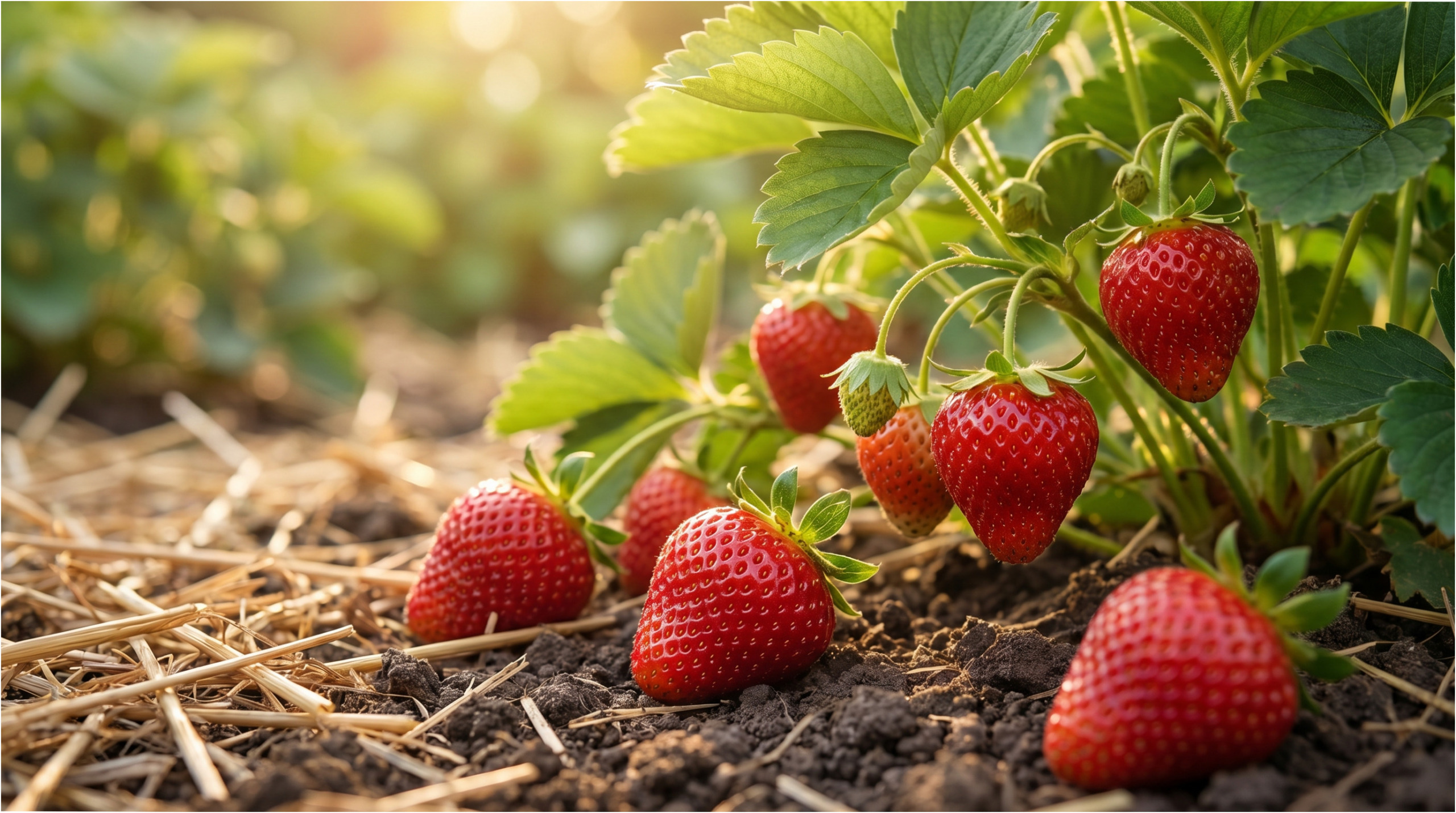
The most important rule is simple: strawberries should not rest directly on the soil. Wet ground after rain or watering holds moisture, dirties the fruit, and increases the risk of rot. That’s why strawberries are traditionally mulched with straw or another airy material.
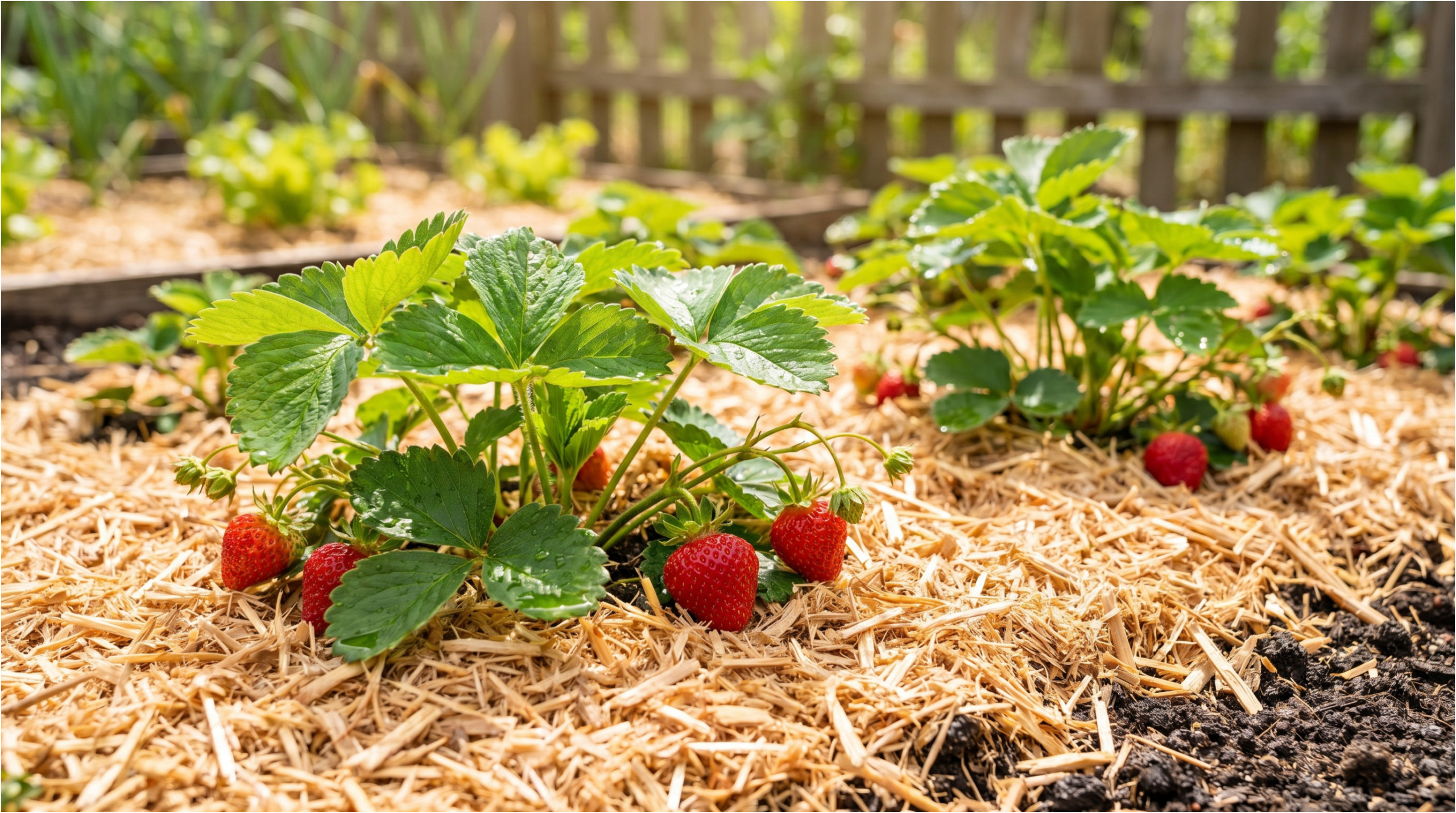
Mulch creates a protective layer between the fruit and the soil. Strawberries stay cleaner, dry faster, and touch less of the places where moisture lingers. At the same time, it limits weed growth, which steals water and nutrients from strawberries.
If you’re also dealing with strawberry nutrition, see the article Strawberries Need Nutrition at the Right Time: How to Support Them for Sweet Fruits and Strong Leaves.
Straw Is a Classic That Still Works
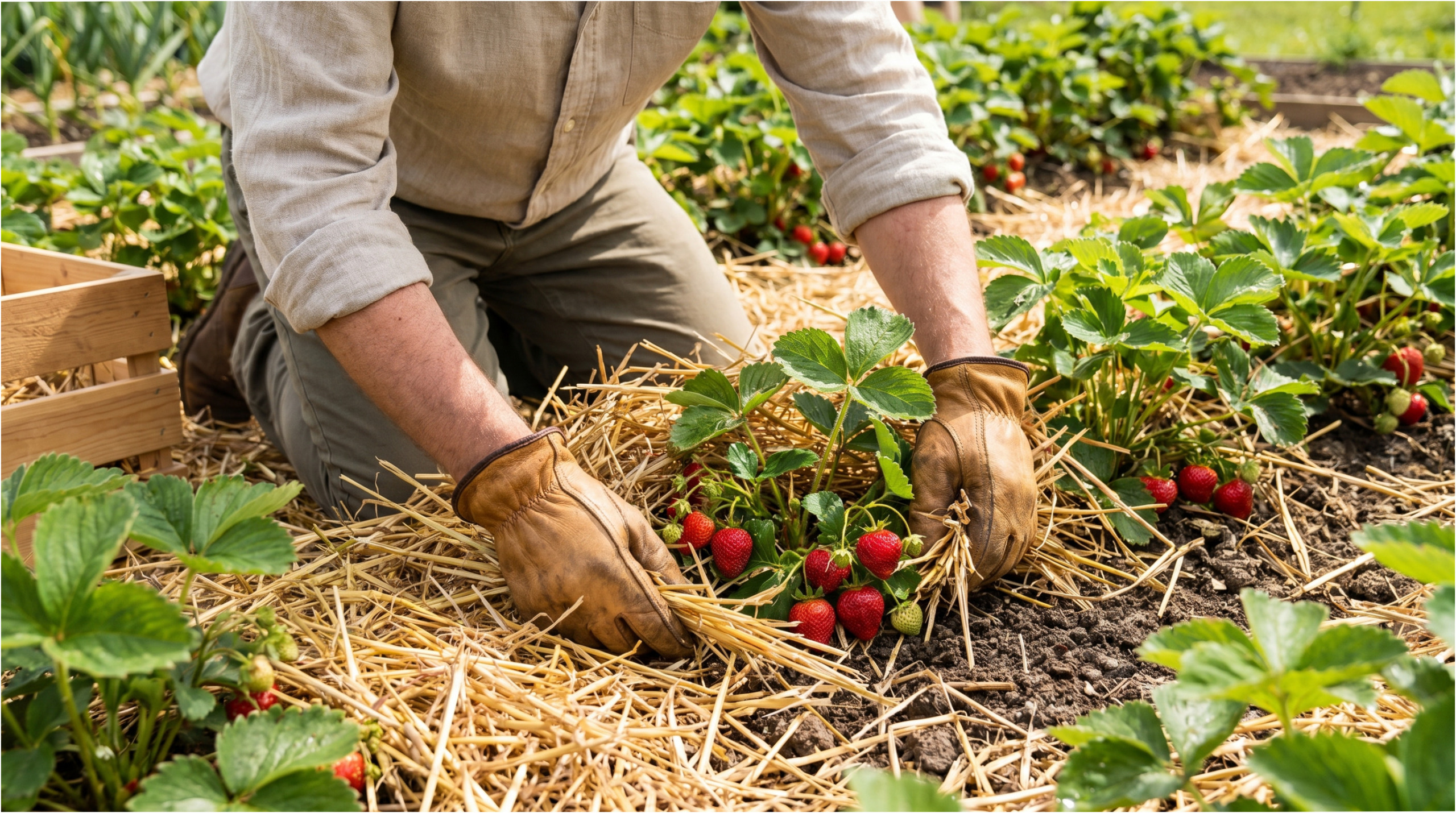
Straw is one of the best materials for strawberries. It’s airy, separates the fruits from the soil well, and looks natural. The best is clean, dry, and not too finely chopped straw. Spread it around the plants so the fruits don’t touch the ground, but leave the strawberry crown free.
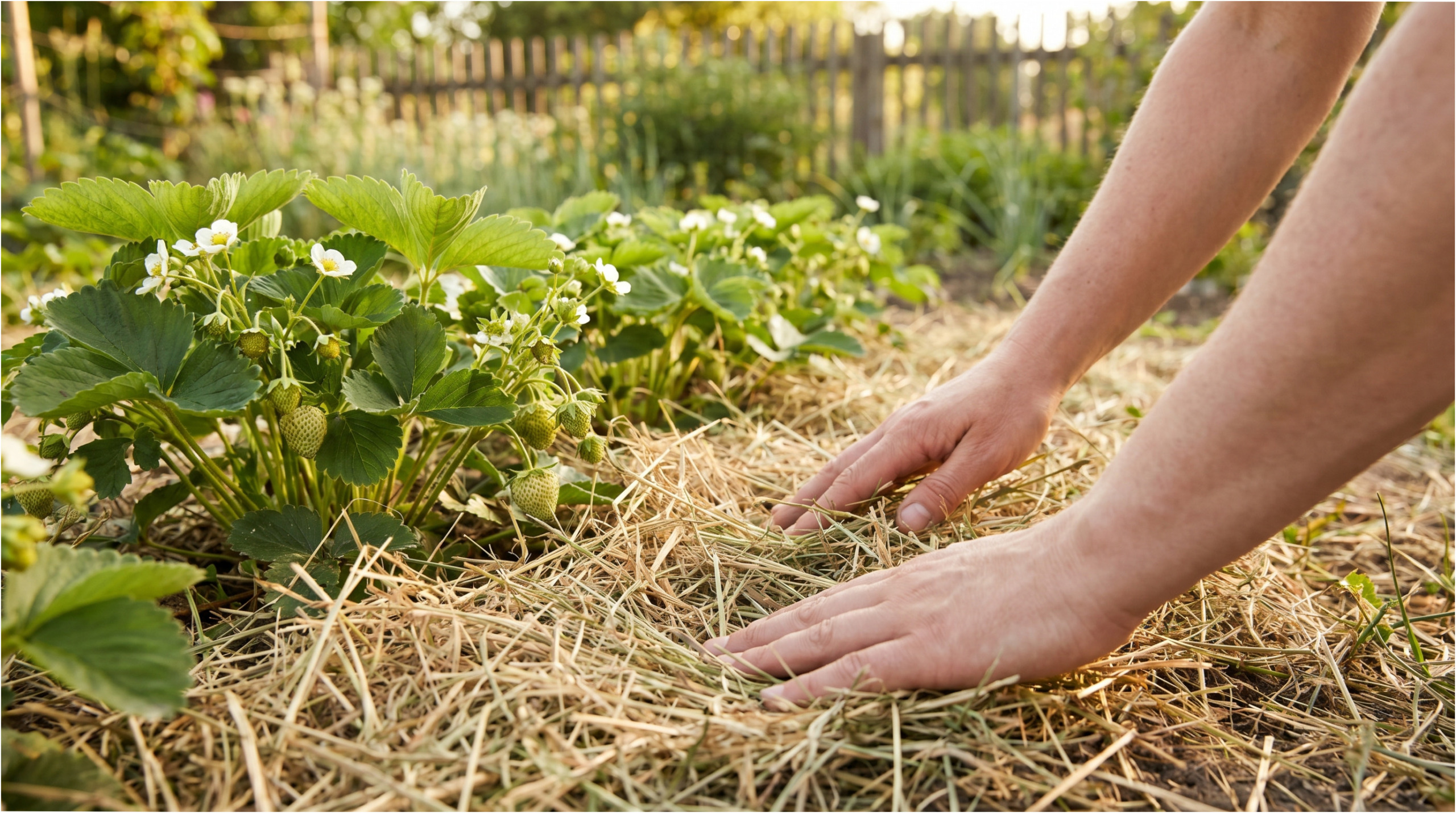
Don’t put a thick layer directly into the center of the plant. The strawberry crown must breathe. If you cover it, it can start to rot or the plant may weaken.
Wood Wool Is a Clean and Decorative Option
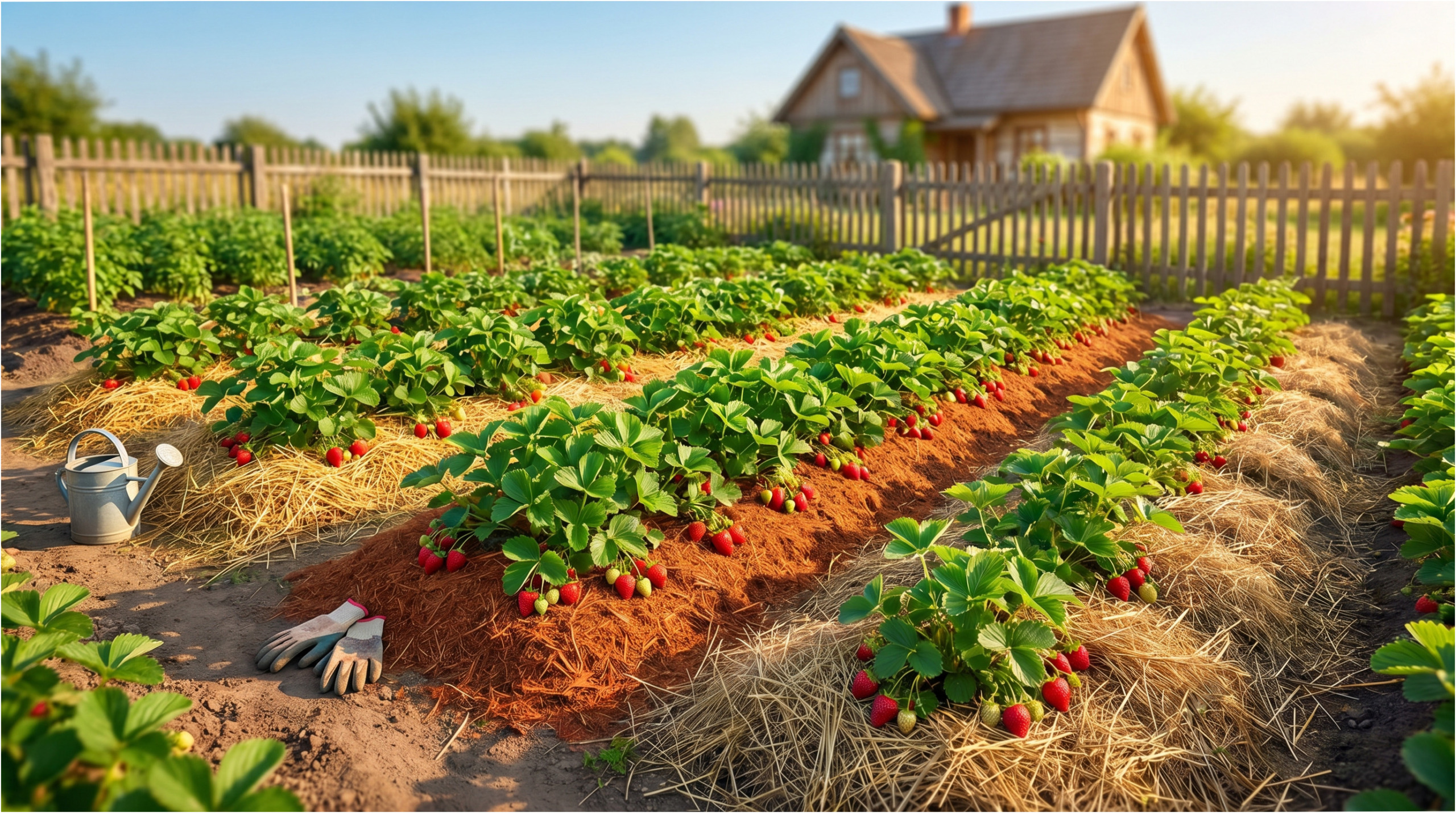
Wood wool is used similarly to straw. It supports the fruits well, looks clean, and gives the bed a tidy appearance. It’s especially suitable where you want the strawberries to stay clean and not touch the soil.
The advantage is its airiness. It doesn’t create a heavy, wet layer as easily as fresh grass. But even here, the material must not be pressed directly onto the plant’s crown.
Grass Clippings Yes, but Only Thin and Wilted
Grass clippings are available in almost every garden, but be careful with strawberries. Fresh grass in a thick layer can heat up, compact, and hold too much moisture. That’s exactly the environment rot loves.
If you use grass, let it wilt a bit first and apply it only in a thin layer. Never press it directly onto the center of the plant. After rain, check that it hasn’t compacted and become as wet as a carpet.
Black Fabric Is Not Always Ideal
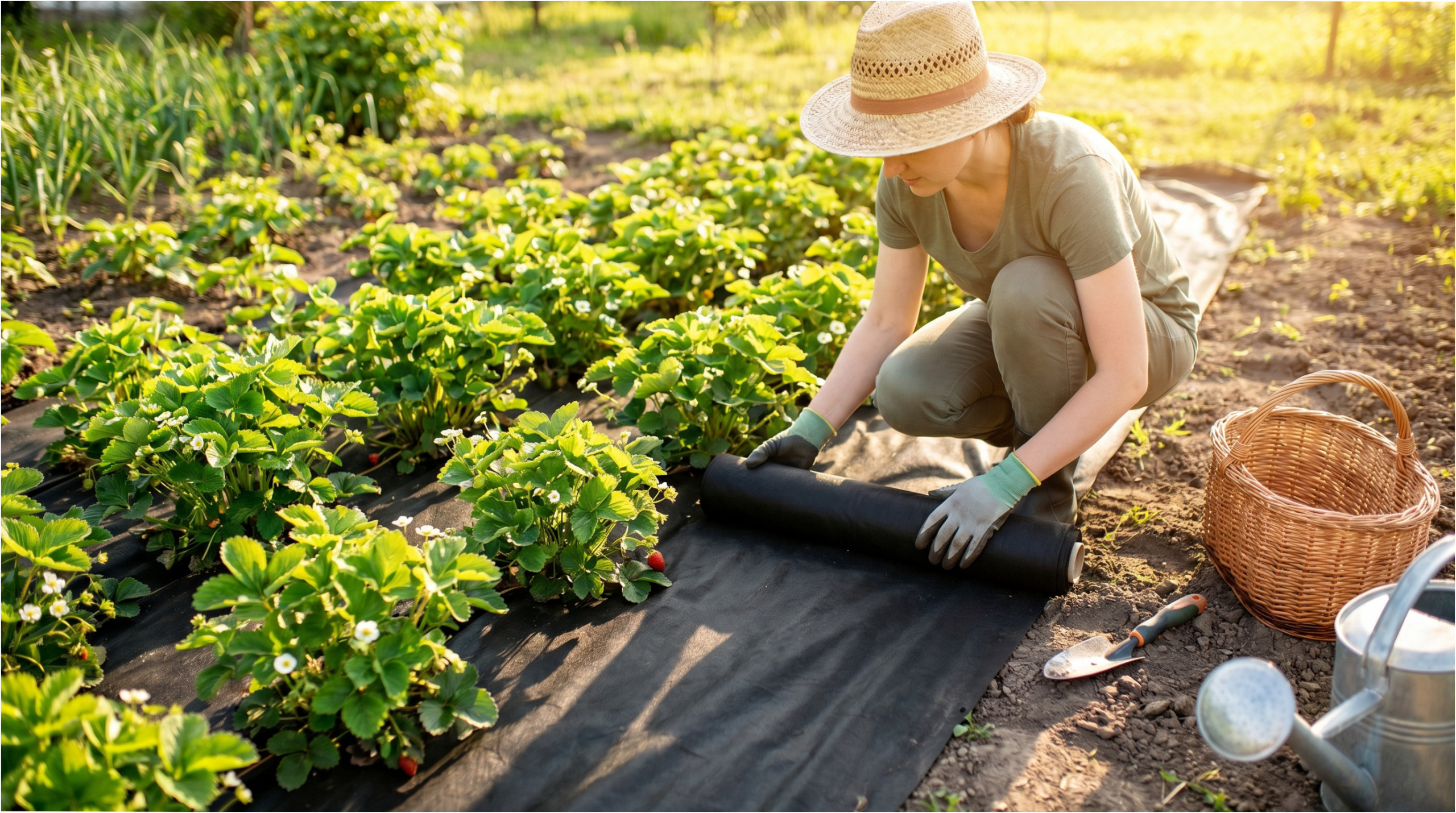
Some growers use black non-woven fabric or foil. It can limit weeds and keep fruits cleaner, but in hot weather it can overheat and the soil underneath may not breathe well. If it’s poorly laid, water may run off elsewhere and roots may not get moisture evenly.
For smaller beds, natural airy mulch often works better. Straw or wood wool is easier to adjust, top up, and check after rain.
Rule 2: Water at the Roots, Not Over the Leaves
Strawberries need water especially during flowering and fruit formation. But the way you water is crucial. If you regularly sprinkle the leaves, flowers, and fruits, you increase the risk of rot and mold. Water should go to the roots.
The best time to water is in the morning or before noon. During the day, plants can dry and the soil has time to absorb the moisture. Evening watering over the leaves is risky, especially on cool or damp days.
How Often to Water Strawberries
Strawberries don’t like either drought or constant waterlogging. The soil should be slightly moist, but not muddy. In heat and drought, they need regular watering, especially when flowering and forming fruit.
But don’t water automatically after rain. Reach under the mulch and check the soil. The surface may look dry, but under the straw there may be enough moisture. On the other hand, after a long dry spell, the soil under the surface can be parched even if the top gets wet after a brief shower.
Irregular Watering Worsens Fruit Quality
When strawberries dry out for a long time and then suddenly get a lot of water, the fruits can be softer, more watery, or more prone to damage. Even moisture is important not only for size, but also for flavor.
Sweet strawberries don’t come just from fertilizer. They need sun, healthy leaves, adequate water, and a plant that’s not stressed. Overwatering or prolonged drought can worsen the taste.
Rule 3: Remove Damaged Fruits and Old Leaves
One rotten fruit can spoil the rest. If you find soft, brown, moldy, or nibbled strawberries, remove them immediately. Don’t leave them in the bed or under the plants. They are a source of problems.
Similarly, it’s worth removing leaves that are old, damaged, lying on the ground, or covering fruits so that moisture lingers under them. But don’t do a radical cut. Healthy leaves are needed by the strawberry to feed the fruits.
Watch Out for Slugs After Rain
Strawberries lying close to the ground or on wet mulch attract slugs. They often damage only part of the fruit, but the whole strawberry is then spoiled and rots faster. After rain, check the area around the bed, lower leaves, and damp spots under the mulch.
If slugs appear regularly, you may find the article Slugs After Rain: What to Protect First and Where They Hide During the Day useful.
Rule 4: Nutrition Yes, but Don’t Overdo Nitrogen
Strawberries need nutrition, but at the right time and in reasonable amounts. If you give them too much nitrogen, they may grow beautiful leaves, but the fruits may not be as firm and sweet. Over-fertilized patches also become denser and dry more slowly.
During flowering and fruiting, gentle support is better than a strong dose. Well-matured compost, suitable strawberry fertilizer, or a mild organic feed can help, but always in moderation.
Use Compost for Strawberries Carefully
Well-matured compost is a good base for strawberries, but it must not be spread directly onto the plant’s crown. Spread it around the plants and lightly work it into the surface. Then you can add airy mulch.
The compost should be truly matured. Fresh or smelly material doesn’t belong with strawberries. It can attract pests, heat up, and harm the plants.
Homemade Fertilizers: What Works and What to Avoid
Banana peels, eggshells, nettle tea, or yeast are often used for strawberries. But each of these tricks has its limits. Banana peels are better in compost than directly with the fruits. Eggshells work slowly. Nettles mainly support leaves. Yeast is not a complete fertilizer.
If you want a homemade approach, stick to gentle and safe options. Don’t use several infusions at once and never fertilize into wet soil after rain.
We cover homemade fertilizers in more detail in the article Homemade Fertilizer for Strawberries: How to Support Better Growth and Yield.
When Not to Water or Fertilize Strawberries After Rain
After heavy rain, let the bed breathe first. Check if the mulch is compacted and wet, remove rotten fruits, and only then consider further care. If the soil under the mulch is still moist, more watering is not needed.
Fertilizing into wet soil is pointless. Roots in wet, airless soil don’t work well. Adding more liquid can encourage rot and worsen plant health.
How to Tell If Mulch Is Too Wet
Mulch is a problem when it’s compacted, smells, holds water, or you find slugs and mold under it. In such cases, gently fluff it up, remove some, or replace it with a more airy material.
For strawberries, it’s important that mulch supports the fruits but doesn’t hold moisture too long. After rainy periods, checking the mulch is as important as watering.
The Most Common Mistakes When Mulching and Watering Strawberries
- Fruits rest directly on the soil.
- Mulch is pressed onto the strawberry crown.
- Using a thick layer of fresh grass.
- Watering over leaves, flowers, and fruits.
- Evening watering in cool or damp weather.
- Not removing rotten fruits.
- Too much nitrogen fertilizer.
- Watering right after rain without checking the soil.
- Leaving wet, compacted mulch under the fruits.
Quick Steps for Strawberries in May and June
- Check that fruits are not lying on the ground.
- Add straw, wood wool, or a thin layer of wilted grass.
- Leave the plant crown free.
- Water at the roots, preferably in the morning.
- Don’t water automatically after rain.
- Remove rotten and damaged fruits.
- Thin only old and diseased leaves, leave healthy ones.
- Feed gently and don’t overdo nitrogen.
Sweet Strawberries Are No Accident
To keep strawberries from rotting and make them sweet, they mainly need balance. Fruits must not rest on wet soil, the bed must not be waterlogged, watering should go to the roots, and mulch must be airy. If you also remove damaged fruits in time and provide moderate nutrition, strawberries will have much better conditions.
It’s not some complicated gardening magic. The biggest difference often comes from straw under the fruits, morning watering, a clean bed, and checking after rain. These little things decide whether you harvest sweet, firm strawberries or fruits that start to rot before you can pick them.
Straw, wood chips, or a thin layer of wilted mowed grass are most commonly used. The material must be airy and not pressed directly against the heart of the plants.
Most often because the fruits are lying on wet soil, the bed is oversaturated, the growth does not ventilate well, or rotten fruits are not removed. The risk is also increased by watering over the leaves and fruits.
Water at the roots, ideally in the morning or early afternoon. Do not unnecessarily wet the leaves, flowers, and fruits. After rain, first check the moisture of the soil under the mulch.
Yes, but only in a thin layer and preferably wilted. Fresh grass in a thick layer can become soggy, compact, and retain too much moisture.
Mature compost, suitable fertilizer for strawberries, and even watering will help. Do not overdo nitrogen, as it can mainly promote leaves and worsen fruit quality.