

Cucumbers love warmth and regular moisture, but they can’t stand having wet leaves for long. The alternation of warm days, rain, dew, and humid nights creates conditions where problems can develop very quickly. One day you might see just a few yellow spots, but within days, a large part of the plant can be damaged.
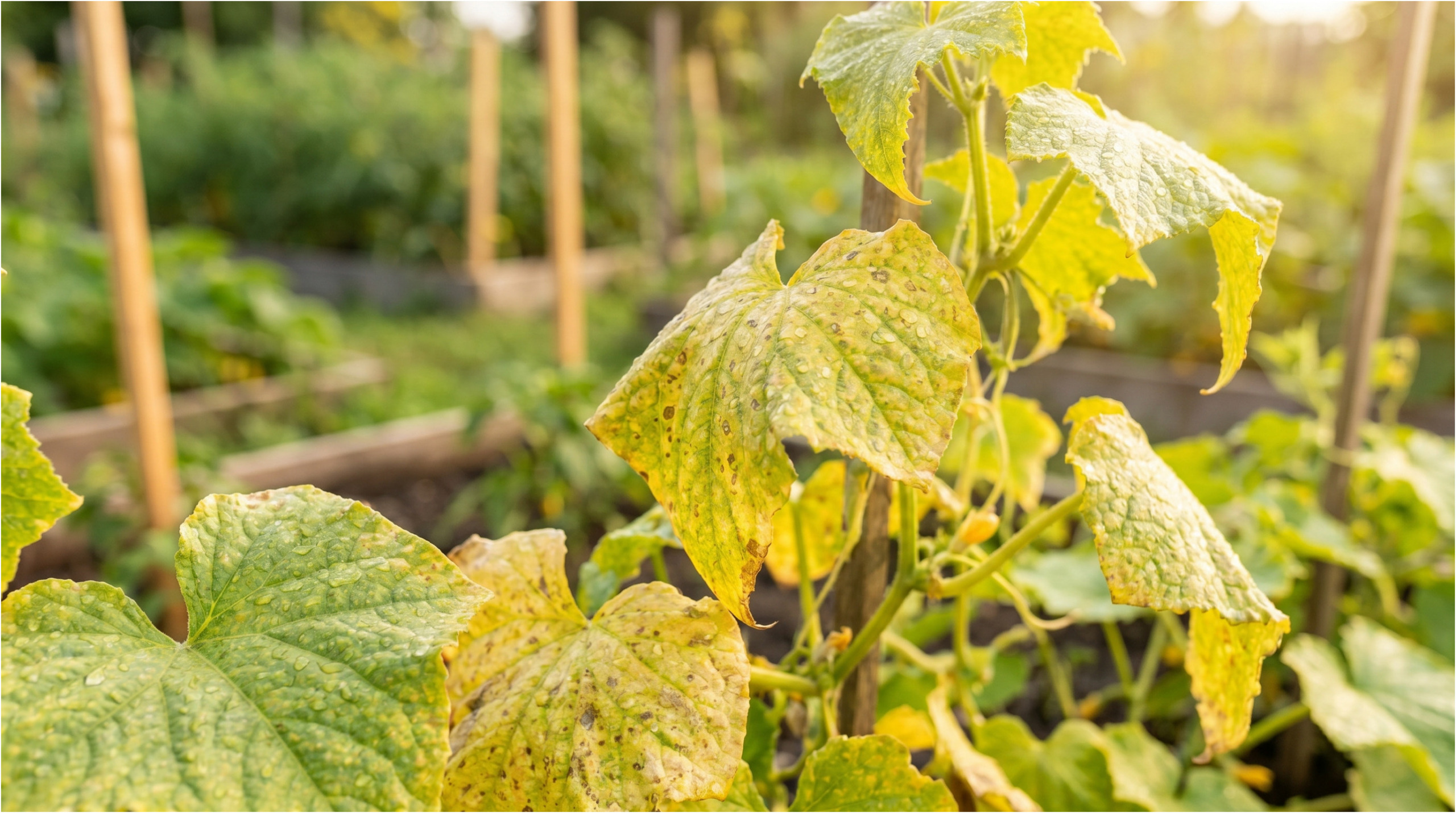
The biggest mistake is to reach for fertilizer automatically. Yellow leaves on cucumbers don’t always mean they’re hungry. It could be waterlogging, cold, damaged roots, lack of light, or the start of a disease. That’s why it’s important to first identify what’s happening to your plant.
How to Spot the First Signs of Trouble on Cucumbers
Start with the leaves. Healthy cucumber leaves are firm, green, and flexible. If the leaves are yellowing, wilting, curling, or developing spots, the plant is signaling that something is wrong. It’s important to observe where the problem appears.
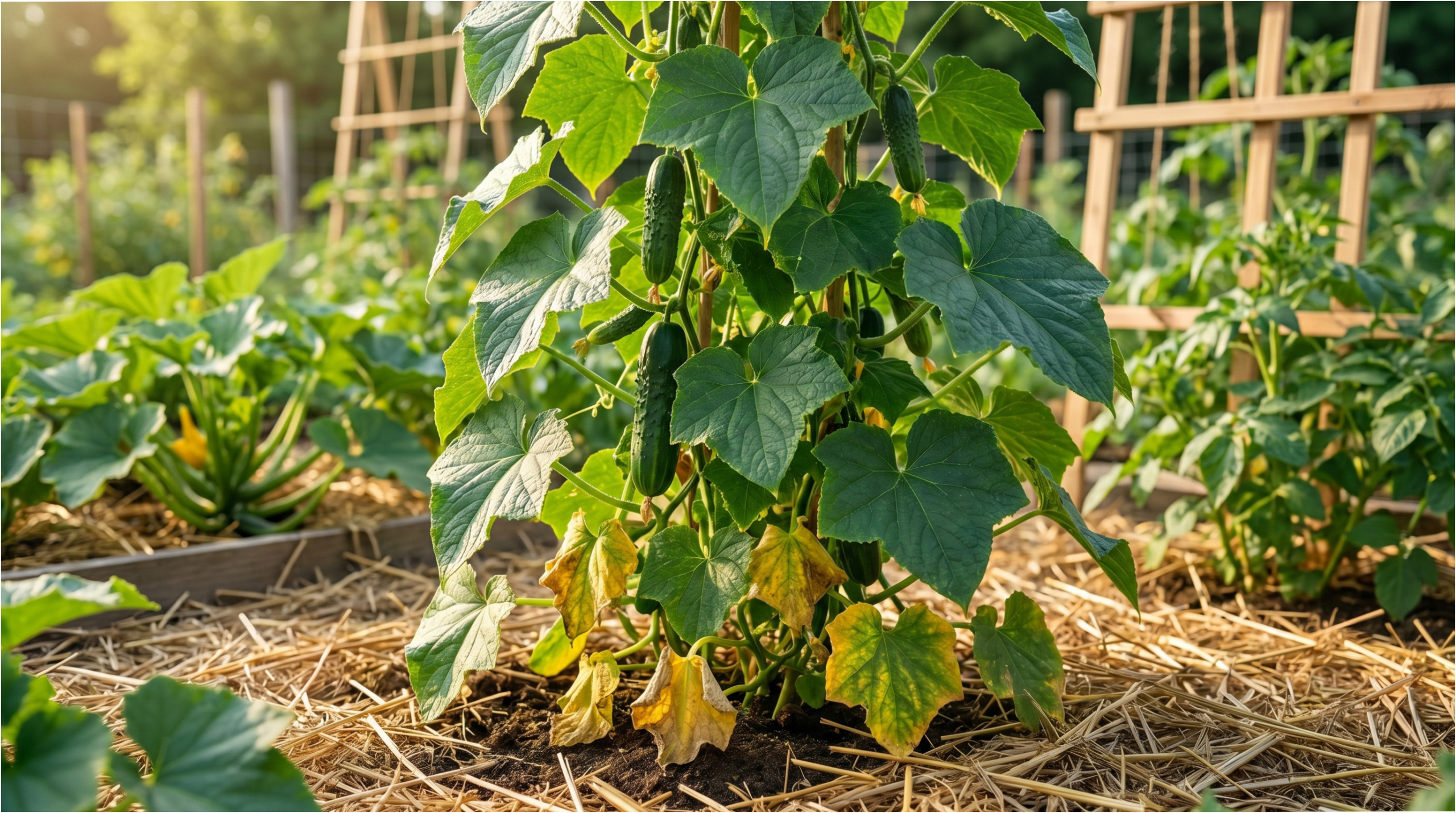
If mainly the older lower leaves are yellowing, it could be natural aging, lack of light, or waterlogging. But if the spots spread quickly, the leaves become patchy, and things get worse after humid weather, it’s time to pay close attention.
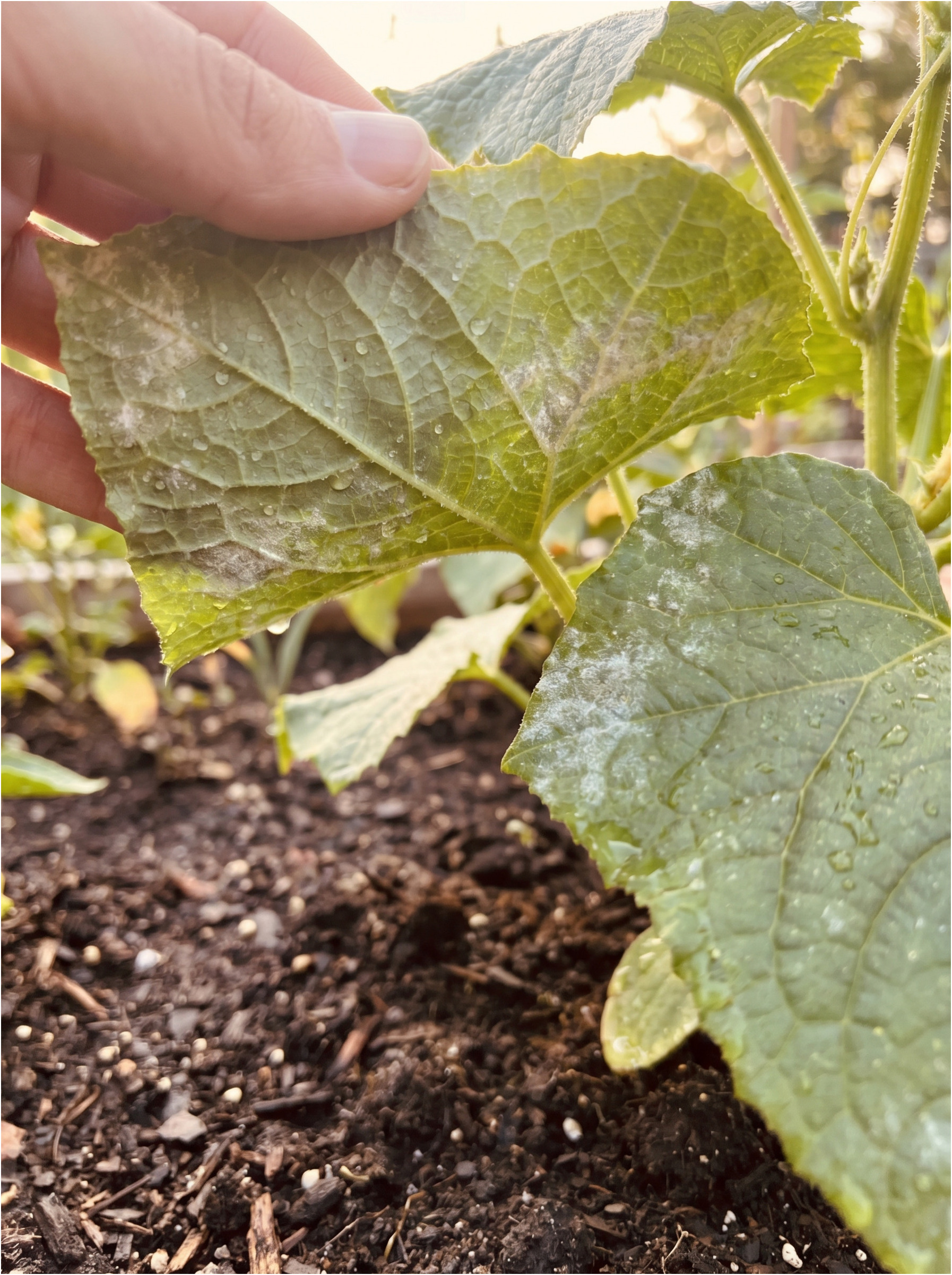
Cucumber Downy Mildew: Why It’s So Dangerous
Downy mildew is feared mainly because it spreads quickly under the right conditions. Humid weather, wet leaves, dense growth, and poor ventilation all help it thrive. It most often shows up on the leaves, which gradually lose their healthy color and die off.
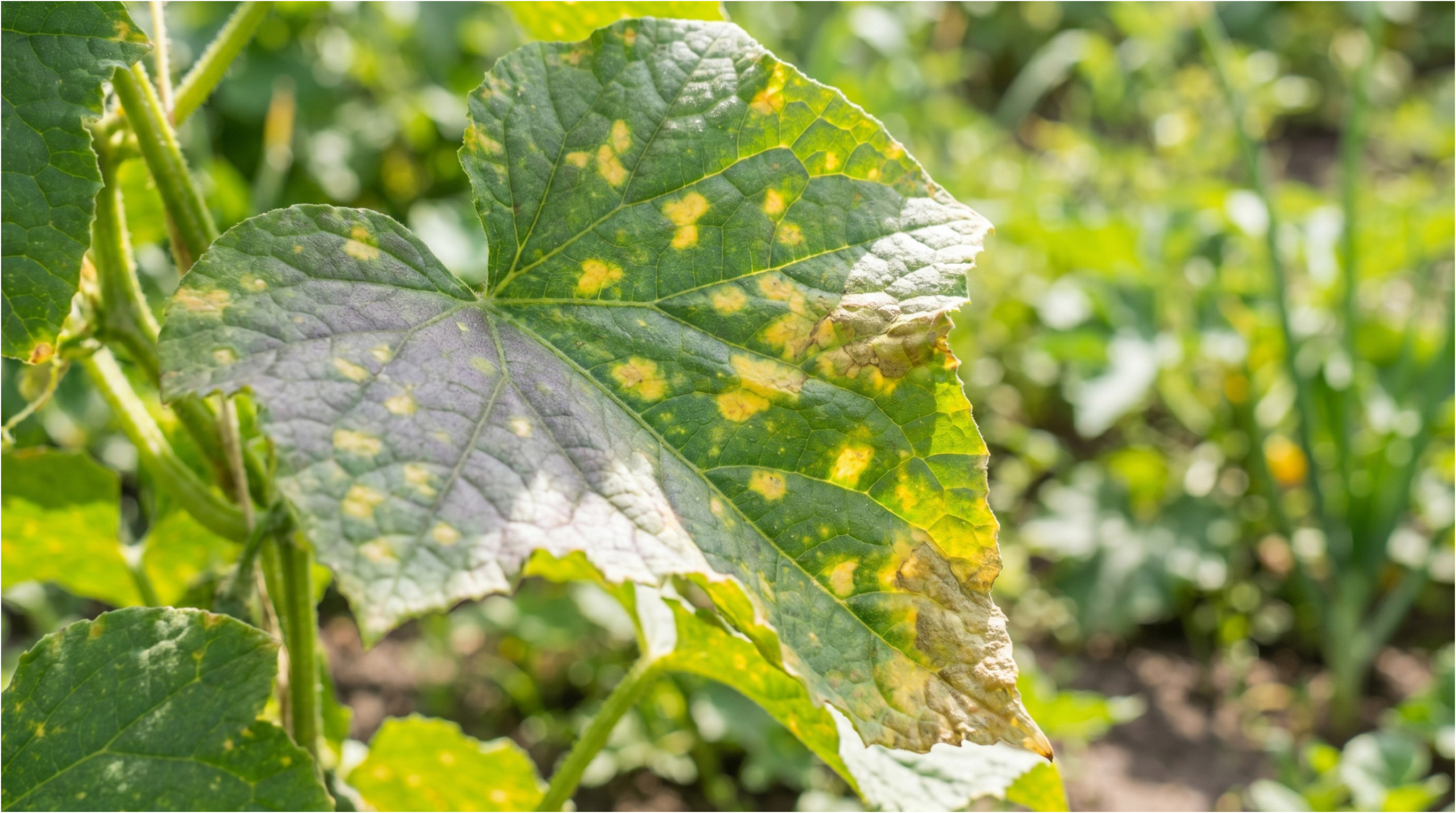
Once the plant loses a large part of its leaf area, it can’t nourish its fruits properly. Cucumbers then weaken, produce less, and the harvest can end quickly. That’s why it’s important to act at the first signs—not when the whole plant is already yellow.
What the First Symptoms May Look Like
At the onset of downy mildew, you may notice yellowish or lighter spots on the leaves. They often appear after humid days when the leaves stay wet for a long time. The spots can gradually enlarge, the leaf dries out, and loses strength.
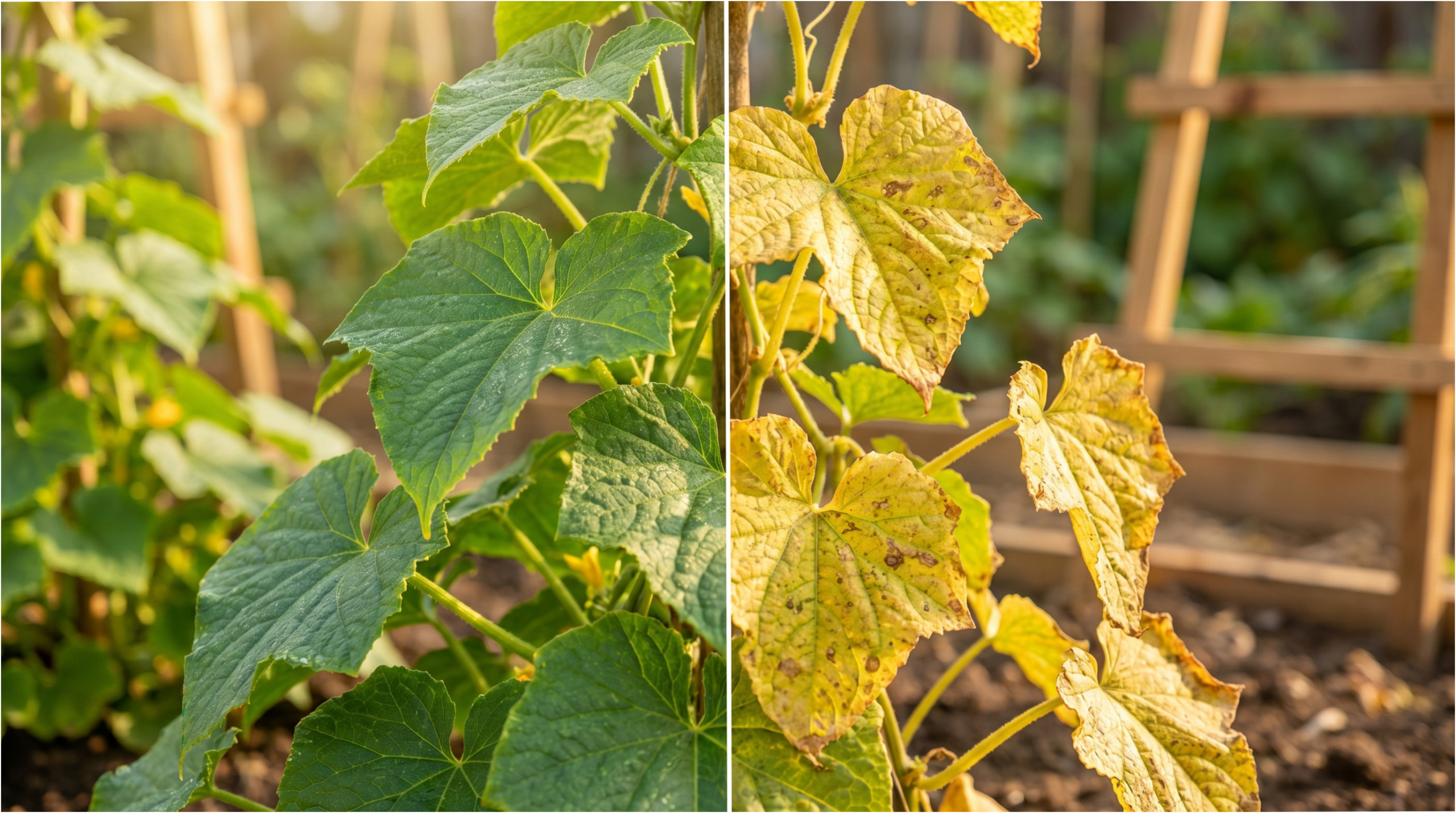
Not every yellow spot means mildew, but if the problem spreads quickly and the weather is humid, don’t wait. Inspect your cucumbers, remove the worst leaves, and adjust your care so the plants dry out faster.
What Else Can Cause Yellowing in Cucumbers
Yellow leaves don’t always mean disease. Cucumbers can yellow due to waterlogging, drought, cold nights, lack of nutrients, root damage, or sudden sun after stress. That’s why you shouldn’t just look at leaf color.
Dig into the soil. If it’s wet, heavy, and doesn’t dry out for a long time, the problem may be at the roots. If it’s dry and crumbly, the cucumbers are suffering from lack of water. If the soil is fine but the leaves are patchy and the problem is spreading, it’s more likely a disease or a combination of several factors.
First Aid: Remove the Worst Leaves
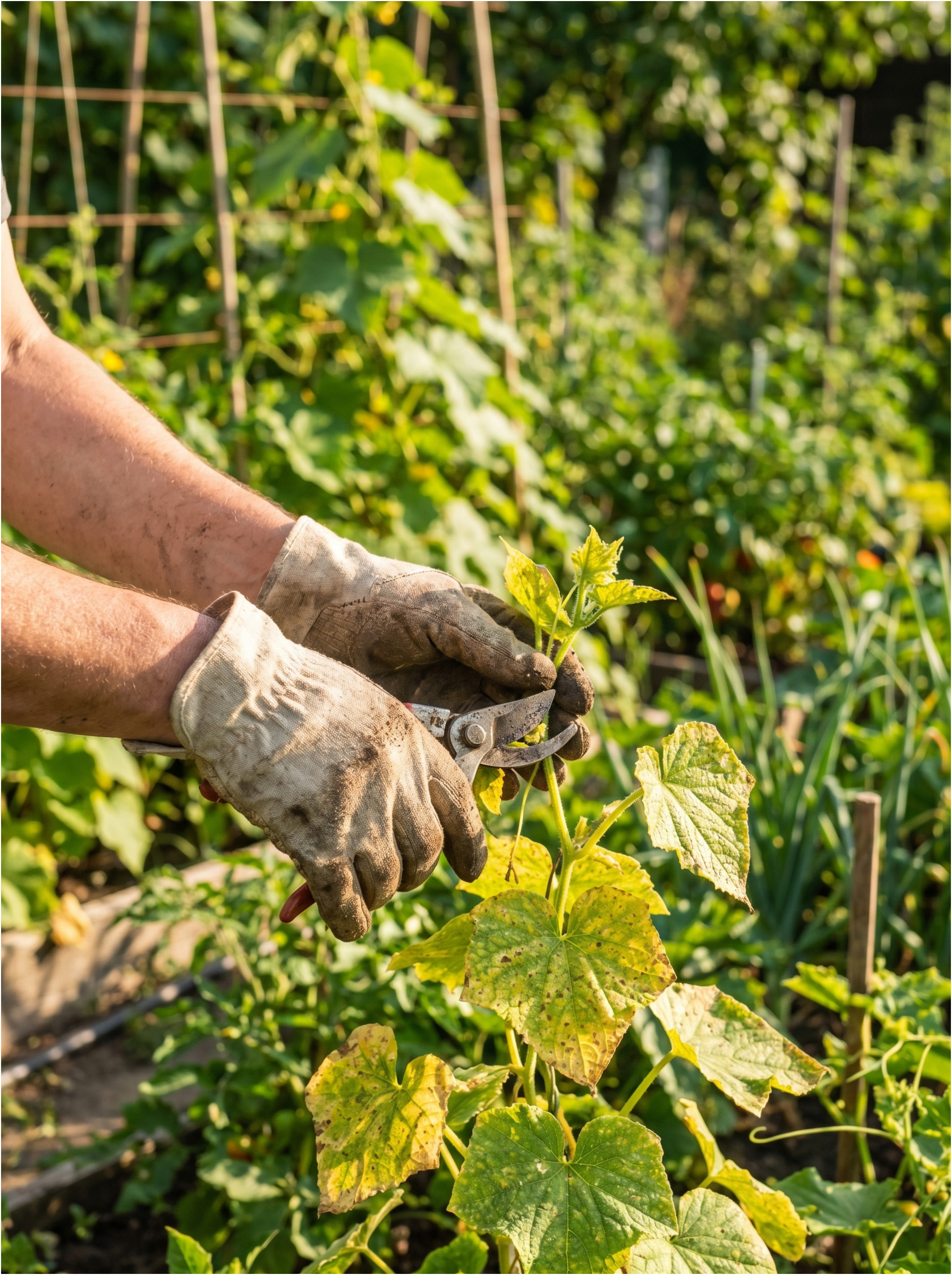
If you find leaves that are badly yellowed, spotted, drying out, or lying on the ground, remove them. Don’t put them on the compost if you suspect disease. It’s better to take them away from the garden.
But don’t remove the whole plant at once or strip off all the leaves. Cucumbers need their leaves to feed the fruits. Remove mainly those that are most damaged, lying on the soil, or thickening the lower part of the plant.
Water at the Roots, Not Over the Leaves
With cucumbers, the way you water is crucial. They need water, but the leaves shouldn’t stay wet for long. Sprinkling over the whole plant, especially in the evening, can make the problem much worse.
Water at the roots, ideally in the morning or before noon. The soil gets moisture and the plant has time to dry during the day. Evening watering over the leaves is risky because the leaves stay wet all night.
Thin Out the Growth for Faster Drying
Cucumbers often grow densely. If the vines are tangled over each other, leaves touch the ground, and air doesn’t circulate, moisture lingers much longer. That’s the perfect environment for problems.
Tying up the plants, training them on supports, and removing lower damaged leaves helps. The goal isn’t to strip the cucumber, but to allow air flow. Airier growth dries faster after rain and dew.
Homemade Baking Soda Spray: When It Makes Sense
Baking soda is often used as a homemade preventive spray on leaves. It can help change the conditions on the leaf surface and slow the spread of some problems, but it’s not a miracle cure for an advanced disease. It makes sense mainly at the first signs or as prevention—not when most of the plant is already damaged.
Usually, a weak solution of baking soda in water with a drop of mild vegetable oil or wetting agent is used so the spray sticks better to the leaves. Always test the spray first on a small part of the plant and don’t use it in strong sunlight.
Milk Solution as Gentle Prevention
Another popular home trick is a milk solution. It’s used mainly preventively or at the first signs of trouble. Milk is diluted with water and applied to the leaves in a thin layer. Again, it’s not a guaranteed rescue for a heavily infested plant.
Don’t use strong concentrations and don’t spray in hot weather. If the leaves remain sticky after spraying or the condition worsens, stop. For cucumbers, dry leaves, ventilation, and removal of infected parts are still the most important.
When to Avoid Homemade Sprays
Skip homemade sprays if the plants are sunburned, severely weakened, dried out, or standing in waterlogged soil. In such cases, another treatment on the leaves could stress the plant even more.
Don’t spray before rain either. The spray will wash off and the leaves will be wet again. It’s better to wait for a dry day, remove damaged parts, water at the roots, and apply prevention only when the leaves are well dried.
Act Quickly After Rain
After rainy weather, check your cucumbers as soon as possible. Lift the leaves, look at the underside of the growth, and remove parts that are lying on the ground or already badly damaged. If the soil is wet, don’t water.
This is when many people make a mistake: they see wilted leaves and add more water or fertilizer. But the plant may be exhausted from waterlogging or poor air circulation.
When to Use Fertilizer and When Not To
If your cucumbers are healthy but weak, a gentle feed can help. Compost tea or a weak fertilizer for fruiting vegetables is suitable. But if the leaves are yellowing due to mildew or waterlogging, fertilizer won’t solve the problem.
Don’t fertilize into wet soil, when spots are spreading quickly, or when the plant is wilting from midday heat. First, stabilize the conditions and only then consider feeding.
What to Do If the Plant Is Already Heavily Infested
If most of the leaves are damaged, the cucumber is turning yellow all over, and has stopped producing, a homemade spray probably won’t save it. In this case, focus on preventing the problem from spreading further. Remove heavily infested parts and check surrounding plants daily.
Sometimes it’s better to remove one severely diseased plant than let the problem spread to the whole bed. It depends on the extent, the weather, and how many healthy plants you still have.
Prevention Is Most Important for Cucumbers
Prevention brings the best results. Plant cucumbers with enough space, train them on supports, water at the roots, and don’t let lower leaves lie on the ground. After rain and humid nights, check the leaves before problems get out of hand.
If you grow cucumbers in a greenhouse, ventilate. In a closed space, humidity lingers and leaves dry more slowly. Ventilation is often more important than extra feeding.
The Most Common Mistakes When Cucumbers Turn Yellow
- Automatically fertilizing without checking the soil and leaves.
- Watering over the leaves, especially in the evening.
- Leaving infected leaves on the plant.
- Dense growth with no air circulation.
- Spraying on hot leaves in midday sun.
- Watering right after rain.
- Using strong homemade mixes without testing.
- Ignoring the first spots on lower leaves.
Quick Steps When Cucumbers Are Yellowing and Wilting
- Check soil moisture.
- Inspect lower and inner leaves.
- Remove badly damaged leaves.
- Don’t water if the soil is wet.
- Water only at the roots.
- Thin out dense growth.
- Ventilate regularly in the greenhouse.
- Use only a mild homemade spray and avoid strong sunlight.
- Monitor the plant daily after humid weather.
Time Decides Your Harvest
Yellow and wilted leaves on cucumbers are not a signal to ignore. Sometimes it’s just a watering issue, other times it’s the first stage of a disease. The key is quick inspection and the right response. If you act in time, remove damaged leaves, improve air circulation, and stop wetting the leaves, your plant has a much better chance to keep producing.
Homemade sprays from baking soda or milk solution can be a supplement at the first signs, but alone they won’t save your harvest. Prevention is the strongest weapon: dry leaves, airy growth, regular watering at the roots, and checking after every rain.
Suspicious are rapidly spreading yellow or lighter spots on the leaves, drying leaves, and deterioration in humid weather. The first signs are often found on the lower or poorly ventilated leaves.
The cause may be overwatering, drought, nutrient deficiency, cold, damaged roots, or an emerging disease. First, check the soil and the condition of the leaves.
It can serve as a home remedy at the first signs or preventively, but it is not a guaranteed cure for an advanced disease. Use a weak solution and never spray on hot leaves.
A milk solution is used as a gentle preventive measure, but it cannot replace proper care. It is mainly important to water at the roots, thin out the growth, and remove affected leaves.
It is better to remove heavily damaged, spotted, drying, or ground-level leaves. However, do not remove all healthy leaves, as the plant needs them to nourish the fruits.