
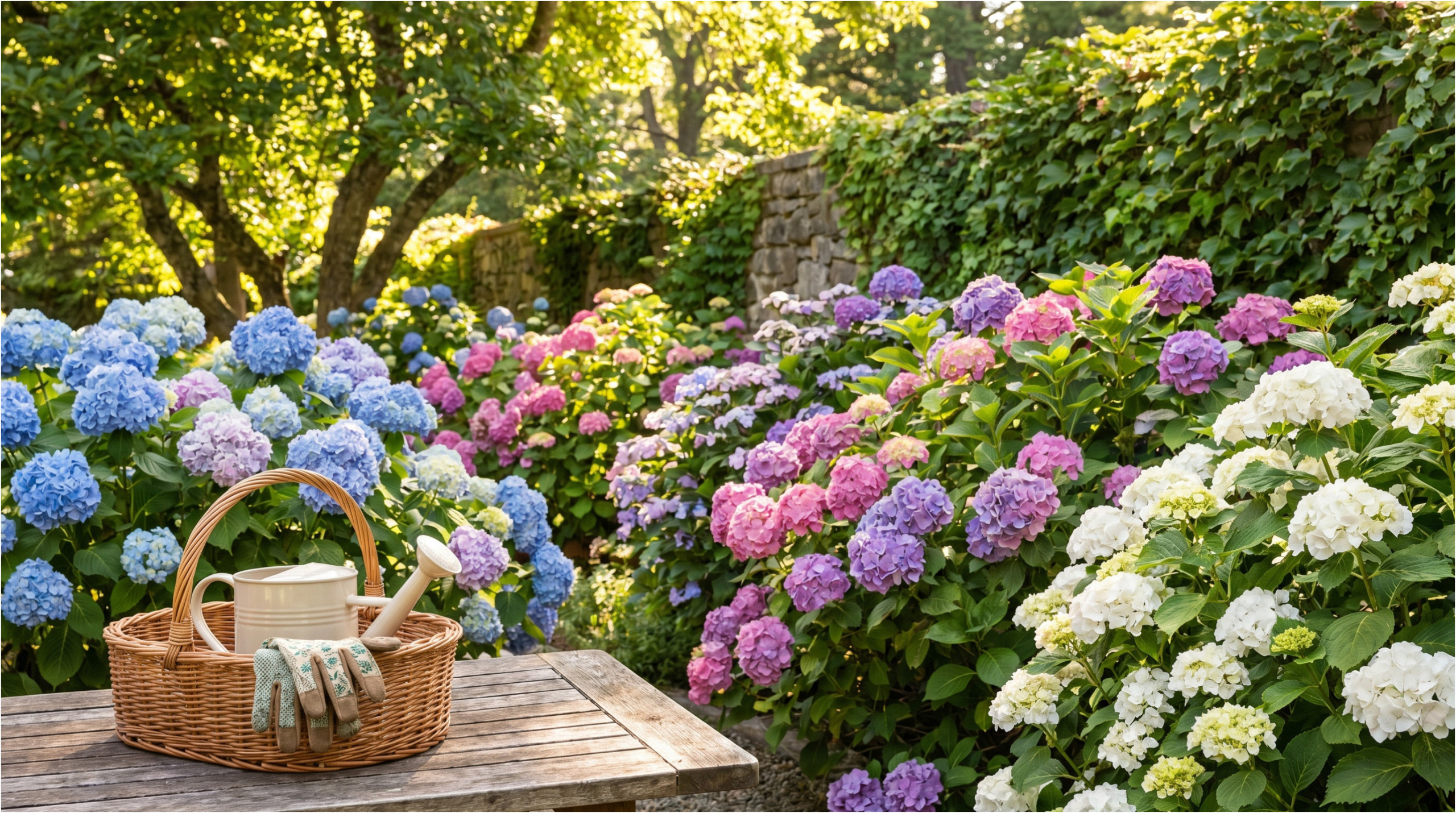
Hydrangeas prefer soil that is not too chalky. If the soil is alkaline, heavy, or regularly watered with hard water, the plant may struggle to absorb certain nutrients. This often results in paler leaves, weaker growth, and less impressive flowering.
Homemade acidic watering is not a miracle that will create giant blooms overnight. But it can be a useful addition to care if hydrangeas are growing in soil that doesn’t quite suit them. The basics always remain the same: the right location, moisture, mulch, suitable nutrition, and careful pruning.
Why hydrangeas need the right soil
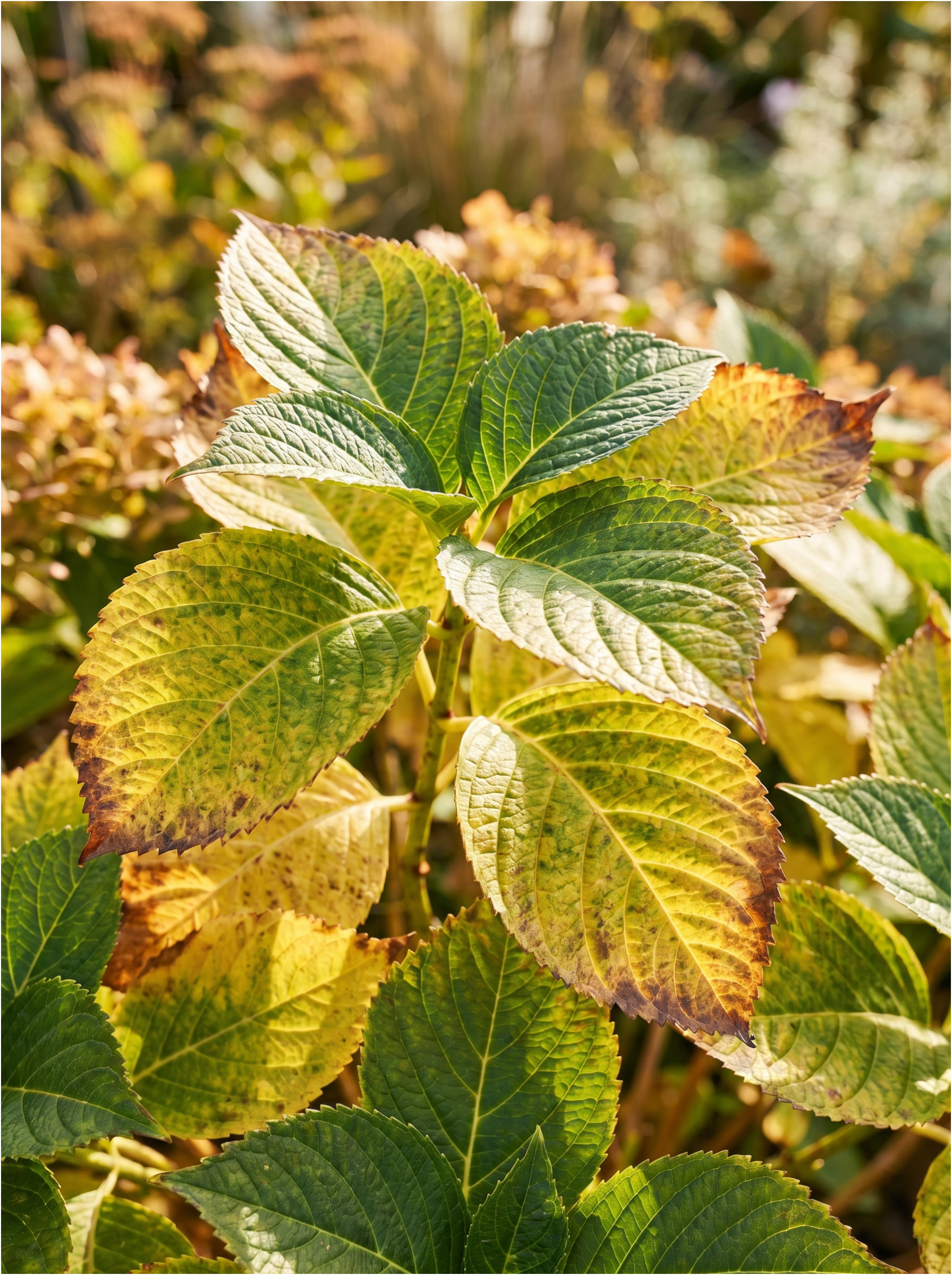
Hydrangeas thrive best in humus-rich, moist but well-drained soil. They don’t like long periods of drought, but constant waterlogging is also harmful. For many hydrangea species, soil pH is also important. Too alkaline soil can make it difficult for the plant to absorb nutrients.
This often shows up on the leaves. They may become pale, yellow between the veins, or look tired, even if you water the plant. In such cases, the problem may not be a lack of nutrients in the soil, but that the plant can’t use them properly.
An acidic drink from the kitchen: what to use
The most common is a gentle watering of water and apple cider vinegar. It’s not a strong solution, just a very mild acidification of the water. For example, you can use one tablespoon of apple cider vinegar in a large watering can of water. It’s important to always mix well and water only at the roots.
An alternative can be water with a few drops of lemon juice, but moderation is key here too. The goal is not to “pour acid” on the plant, but to very gently adjust the watering if the water is too hard or the soil doesn’t suit the hydrangeas.
How to prepare acidic watering
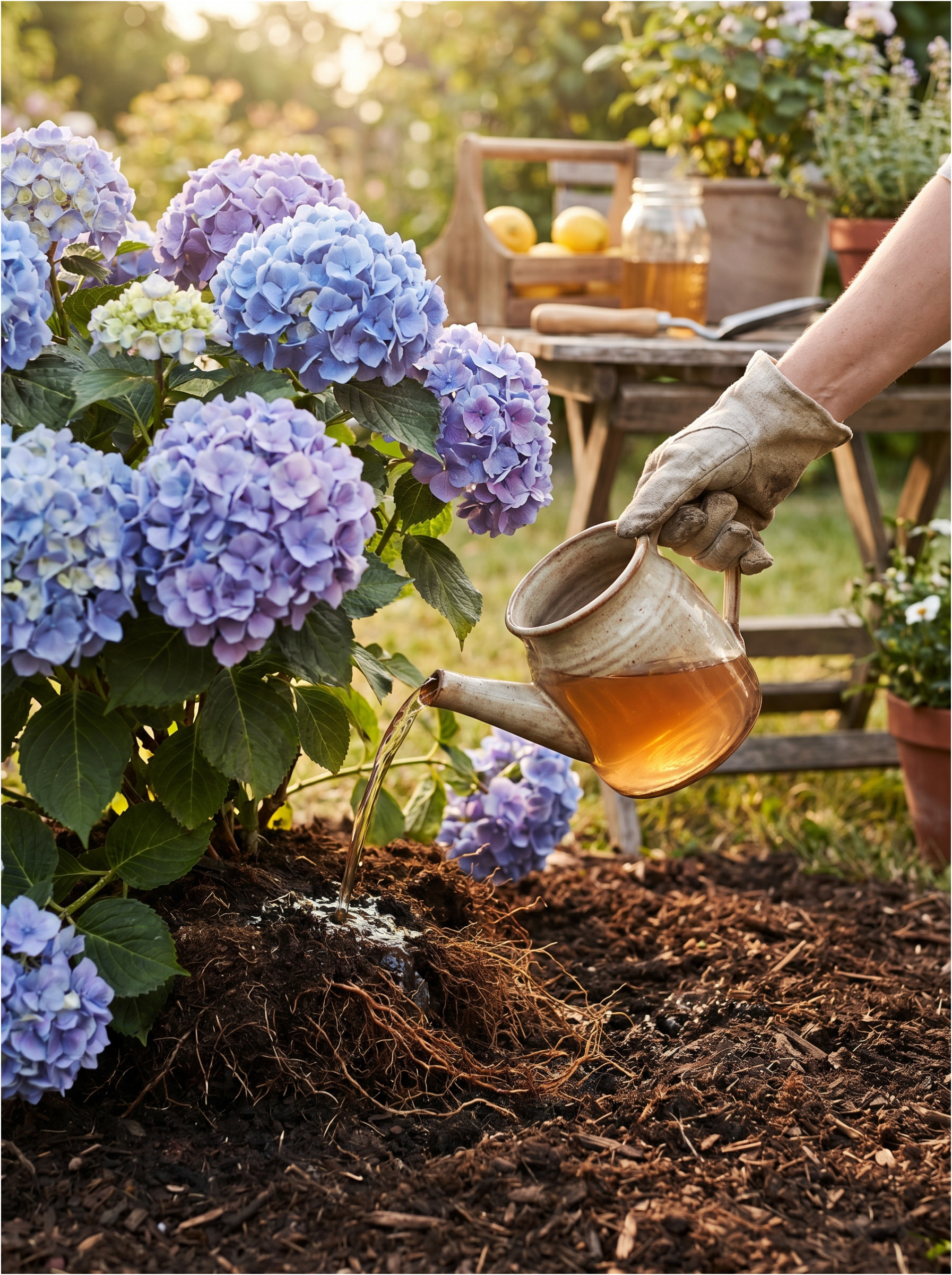
Add a small amount of apple cider vinegar to a watering can of water and mix thoroughly. The solution should be weak. If you’re unsure, start even more cautiously and observe the plant’s reaction.
Water at the roots, not over the leaves or flowers. Acidic watering is not meant as a spray. Hydrangeas need moisture in the soil, where the roots work.
How often to use it
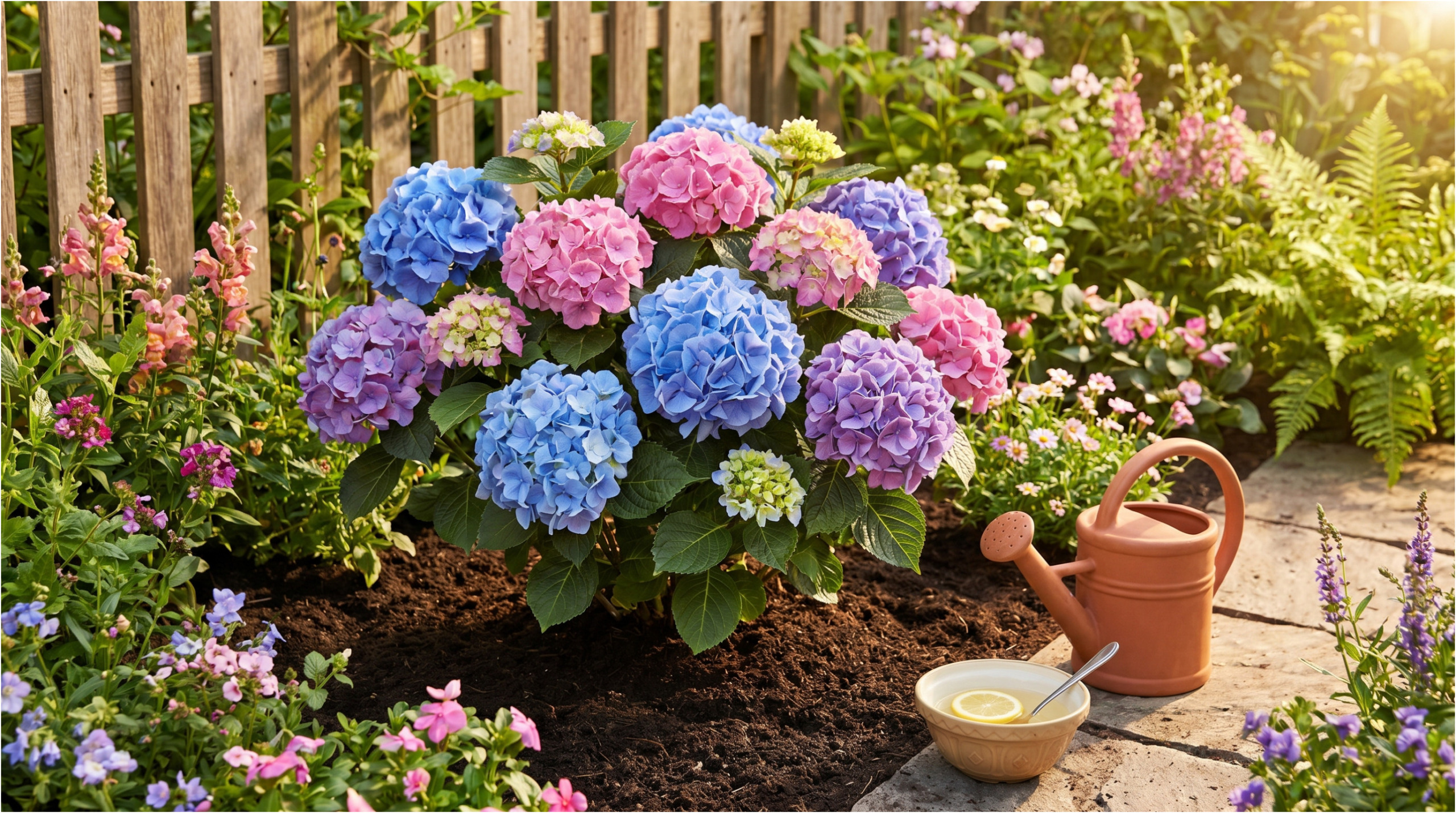
For healthy hydrangeas, it’s enough to use acidic watering about once every two weeks during the active growing season. Do not use it with every watering. Over-acidifying the soil can be just as bad as having soil that’s too alkaline.
If you already use special fertilizer for hydrangeas or acid-loving plants, be even more cautious with homemade watering. Combining several methods at once can unnecessarily disrupt the soil.
When to skip acidic watering
Do not use the acidic drink if the soil is waterlogged, the hydrangea is standing in water, or its roots are damaged. At such times, the plant doesn’t need more watering, but rather airier conditions and time to recover.
Also skip it during severe drought, when the soil is completely dry. First, water the plant normally with clean water and let it stabilize. Use acidic watering later, when the soil is evenly moist.
Hard water can bother hydrangeas
If you water hydrangeas long-term with hard tap water, the soil may gradually change and may no longer suit the plant. In such cases, rainwater can help. It’s often better for hydrangeas than regular watering with hard water.
If you have the option, collect rainwater in a barrel and use it mainly for hydrangeas, rhododendrons, azaleas, blueberries, and other plants that dislike chalky soil.
Will acidic watering help turn flowers blue?
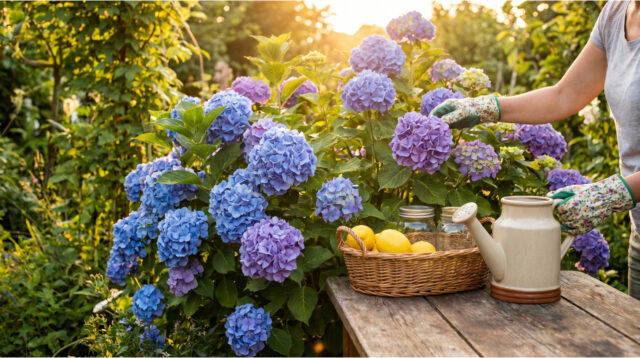
For some hydrangeas, soil acidity can influence flower color, especially in bigleaf hydrangeas. But blue color doesn’t depend only on acidity. The availability of aluminum in the soil and the specific variety are also important.
If you have hydrangeas that naturally bloom pink, they won’t magically turn blue after homemade watering. Some species and varieties don’t change color this way at all. That’s why it’s better to see acidic watering mainly as a way to support a more suitable environment, not as a guaranteed trick to change color.
Giant blooms aren’t just about watering
Large blooms are the result of overall care. Hydrangeas need enough moisture, nutrient-rich soil, proper pruning according to type, and a sheltered location. If they’re growing in full sun and wilt every day, acidic watering alone won’t help.
Hydrangeas suffer most in light, dry soil, in direct midday sun, and without mulch. The leaves then wilt, flowers tire quickly, and the plant doesn’t have the strength to produce abundant blooms.
Mulch is a big helper for hydrangeas
Mulch helps retain moisture in the soil and protects roots from overheating. Suitable mulches for hydrangeas include bark, leaf mold, composted wood chips, or coniferous litter. It’s important not to let the soil around the roots dry out completely.
But don’t place mulch right up against the stems. Leave a little space around the base of the plant so excess moisture doesn’t collect there and cause rot.
Mulch is also discussed in the article Mulch in the summer garden: When it keeps moisture and when it can harm plants after rain.
What to fertilize hydrangeas with
Hydrangeas appreciate fertilizer designed for hydrangeas or acid-loving plants. You can also use well-rotted compost, but carefully and according to soil type. If you want to boost blooms, avoid too much nitrogen.
Too much nitrogen mainly promotes leaf growth. The plant then looks green and lush, but the blooms may not be as abundant. For flowering, balanced nutrition and proper pruning are key.
The same principle applies to other flowering plants. See also the article Homemade fertilizer for flowering: What to give geraniums, tomatoes, and peppers so they don’t just grow leaves.
Beware of improper pruning
Hydrangeas often don’t bloom not because they’re lacking water, but because of improper pruning. Different types of hydrangeas are pruned differently. Some flower on old wood, others on new shoots. If you cut off the buds, you can lose blooms for the whole season.
Before radically pruning hydrangeas, check which type you are growing. If unsure, it’s better to remove only dry and damaged parts than to shorten the plant without thinking.
Coffee grounds for hydrangeas? Be careful
Coffee grounds are often recommended as a homemade boost for acid-loving plants. But use them carefully with hydrangeas. In thick layers, they can mold, compact, and reduce air access to the soil.
If you want to use them, let them dry well and use only a small amount. Even better is to add them to compost, where they’ll break down more safely.
Be just as careful with other homemade tricks. This topic is also covered in the article Banana peels as fertilizer? Which plants they can help and when to avoid them.
How to tell if hydrangeas tolerate the watering well
If hydrangeas look fresher after a few weeks, the leaves have better color, and the plant keeps growing, the watering probably doesn’t bother them. But improvement may not be just from the acidic water. Regular care, mulching, and proper watering often help too.
If browning of leaf edges, wilting, or worsening condition appears after watering, stop. The soil may be too wet, the solution too strong, or the problem may lie elsewhere.
The most common mistakes with acidic watering
- Using undiluted vinegar or lemon juice.
- Acidifying with every watering.
- Watering waterlogged hydrangeas.
- Combining homemade watering with overly strong fertilizer.
- Expecting immediate color change of flowers.
- Ignoring improper pruning.
- Watering over leaves and flowers.
- Using homemade tricks instead of solving drought or poor location.
Quick steps for more beautiful hydrangeas
- Check if hydrangeas are not standing in dry or waterlogged soil.
- Ideally, water with rainwater.
- Once every two weeks, you can use a very weak acidic watering.
- Water only at the roots.
- Mulch to keep the soil from drying out.
- Don’t overdo nitrogen fertilization.
- Prune according to the type of hydrangea.
- Observe the reaction of leaves and flowers.
An acidic drink can help, but it’s not the whole secret
A gentle acidic watering made from water and a small amount of apple cider vinegar can benefit hydrangeas if they’re growing in overly alkaline soil or are long-term watered with hard water. But it must not be too strong, too frequent, or used on waterlogged or weakened plants.
Giant blooms are not the result of a single kitchen ingredient. Hydrangeas mainly need the right location, moisture, mulch, nutrition, and proper pruning. Acidic watering can be one piece of the puzzle, but the biggest effect comes when all aspects of care work together.
It is usually a very weak watering of water and a small amount of apple cider vinegar. It is used at the roots as a gentle support for hydrangeas that are bothered by overly alkaline soil or hard water.
About once every two weeks during the growing season is sufficient. Do not use it with every watering and always monitor the plant’s reaction.
No. Vinegar must always be heavily diluted with water. Undiluted vinegar can damage the roots and soil life.
For some big-leaf hydrangeas, soil acidity can affect the color, but it also depends on the variety and the availability of aluminum in the soil. It is not a certain or immediate effect.
A common cause is improper pruning, insufficient moisture, unsuitable location, frost damage, or too much nitrogen. Acidic watering will not solve everything.