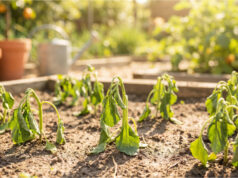

You bring home a beautiful heather from the store, place it on the windowsill and water it regularly. Yet, it starts to lose its fresh look and its branches turn into dry little brooms. The problem may be in the root ball, which stays dry even when water runs through the pot. If the plant is still alive, thorough moistening and, if necessary, gentle repotting can help.
Why does heather dry out even when it gets water?
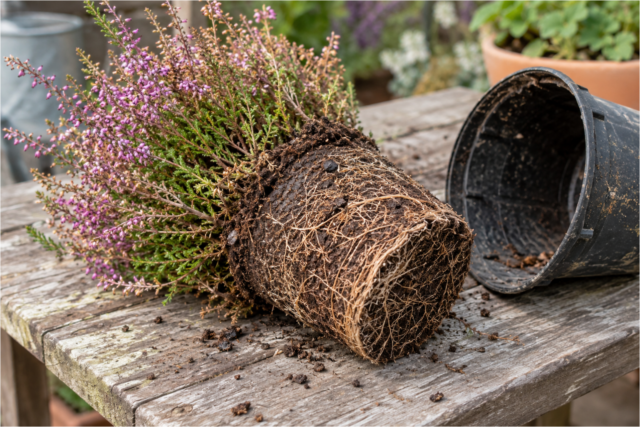
In a small pot, the plant has a limited supply of moisture. When the substrate dries out significantly, it can start to repel water. This often happens with peat-based mixes. When watering, the water then runs down the gap between the root ball and the wall of the container, while only a little reaches the roots inside.
Water in the saucer itself does not prove that the heather is well watered. Before adding more water, check if the substrate is actually absorbing it.
These signs may indicate a dried-out root ball:
- the pot remains unusually light even after watering,
- the substrate has pulled away from the sides of the container,
- water runs through very quickly and the root ball inside stays dry,
- the foliage is dry and brittle.
If, on the other hand, the soil is constantly wet, smells bad or the roots are soft and disintegrating, further soaking will not help. In that case, check the drainage holes and remove any standing water from the cover pot.
What to prepare
- a bowl or bucket large enough to fit the pot,
- clean water, ideally collected rainwater,
- for possible repotting, substrate for heathers or other acid-loving plants,
- a slightly larger pot with drainage holes.
Simple water bath for dried-out heather
The purpose of this method is to moisten the entire root ball. Use the bath only if you have confirmed that it is dried out.
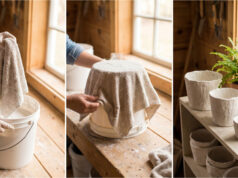
- Remove the decorative cover. Leave the heather in its nursery pot with holes at the bottom for now.
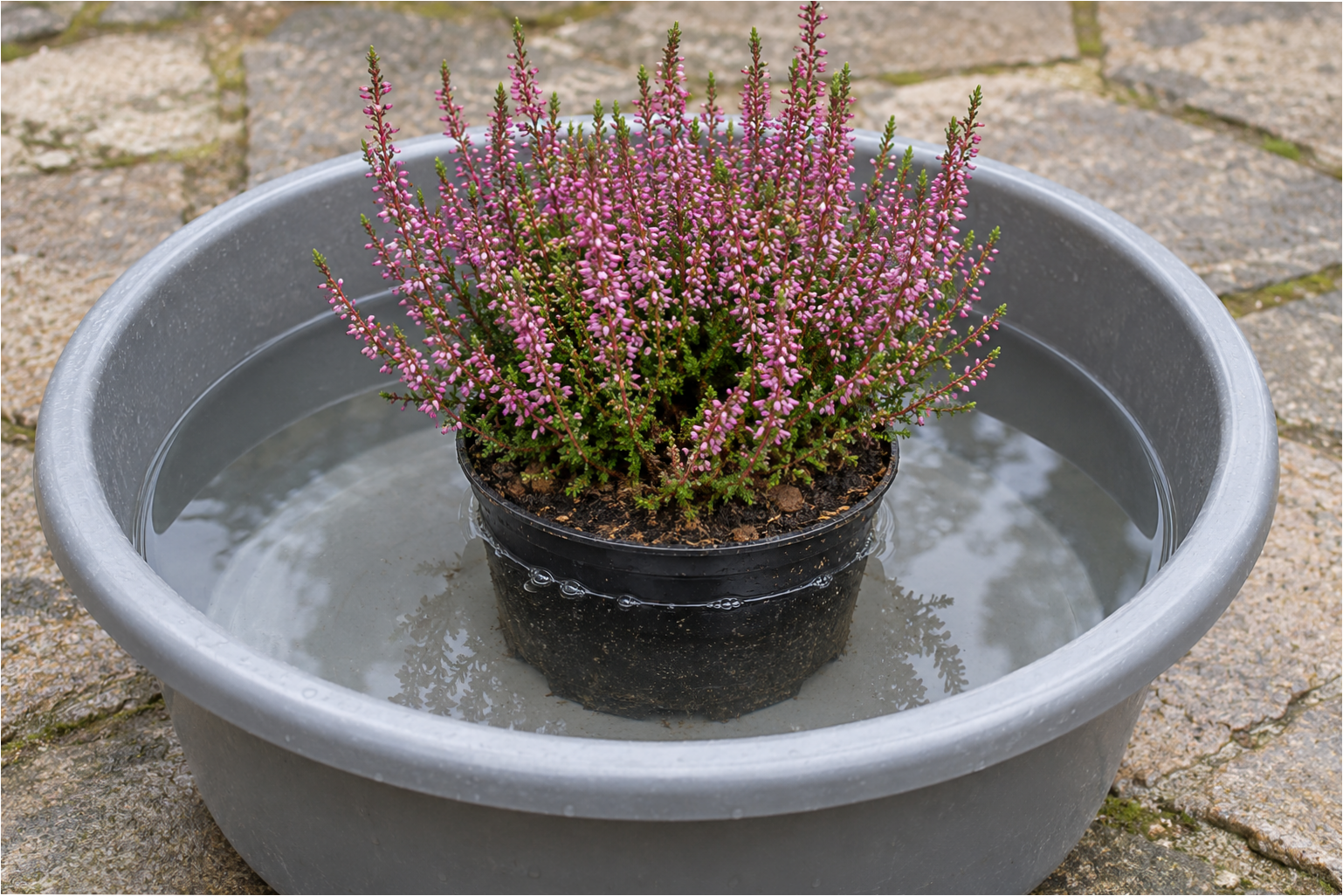
- Place the pot in water. The water level can reach up to the surface of the substrate. Keep the above-ground parts of the plant above the water.
- Watch for escaping bubbles. The water gradually pushes air out of the dry root ball. If the pot floats, gently hold it down.
- Check for moistening. When the bubbles stop, check that the root ball has absorbed water. A fixed time is not a reliable guide, as it depends on the size and degree of dryness.
- Let excess water drain away. Remove the pot and return it to its cover only after it has dripped off. Do not leave the plant standing in water permanently.
For a larger planter that cannot be submerged, water slowly in several doses. Let the water soak in between and check the moisture at the roots regularly.
Repot gently and give heather the right substrate
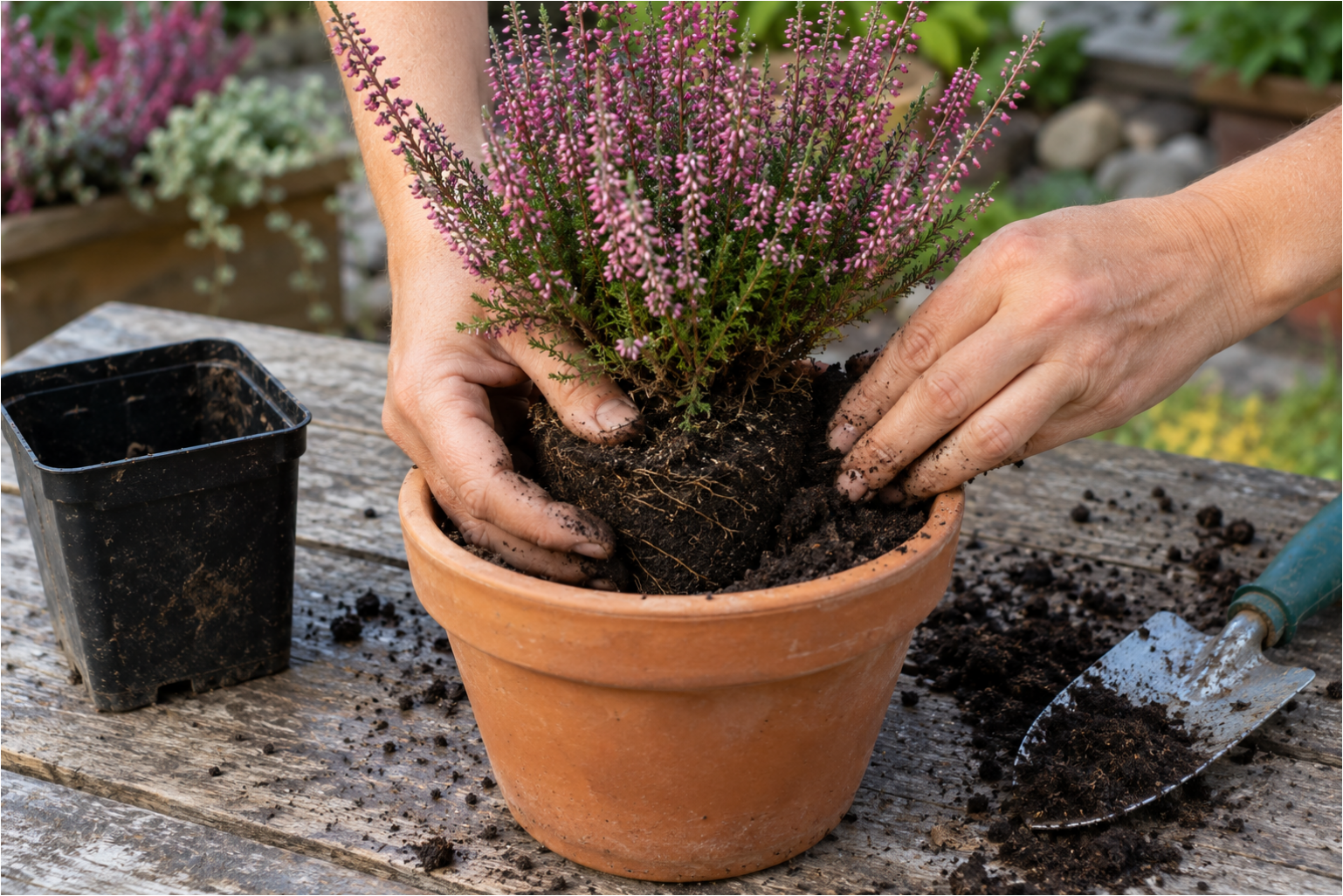
If the roots have filled the entire small pot, you can repot the heather. First, moisten the root ball, then gently remove the plant. Gently loosen roots pressed around the edge so they can grow into the surrounding substrate. For normal repotting, you do not need to break up the entire root ball or wash all the roots completely clean.
Choose a container only slightly larger than the original. An unnecessarily large pot can retain too much water. Plant the heather at about the same depth as before and lightly press the soil around it.
Autumn common heather (Calluna vulgaris) needs an acidic and well-draining substrate. A mix labeled for heathers or acid-loving plants is suitable. Simply changing the pot will not help if you plant it in unsuitable soil or a container without drainage.
Want to use it straight away for decoration? Check out ideas for autumn decorations with heather for your home and garden.
Where to place heather so it thrives
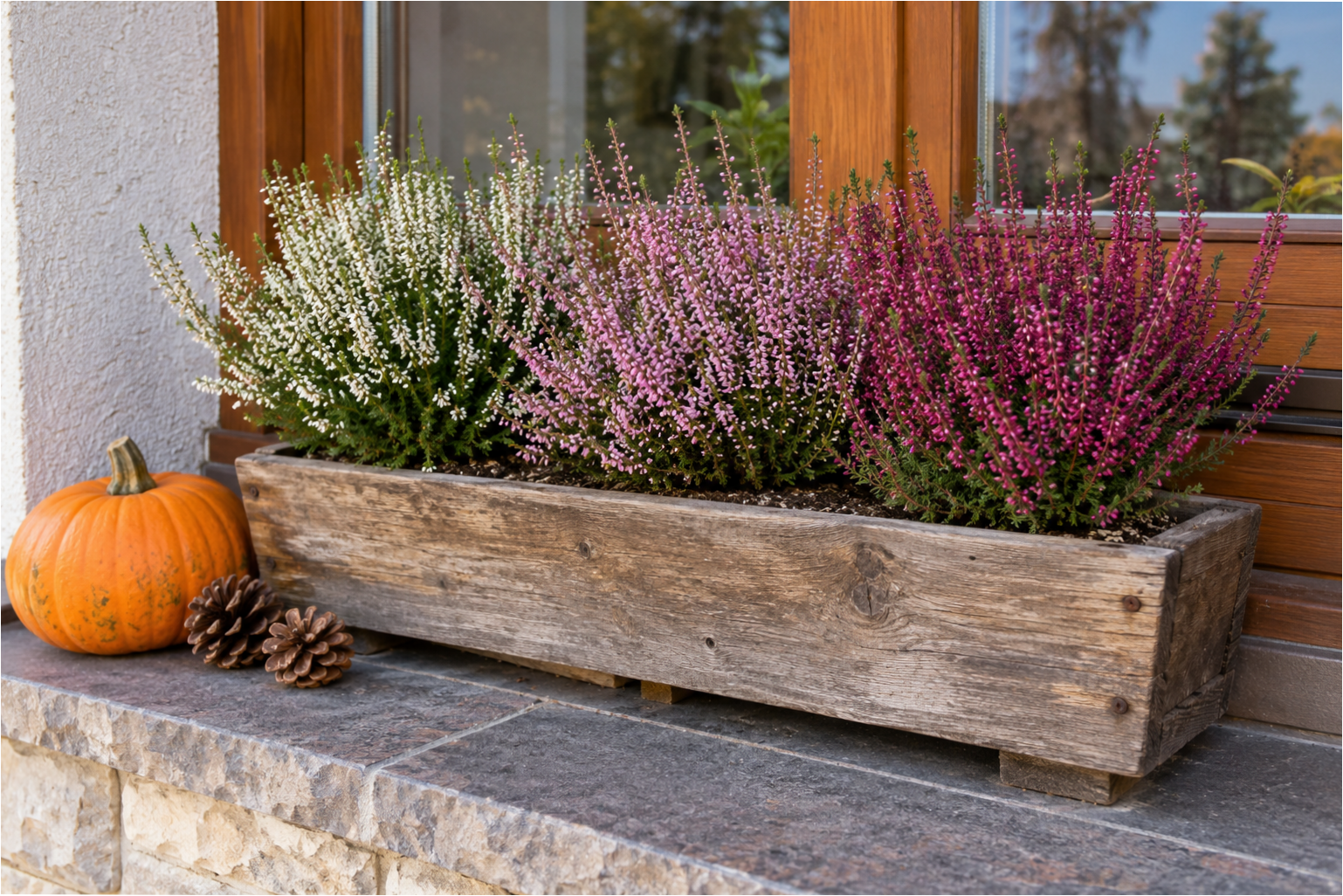
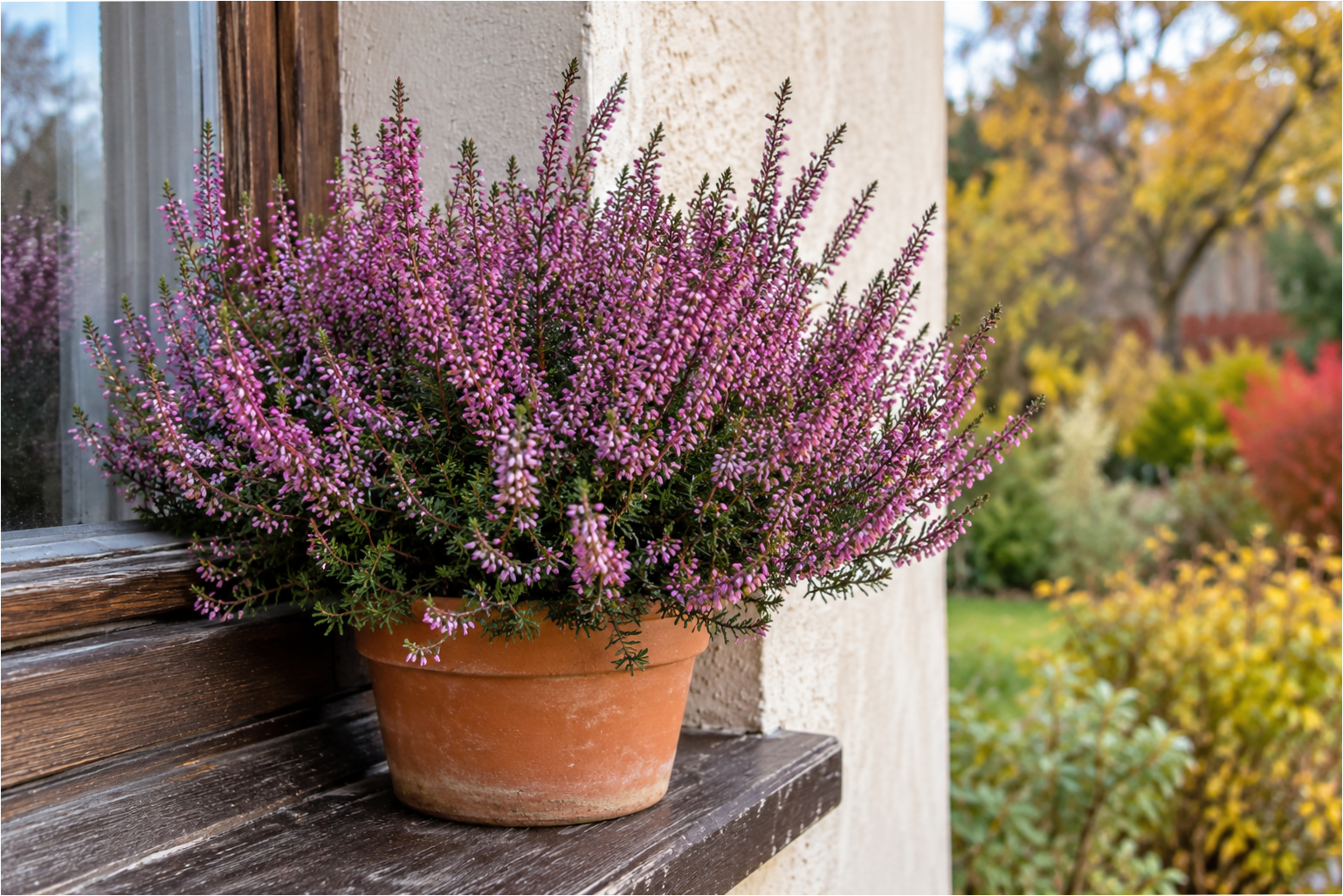
Common heather belongs outdoors in a bright, sunny spot. It is suitable for outdoor planters, balconies, terraces or by the entrance. For long-term cultivation, give it the conditions of an outdoor plant.
When buying, also check the label. Heather and heath are not the same plant. Heath (Erica) includes various species with different flowering times and requirements. For example, winter heath blooms from winter to spring and tolerates less acidic soil than common heather. Adjust care to the specific species.
How to water heather in autumn and winter
Go by the moisture of the substrate, not a fixed schedule. When checking, reach below the surface. As soon as the root ball starts to dry, water slowly directly onto the soil. The goal is a slightly moist substrate that is neither dried out nor constantly soggy.
- Don’t rely on a brief shower. A light rain may only moisten the surface.
- After watering, pour out water from any non-draining cover pot. Roots also need air.
- Check heather more often in sunny and windy weather. Containers dry out faster in such conditions.
- Don’t forget winter checks. Evergreen plants in containers may need watering even during dry winter periods; water when the soil is thawed.
A water bath is not a guarantee to save a plant that is already dead. But for heather damaged by drought, it can restore water supply to still-living roots. After that, regular checking is crucial: moisture must stay in the root ball, excess water must be able to drain away.